In this article
An Izmir-based brand may want to present the same product through several sales channels and in more than one language. The task involves more than translating existing wording: names, variant descriptions and information hierarchy must work with different text lengths. Without assuming that every local business has the same requirements, this article uses a hypothetical olive oil range to explore the decisions. Bottle labels, a gift box and online product images provide three connected applications with different communication roles.
Quick answer
For an Izmir packaging project, list channels, product variants, formats and language versions together. Test layouts with actual translations instead of fitting another language at the end. Have the responsible company team approve product information. Remote collaboration with BOCW can be arranged through its Istanbul and Sakarya offices, without assuming an Izmir branch or manufacturing service.
Map languages against formats and variants
A bottle needing Turkish and English information does not automatically require two independent designs. Decide whether both languages share a surface or whether different markets need separate versions. Then connect that decision to sizes and variants. In a hypothetical two-size olive oil range, examine which combinations are actually required. Unnecessary versions complicate delivery, but missing a necessary version creates another problem. The scope consists of these combinations, not simply a list of language names added to an otherwise unchanged quotation.
Preserve the front panel’s purpose during adaptation
A product or variety name may be short in one language and much longer in another. Reconsider hierarchy and line arrangement instead of continually shrinking the type. The brand can remain recognisable while the layout allows room for language differences. Use real translations early and name their approver. Do not assume the designer can independently validate foreign-language product descriptions. Compare whether each version explains the product clearly, not only whether the panels look identical. Consistency does not always require the same number of lines.
Give bottles and gift boxes different information roles
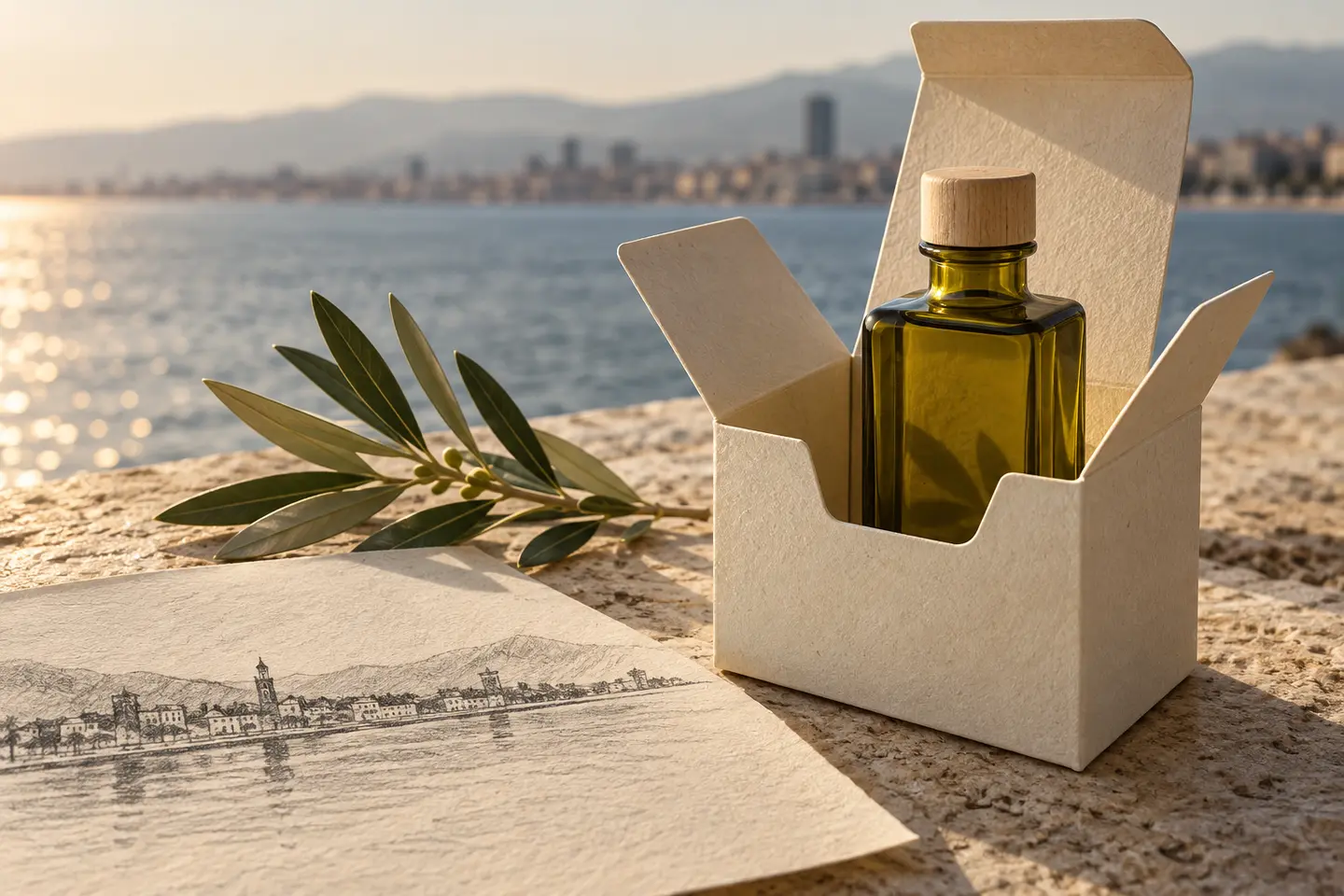
In the hypothetical range, a bottle label identifies an individual product while a gift box may present several products together. Rather than enlarging a single label, explain what the set contains. Make its included varieties and product relationship understandable. Review the bottle, closure and box together to assess their shared visual elements. This does not establish physical production suitability; the manufacturer’s inputs and a real sample review remain separate requirements. Check the proposed layouts against confirmed dimensions rather than relying on an attractive presentation mock-up.
Test what survives in an online product image
Packaging that appears clear on a shelf can become ambiguous in a small product photograph. Review the name and variant within the image area used by the intended sales channel. Do not assess this only through large presentation renderings. Consider the product page’s text fields instead of trying to place every explanation inside the photograph. The packaging and online presentation can share a visual language while performing different jobs. A small-image review also reveals which details need explanation outside the image itself.
Verify language versions individually at handover
Identify language, size and variant in the final file list. Decide whether a source-text update requires checks across the other versions. Keep outdated translations separate from current artwork. A named content owner can coordinate the Izmir company, its chosen manufacturer and BOCW during a remote project. Product descriptions and market-specific requirements should be verified by the appropriate responsible specialists. Design delivery should not be interpreted as an independent guarantee that every translated statement satisfies every condition of sale or use.
Key takeaways
- Map language, size and variant combinations before requesting adaptations.
- Use actual approved translations in the first layout tests.
- Give labels, set packaging and sales images distinct communication roles.
Frequently asked questions
Does BOCW operate a local branch in Izmir?
No. Its offices are in Istanbul and Sakarya. An Izmir-based project can use remote meetings and file sharing, while physical sample requirements are planned separately.
Can English wording be added at the final stage?
It can be added, but its length may change the layout. Identify the requirement early and work with real translations so the need for additional space becomes visible sooner.
Does each language require a separate box?
That is not a design-only decision. Review the sales plan, information volume and relevant market requirements with the responsible company team before defining the necessary versions.