In this article
A gift brand looking for packaging design in Istanbul needs to consider more than an attractive box. The same collection may appear in several stores, be assembled by different employees and travel with the buyer to another destination. Each situation creates a different design question. Imagine a hypothetical premium gift collection sold through two stores and a corporate ordering channel. This article explains how to preserve a shared identity while separating product, retail and recipient needs.
Quick answer
Start an Istanbul packaging project by mapping products, retail locations and packing routines in one brief. Review the visual direction using physical products and samples, considering the box, internal arrangement, shopping bag and gift card together. BOCW has an actual office in Istanbul Levent and works as a design studio; manufacturing responsibilities require separate agreement.
Turn the product list into retail scenarios
Suppose the collection contains a ceramic cup, a small notebook and a two-piece gift set. One store uses open shelves while the other presents products inside a cabinet. Record which packaging surfaces are visible, where price information appears and what shoppers can understand without opening anything. Review both settings together. Also prepare an example showing a corporate gift message, checking that personalization does not obscure the product name or the brand.
Define premium through the complete presentation
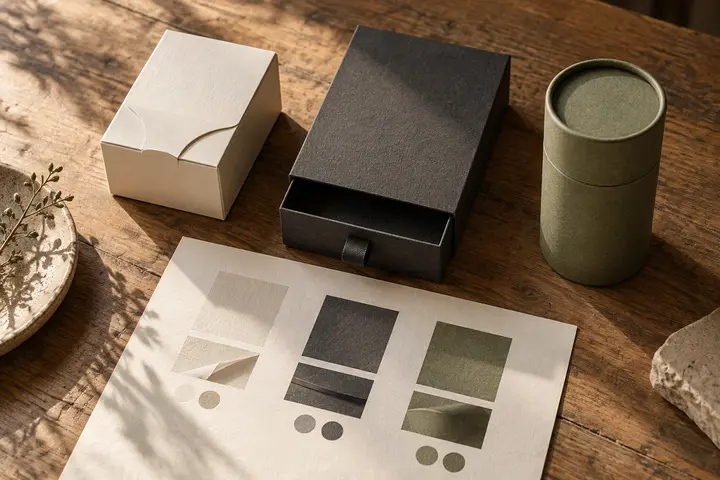
An expensive-looking surface is only one possible design choice. Typography, the information revealed on opening and the relationship between components also contribute to the experience. Compare two proposals with identical products and copy: perhaps a restrained box with a distinctive card versus a more expressive outer surface. Ask which better communicates the intended brand character. Discuss proposed finishes with the selected manufacturer and examine samples rather than treating a screen rendering as a production result.
Compare shared boxes with product-specific arrangements
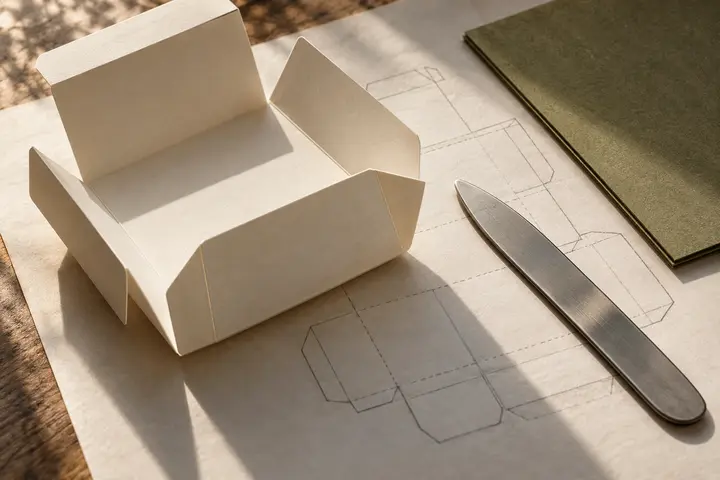
A separate box for every item creates variety but also creates more components and artwork to manage. A shared outer box may require different internal arrangements. Evaluate the cup placement, notebook removal and gift set opening sequence before choosing. Do not accept decorative filling as a complete answer simply because it looks convincing in a presentation. Observe how each item is inserted and retrieved, and identify which decisions need physical development by the production partner.
Make store routines part of the brief
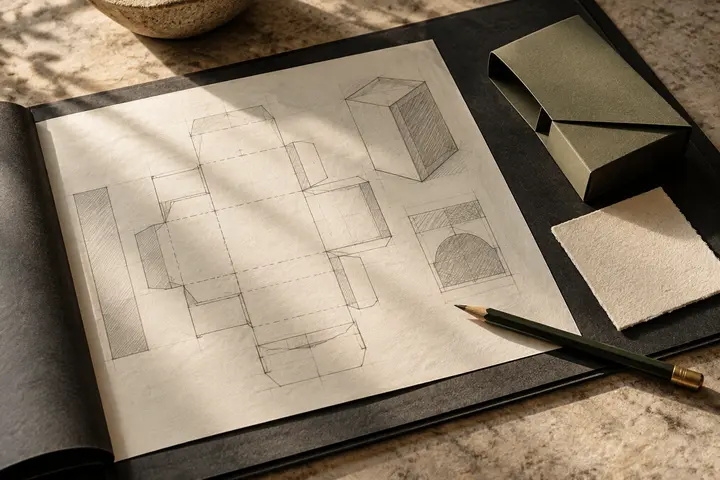
During sample review, ask someone to place the product, add the card, close the box and put it into the shopping bag. If the process requires repeated verbal explanation, reconsider the arrangement. Create a short illustrated packing guide so each store has the same reference. Show where spare cards, seasonal sleeves and corporate messages belong. This guide describes retail use; it should remain distinct from the manufacturer’s production documentation and from any product protection assessment.
Approve the collection across actual touchpoints
Review shelf placement, checkout presentation and carrying views instead of relying on one attractive mockup. Can people distinguish the sets? Are product names visible? Does the bag belong to the same visual family as the box? Put those questions in the acceptance checklist. Request an alternative if a layout photographs well but hides useful information in the store. Use the same products when comparing samples so that content differences do not distort the design discussion.
Connect local meetings with explicit deliverables
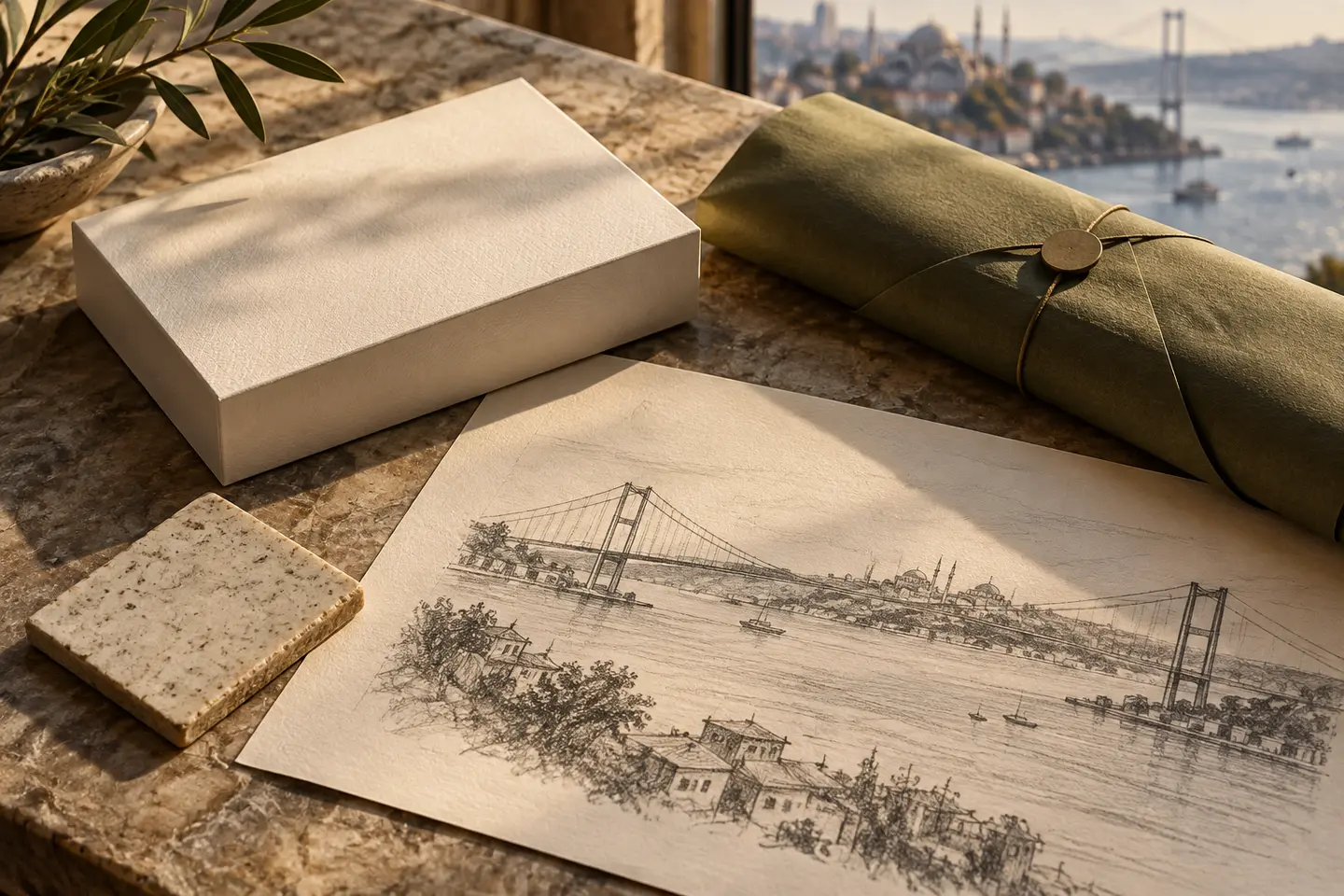
BOCW’s Istanbul Levent office is a real location where an in-person discussion can be agreed within the project arrangements. Proximity does not automatically include production or store implementation. Specify the main design, product adaptations, card and bag artwork, sample review and manufacturer communication separately in the proposal. Assign one person to consolidate store feedback and another, if necessary, to approve product copy. Final files should clearly identify their approved version and corresponding item.
Key takeaways
- Review the collection in every intended retail presentation.
- Consider the box, internal arrangement, card and bag together.
- Separate design deliverables from physical manufacturing responsibilities.
Frequently asked questions
Should all gifts use an identical box?
Not necessarily. Compare the shared-box option using actual product placement and store routines. A collection can also feel consistent through typography, layout and imagery while using different dimensions.
How can a corporate message fit the collection?
A replaceable card or sleeve can provide a defined personalization area. Test realistic message lengths and check that product identification remains visible.
Does BOCW manufacture the packaging?
BOCW is a design studio. Physical production, samples and implementation responsibilities should be clarified separately with the selected manufacturer and in the agreed project scope.