In this article
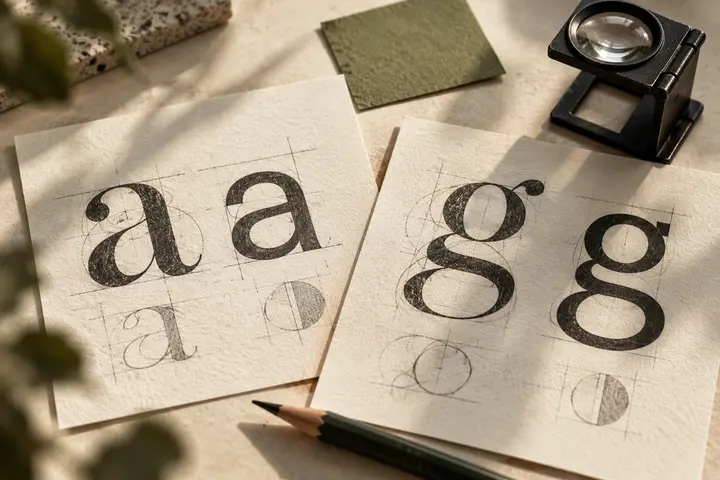
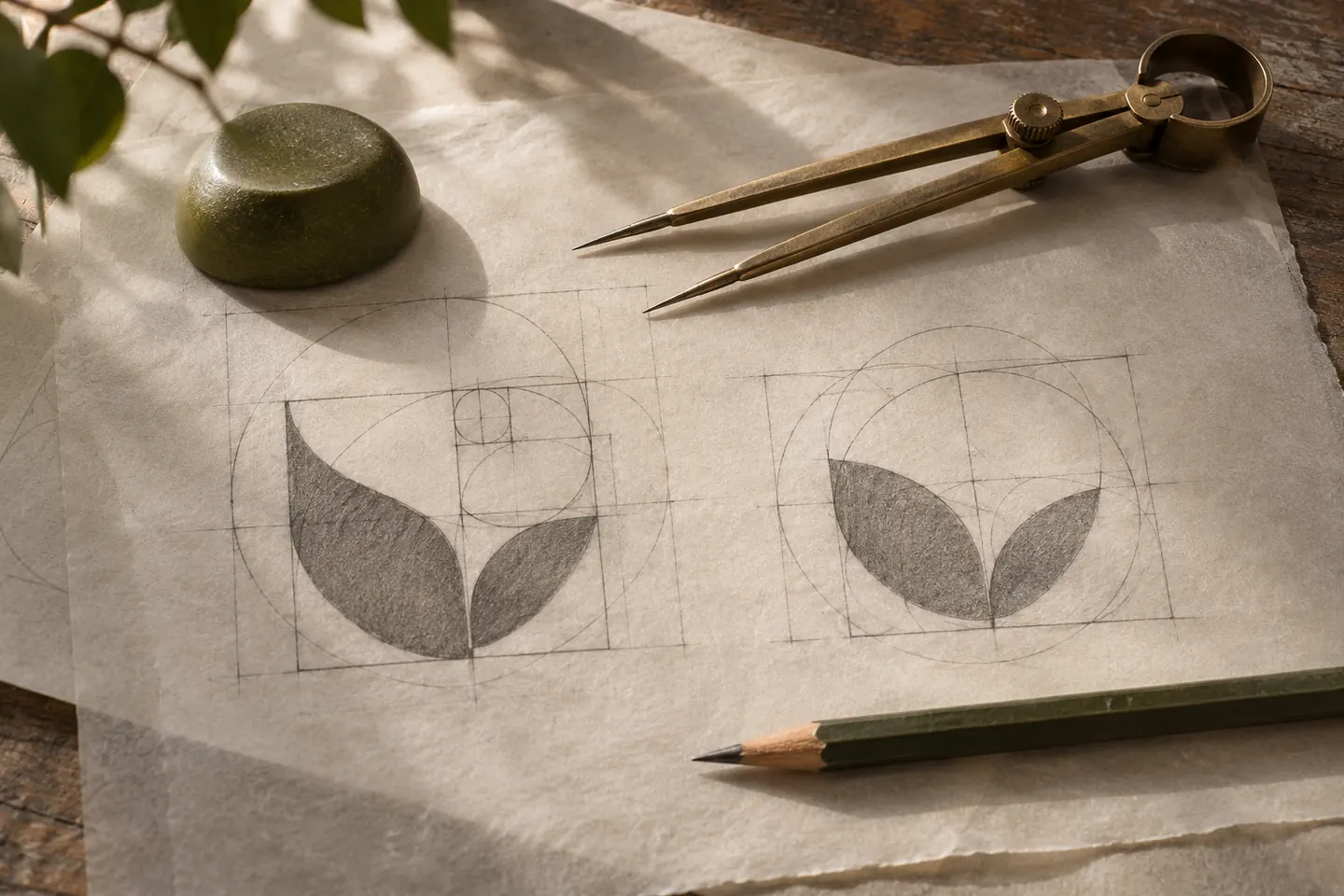
The golden ratio is one possible relationship between parts of a logo. Circles, arcs and rectangles in a presentation may help explain construction, but they are not proof of quality on their own. This article treats the ratio as a tool for organising possibilities rather than a compulsory formula for success. Recognition, legibility and actual brand applications remain the basis for evaluating the finished mark.
Quick answer
The golden ratio is a mathematical relationship of approximately 1.618. It can support proportion studies and form exploration, but a logo need not use it. Assess consistent construction, small-size performance and the reasons behind the form rather than the number of circles in a presentation. Keep the construction diagram separate from evidence that the mark works in practical use.
Understand a relationship rather than a decoration
The relationship can be described by dividing a line so that the larger part relates to the smaller as the whole relates to the larger. In design, the useful question is which dimensions are being connected and why. A symbol height and an arc diameter might be related, but the diagram should serve a construction decision instead of becoming a decorative justification.
Separate diagrams from development evidence
It is easy to place differently sized circles over a finished mark. That does not establish that the design developed from that scheme or could not have been built differently. Ask which elements use the dimensions and what the choice improves. A comparison with an earlier version can make the decision clearer. Read the diagram as an explanation of construction, not as a guarantee about consumer behaviour.
Allow adjustments for visual balance
Equal measurements do not always create equal perceived weight. Curves next to straight edges, dense internal spaces and thick strokes meeting can affect the impression. A designer may therefore use a mathematical relationship as a starting point and adjust it through observation and application tests. A small deviation is not a failure by itself. What matters is the visual problem being solved and consistency across the mark.
Test small and monochrome applications
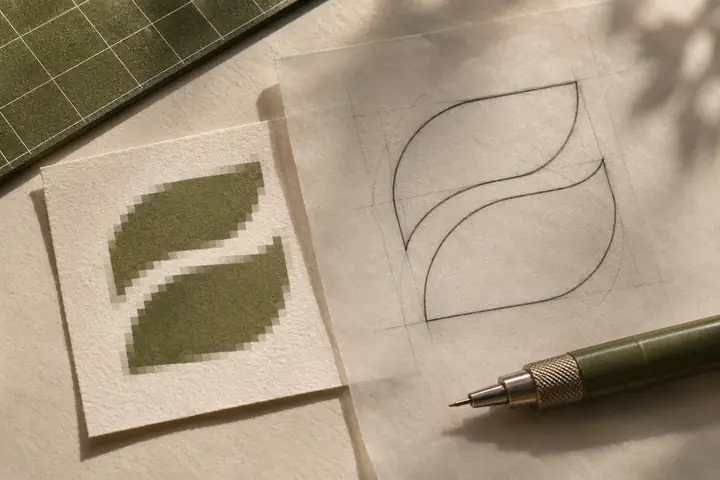
A pleasing proportion study on a large screen is not sufficient. Review the logo in a phone header, on a small label and in monochrome output. If spaces close or the name disappears next to the symbol, an elaborate ratio explanation does not fix the result. A hypothetical consultancy can compare its business card with a presentation cover. Record dimensions and observed problems instead of offering vague requests for greater beauty.
Ask a useful question during presentation
Alongside “did you use the golden ratio?”, ask which brand need the relationship addresses. A design may rely on custom lettering, a simple module or an optical arrangement without forcing them into the same mathematical scheme. BOCW’s project stories provide another way to examine lettering, colour and application choices. A proportion system is useful when it supports an explainable decision rather than displacing the brand’s character or practical requirements.
Key takeaways
- The golden ratio is a tool, not a requirement.
- Read diagrams alongside visual balance and application tests.
- Ask what the form decision achieves.
Frequently asked questions
Is a logo without the golden ratio poor design?
No. Suitability, originality and legibility can be achieved through other approaches. Evaluate the intended communication task and performance in use rather than scoring a logo against one proportion rule.
Does every circle diagram demonstrate the golden ratio?
No. The dimensions and relationships must be explained. A visually impressive construction drawing alone does not demonstrate a particular mathematical relationship or establish that the design is successful.
Should a client calculate the proportions?
You do not need to perform the calculations. Ask the designer to explain the dimensions clearly and show real applications. The technical diagram should relate to the result you can observe.