In this article
A logo on a stamp is a small impression used quickly and sometimes on different papers. Details separated by colour in a presentation can merge in monochrome, while long company information can obscure the name. Preparation therefore needs more care than simply reducing a logo onto a document. This guide concerns visual artwork; it does not determine which legal or financial particulars a business must include on its documents.
Quick answer
Use an approved monochrome version, review small letters and narrow spaces at the intended size, and give the mark and company details a clear hierarchy. Confirm the supplier’s artwork requirements and usable area. Approve through an actual-size impression and a separate information check rather than relying only on a screen mockup. Keep the approved artwork and production reference together.
Define the stamp’s task and space
A company-information stamp and a mark used to brand packaging serve different purposes. Specify the task, approximate space and production method first. Do not choose a rectangular or circular format on appearance alone; the information order affects the space required. Ask the supplier for the actual impression area rather than assuming the housing dimensions describe the usable artwork area.
Preserve form relationships in monochrome
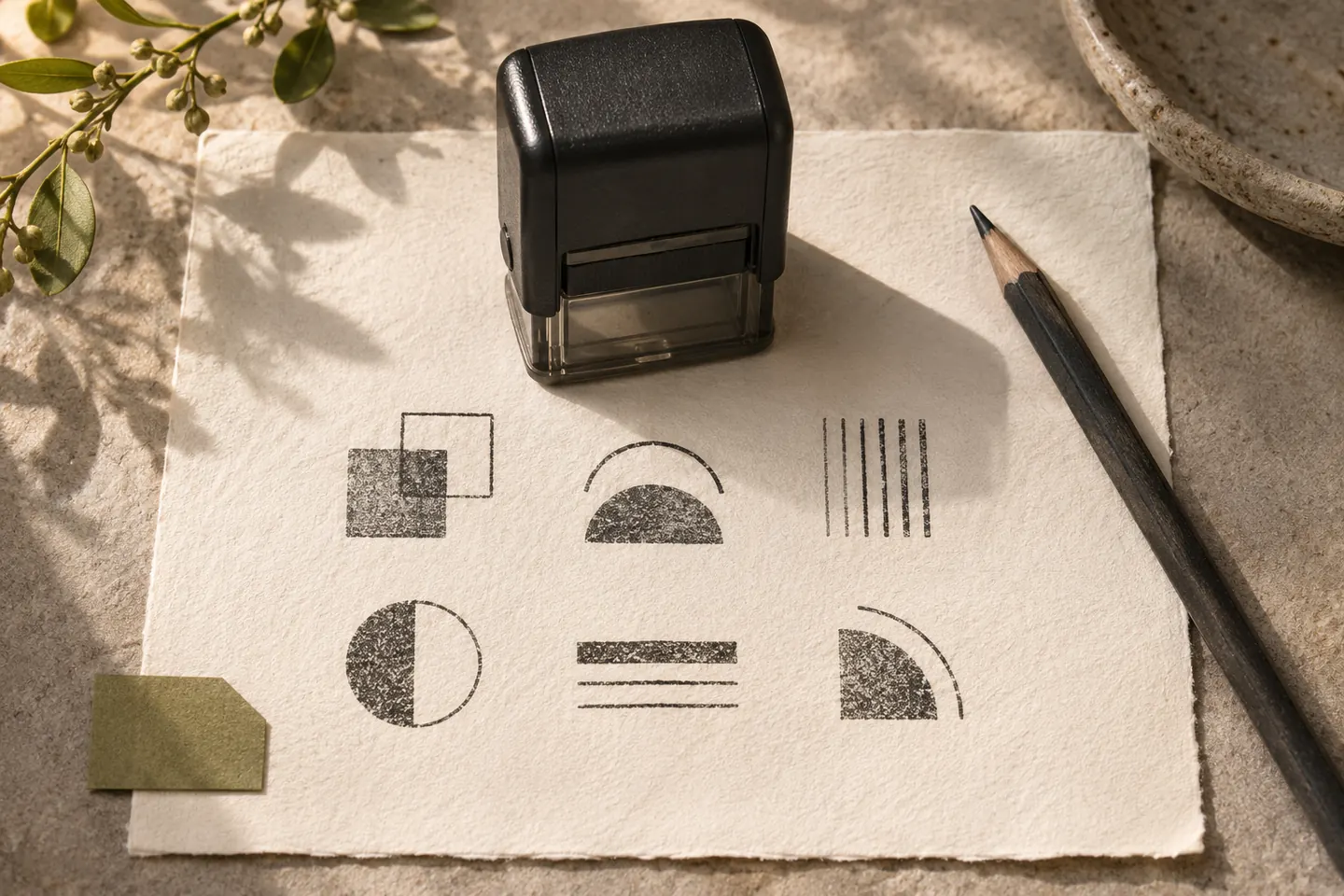
Gradients, shadows and close tonal differences may not translate into stamp artwork. Look for an approved monochrome master or develop one with the designer. Filling a coloured bitmap indiscriminately with black can close counters and letter gaps. Evaluate the inked areas and the spaces left clear together. This is especially important where negative space contributes to the mark’s distinctive appearance.
Build a hierarchy between logo and details
The brand name, registered company name and contact details need not have equal visual weight. The business’s authorised owner should confirm which particulars belong in the stamp; the designer arranges that approved content. Excessive lines can force lettering too small. Do not abbreviate names without approval. Test real content and record information review separately from visual approval; a placeholder proof does not establish that final details are correct.
Test at the intended size and on paper
Spacing that looks generous on a large screen may become unclear in a small impression. Start with an actual-size paper print, then examine the supplier’s trial. Ink, paper and application method can affect the result, so avoid one universal stroke-width prescription. A hypothetical packaging stamp may look different on kraft and smooth white stock. Identify the intended surface early so that artwork and production conditions can be reviewed together.
Deliver the correct version and file
Confirm the supplier’s required format and prepare clean artwork accordingly. Distinguish vector files, impression previews and the approved information list. Recheck lettering and the final company name. Date and version later changes to a phone number or address. The business should separately manage any old physical stamps. Production-ready artwork does not by itself demonstrate that every commercial detail in it remains current.
Key takeaways
- Start with an approved monochrome version.
- Have company details confirmed by the authorised owner.
- Check the actual impression area and sample.
Frequently asked questions
Can I send the coloured logo unchanged?
It can serve as reference, but the monochrome production artwork needs review. Confirm that spaces and letter distinctions survive rather than merely converting all colours to black.
Which company details should a stamp contain?
Refer that question to the authorised person responsible for the intended document use. A graphic design guide does not replace applicable information requirements. Arrange the layout after the content has been confirmed.
Is a screenshot sufficient for approval?
It helps discuss the layout but does not show the physical impression. Review a supplier trial for size, paper and application method, and approve the accuracy of the information separately.