In this article
Searching for the best packaging designer often begins with confidence in someone’s visual talent. Yet an impressive box presentation cannot show, by itself, how that person would approach your product. Relationships between letters, information levels, space and materials matter, as does the ability to explain those choices. This article offers ways to examine a portfolio rather than a ranking of individuals. The aim is to preserve your own visual judgement while developing concrete questions about the work you actually need.
Quick answer
Assess a packaging designer through both finished work and the ability to explain and adapt decisions. Review typography at realistic sizes, information hierarchy across variants and material ideas alongside manufacturer input. Listen to how the designer questions your brief. A suitable partner should make the visual approach, feedback process, agreed scope and delivery responsibilities understandable rather than relying only on a persuasive portfolio.
Start by viewing the work at a smaller scale
In a presentation that fills the screen, almost every heading can appear prominent. Reduce the view and consider the order of brand, product and variant names. Describe what you notice first in your own words. This does not mean every package should follow the same reading sequence; it helps you discuss whether the chosen sequence suits the product. Ask for an actual-size example or application photograph where available. Consider whether dramatic lighting and decoration in the presentation help you assess the design itself.
Ask about more than the name of the typeface
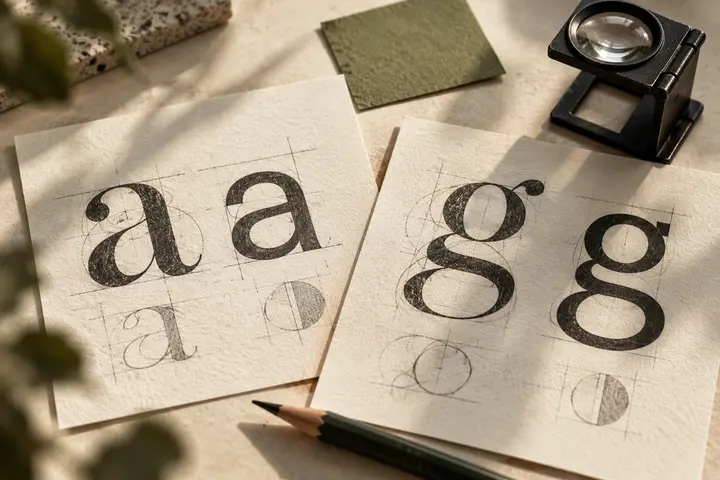
A strong typographic decision involves more than choosing a recognised font. Examine long product names, relationships between information levels and the use of spacing. How does the designer maintain the approach when short copy becomes longer? If Turkish and English will be used, ask to review real words in both languages. The purpose is not to administer a technical examination, but to see whether visual decisions connect to actual use. A letterform you admire may not create the same effect in every product name.
Connect material ideas with production review
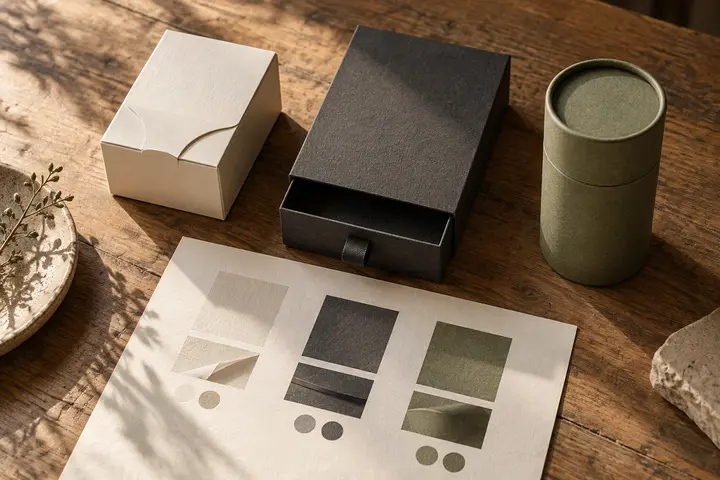
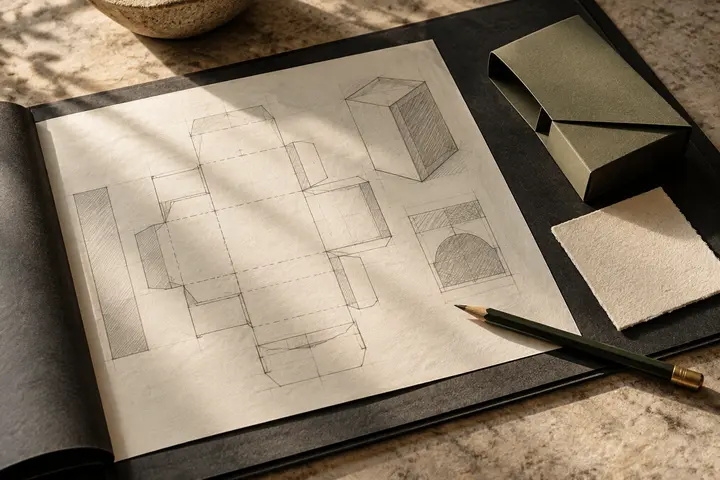
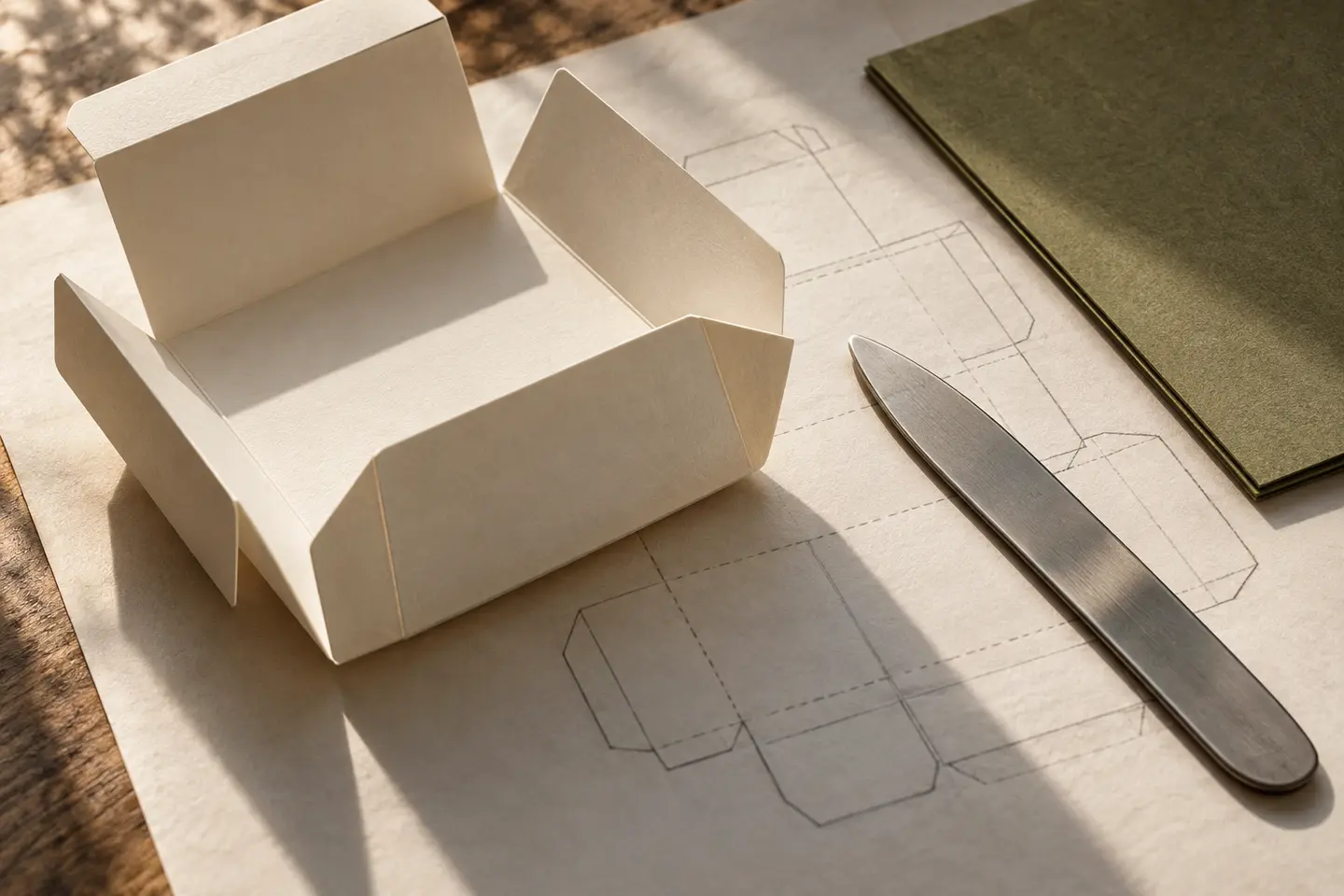
When textured paper, transparency or a special surface is proposed, ask what it contributes to the product. The suggestion may establish a visual direction, while feasibility still needs a separate assessment. Rather than assuming the designer is an expert in every manufacturing process, ask what information will be exchanged with the producer. When no physical sample exists, it is helpful to know which assumptions remain open. Look for explanations that identify boundaries and propose a review step instead of promising a result that has not been tested.
Discuss how a revision improved the thinking
Ask the designer to explain the difference between an initial direction and a finished solution in a project they are able to discuss. Do not request confidential drafts or private client records; a verbal account can still be informative. Which feedback improved the work, and which request needed discussion because it weakened the intended message? Automatically accepting every suggestion and refusing every amendment can both make collaboration difficult. The conversation should reveal how the designer handles reasons for change. Revision rounds and new-direction requests still belong in the written scope.
Use a hypothetical product to frame useful questions
Imagine a care product with a long name and a second variety with a short name joining the same family. Instead of requesting a finished unpaid concept, ask which information the designer would need first. Questions about container shape, sales channel, product statements and variant count reveal an approach. Discuss which examples would support later decisions. The first meeting should establish the quality of joint thinking and the boundaries of a possible commission, rather than collect free creative work. A paid discovery stage can be defined separately if appropriate.
Choose working compatibility alongside visual affinity
Liking the designer’s aesthetic matters, but communication, authority and delivery arrangements also affect the partnership. Explain who will supply copy, who will comment and who makes the final decision. Ask how the designer would work within that arrangement. The same questions can be applied when considering BOCW or Bilal Öz, using verified portfolio work and the stated service scope as evidence. Finish with a reasoned judgement of suitability for your product and team rather than a claim that one person is universally better than every alternative.
Key takeaways
- Assess typography and information order at realistic viewing sizes.
- Ask why a material is proposed and who will review its suitability.
- Explore the designer’s approach to the brief rather than requesting unpaid finished concepts.
Frequently asked questions
Must a good designer already know my sector?
Relevant experience can help, but it is not the only criterion. Consider the questions asked about your product, the organisation of information and the approach to manufacturer input. Recognising missing specialist knowledge is valuable too.
Can I request a packaging concept at the first meeting?
An initial conversation can address approach and scope. If you want commissioned creative work, define its fee, deliverables and usage arrangements separately. Reviewing a portfolio is different from requesting a free project.
Can awards alone identify the best designer?
A verifiable award can be one piece of information, but it does not establish suitability for your product. Examine actual work, explanations of decisions and the proposed working scope together.