In this article
Using a logo alongside several languages does not mean a business needs an unrelated brand in every market. The important question is how different readers recognise the same organisation and understand its information. Translation, typography and layout can produce substantial rework when treated as independent late-stage decisions. This guide looks beyond producing an English catalogue. It considers a coordinated arrangement from name usage to final files, without assuming that exporting or communicating in another language establishes an office, branch or local operation in the destination country.
Quick answer
First decide which form of the brand name remains stable, which descriptors are translated and whether languages appear together or in separate versions. Test typography with real target-language content. Plan text length, reading direction and approval ownership explicitly. The identity can remain recognisable while wording and applications adapt to the reader. A translated caption is only one part of a complete multilingual arrangement.
Separate the brand name from explanatory wording
A brand name, legal company name and service descriptor may require different decisions. Identify which wording stays unchanged and which is translated. Collect existing international applications with examples rather than relying on recollection. Language-focused projects such as Germany Logo Design can support the discussion, but a country label must not imply a local branch. Contact details and service descriptions should accurately represent how the business actually operates and how enquiries will be handled.
Test the type system with actual characters
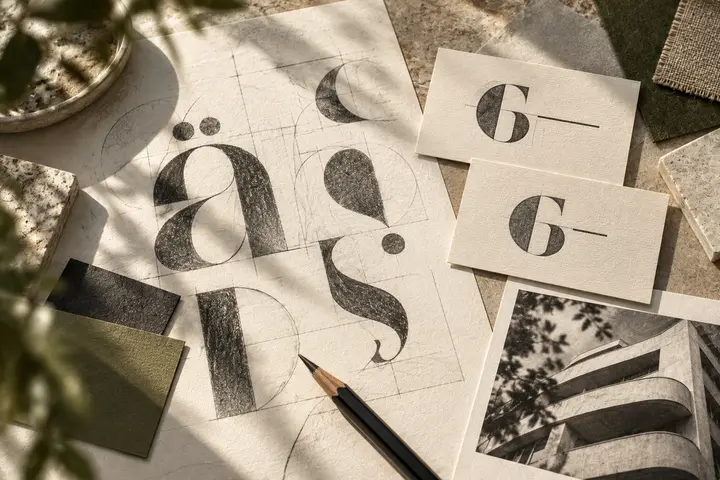
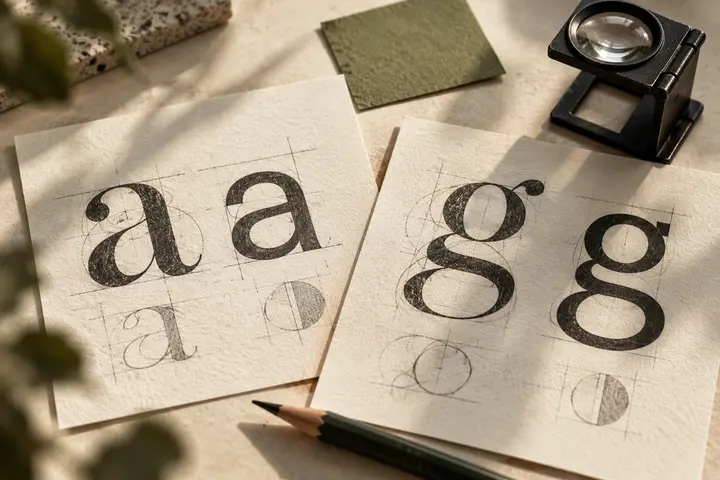
Check that the proposed family supports the required letters and marks. A short Latin sample cannot represent every writing system. Include long product names, groups of numbers and punctuation in the trial. The same nominal size may not create the same visual weight across scripts. Involve someone who reads the target language. A designer should not give definitive linguistic approval solely because unfamiliar forms look balanced or resemble the approved Latin version.
Include text length and direction in layout planning
A description fitting on one line may occupy several in another language. Do not solve every expansion by shrinking the type; reconsider the arrangement and information priority. Right-to-left material may require more than mechanically mirroring a composition. W3C explains explicit base direction for web content. Check numerals, brand names and mixed-direction fragments with real examples. Treat these as application requirements rather than assuming that changing a language label completes the work.
Make the reading order clear when languages share a surface
A bilingual package, exhibition panel or proposal cover should make each language easy to locate. Placing every sentence side by side at an identical size does not always create a useful hierarchy. Language labels, clear sections or separate versions may be appropriate. Ask the information owner to verify matching product codes, dimensions and characteristics across versions. The visual structure should help readers locate the relevant information without having to decode the relationship between unrelated text blocks.
Review a hypothetical exhibition set as a whole
Imagine Turkish and English presentations, catalogues and exhibition graphics for a hypothetical manufacturer. Does the same product group retain coherent naming? Which team receives the listed enquiries? Can editors identify the correct descriptor while retaining the approved logo? This is not a claim about a client result. It is an exercise showing how multilingual decisions behave across a complete delivery set rather than on one carefully arranged cover with unusually convenient sample text.
Include language approval and version records in the handover
Identify the translator, technical information owner and final design approver. File names should distinguish language, application and version. Record which related translations need review when a source statement changes. Share target languages and representative content with BOCW at the start. A multilingual identity can then operate as an ongoing publication arrangement, with a clear change process, instead of becoming a collection of artwork files whose text is replaced informally whenever another language is required.
Key takeaways
- Decide separately how names are preserved and descriptions translated.
- Test characters, expansion and direction with real target-language material.
- Assign information and approval ownership for every language version.
Frequently asked questions
Must the logo be redrawn for every language?
Not necessarily. Preserving the name and adapting explanatory text are separate decisions. Required versions depend on actual use and the intended naming arrangement.
Can translation be added after the design?
It can, but expansion, characters and direction can affect the layout. Sharing real text earlier makes those requirements visible before final approval.
Does multilingual identity imply offices in different countries?
No. Languages support communication. Offices, production locations and service addresses should describe only the business’s actual operating situation.