In this article
When commissioning law firm logo design, a general commercial branding approach may not be the right starting point. Professional application rules affect visual decisions on signs, business cards and electronic documents. First establish the intended uses and the firm's responsible approver. Design can help names remain clear, documents stay organised and the visual language feel considered. Scales, columns or letter emblems are not prerequisites. This discussion concerns design scope; the firm's authorised responsible team makes the relevant professional compliance decisions.
Quick answer
Develop a law firm's visual identity through name arrangement, typography and document hierarchy while considering current professional rules. Signage and printed or electronic documents may be subject to specific restrictions, so review applications separately. Prioritise clear names, consistent layouts and responsible approval before production. A generic emblem package intended for unrestricted use across every channel is not an appropriate starting assumption.
Application rules are the first input to the brief
The Union of Turkish Bar Associations' Advertising Ban Regulation addresses signage and printed/electronic documents in separate provisions and restricts emblem and shape use in those applications. A design proposal should therefore not promise a firm symbol for unrestricted use everywhere. The firm's responsible team assesses current rules and intended uses. The designer works from approved names and information. An impressive presentation created before applications are defined may not represent a usable, deliverable scope for the firm.
Typography can organise identity without a crest
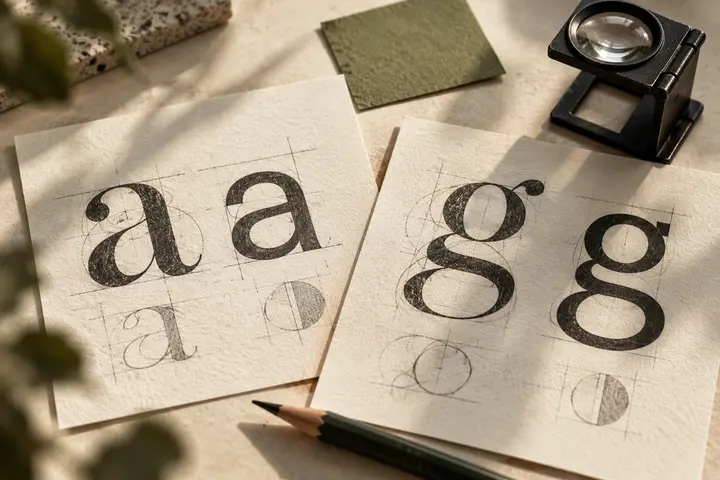
Placing names on one or separate lines, balancing partners' names and positioning a descriptive phrase are design decisions. They can aid reading but do not themselves confer approval. Compare options that remain legible at required sizes instead of choosing delicate decorative lettering alone. Turning a name arrangement into an embellished emblem does not remove the need for application review. Assess colour and lettering within approved limits. A restrained appearance can still involve careful composition and attention to detail.
Leave room for the document's purpose
A reader of correspondence needs to find the firm's name and contact details, then follow the content. Oversized decoration, excessive spacing or motifs repeated across every page can hinder that task. Develop heading, date, page and text areas with representative documents. Long titles and multipage layouts can be tested without disclosing private case content. Agree sharing responsibility before using real names or case information in a presentation. Illustrative documents can instead use clearly labelled fictional data throughout.
Hypothetical brief: a two-name office arrangement
Imagine an office using two lawyers' names together. The brief covers a name arrangement for responsible approval, a business-card draft using approved information, a correspondence template and a signage draft. Balance differing name lengths, retain readable descriptions and show monochrome output. Do not make a free-standing monogram or seal an initial requirement. Review each application separately before presenting it as ready for use.
Acceptance includes accurate information
Start the visual review by checking complete names, Turkish characters and approved details. Inspect cards and document output at actual size. Long names should fit, letter details should remain distinguishable on ordinary office prints, and continuation pages should be organised too. Compare the signage draft with approved content and dimensions. Review name consistency across applications. Record visual acceptance separately from the responsible professional approval. Completion of one review does not demonstrate that the other has occurred or that the application is authorised.
- Check every name, title and Turkish character.
- Inspect the card, first page and continuation page at actual size.
- Match production artwork to the approved draft for that application.
Define scope, responsibility and future changes
Specify name arrangement, document templates, signage drafts and production preparation as distinct items in the proposal. Clarify who supplies the necessary font rights and licences. Define how files will be updated when a name or address changes. Commission a visual system operating through responsible approval rather than asking the designer to guarantee compliance or client acquisition. Making this distinction early keeps the work focused on usable layouts and actual communication needs instead of an increasing collection of decorative marks.
Key takeaways
- Review signage and documents against current professional application rules.
- Work on name arrangement and legibility before decorative symbols.
- Record visual acceptance and responsible professional approval separately.
Frequently asked questions
Does a law firm need a scales emblem?
No. A familiar sector symbol does not automatically authorise its use. A name-led arrangement may be sufficient. The firm's responsible team should assess any proposed shape for the particular application in which it is intended to appear.
Can signage and business cards use the same design?
Do not assume this at the outset. Review the conditions of each application separately. An approved name arrangement can remain consistent, while content and placement follow applicable rules and the firm's responsible approval for that particular medium.
What should we provide to the designer?
Supply complete names, approved titles and contact information, intended applications and the responsible approver. Prepare example documents without private personal or case-specific content. Address current professional requirements at the beginning of the project, before visual development and production.