In this article
A womenswear logo should not depend entirely on one collection's colours or campaign photography. Collections change while the name remains on sewn labels, swing tags and the online shop. Describe the products and shopping experience rather than relying only on demographic labels. The relationship between everyday pieces, occasionwear and additional ranges also matters. Bring actual label dimensions and sales screens into the discussion alongside product photographs, so the identity is evaluated where people will use it.
Quick answer
Commission a womenswear logo as a lasting identity decision, separate from seasonal campaigns. Compare the name on small sewn labels, swing tags and mobile shop headers. Ask how collection headings enter without changing the permanent signature. Approval should establish producible lettering and consistency across product imagery, with each label format explicitly included or excluded from the handover.
Explain the brand attitude beyond campaign photography
The brief can describe product-use contexts, the intended sense of positioning and the tone of the shopping experience. Single adjectives such as romantic or modern may not explain enough. Show what those words mean on labels, in the store and in customer communication. If the brand uses a personal name, identify the spelling that must remain. Rather than requesting another fashion house's lettering, explain the structure and pronunciation of your own name. Evaluate the collection's temporary visual language separately.
The smallest label may be the most permanent surface
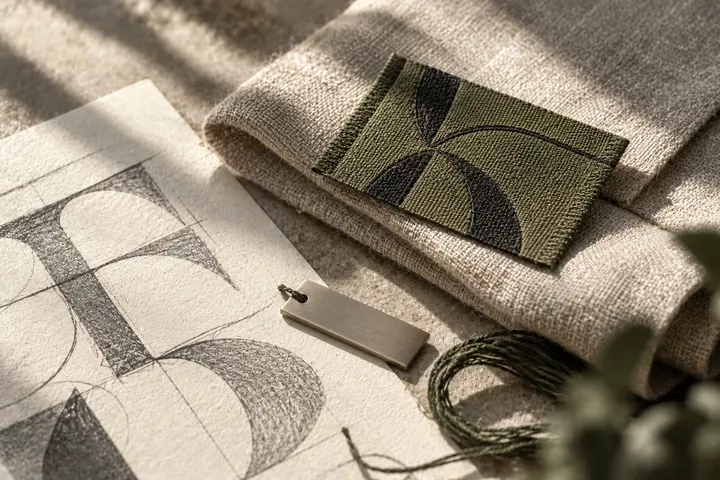
Ask the label supplier for a real sample using the selected production method. Fine strokes, close lettering and long names may reproduce differently from the screen. Observe readability, closing spaces and the effect of edge allowances. Explain whether the identity shares a label with size or product information. If a simplified small-use version is prepared, retain the core lettering relationship. Show the directions in which labels are attached to different products; a blank strip mockup does not represent every use.
A hypothetical everyday and occasionwear range
Imagine one brand selling everyday pieces and occasionwear through the same shop. Creating unrelated logos for the two collections could weaken their connection. First test changing collection headings beneath the same master signature. Photography, colour and tag material may differ while the name remains recognisable. Show both ranges on one mobile storefront to assess whether their relationship is understood. This example questions whether a new range requires another brand; it does not promise a particular commercial result.
Approve swing tags and mobile headers together
A long name with generous space on a swing tag may become crowded in a mobile header. Horizontal and tighter arrangements may be useful, but they should not be rewritten with unrelated lettering. Product and price fields on the back of a tag are not permanent parts of the logo. Review actual tag dimensions and a real storefront screen. Check the header alongside pale and dark product photography. Selecting solely through an elegant shopping-bag mockup can leave everyday screen problems unexamined.
Separate seasonal campaigns from the identity handover
List master files, the sewn-label version, swing-tag arrangement and storefront-header example as distinct deliverables. Collection shoots, seasonal posters and every social image are not automatically included. Ask whether each application is completed artwork or a directional demonstration. Establish who approves production adaptations made by the label supplier. Show the spacing and naming relationship preserved when another collection heading is introduced. The team can then update seasonal communication without reconstructing the permanent signature or leaving suppliers to improvise its lettering.
Key takeaways
- Separate the lasting signature from one season's photographic style.
- Evaluate sewn labels through actual production samples.
- Add collection headings without redrawing the master identity.
Frequently asked questions
Must womenswear branding use delicate lettering?
No. Judge lettering through the brand attitude and actual production surface. Check very fine strokes on a small physical label rather than relying on their screen appearance.
Should the logo change every season?
Collection communication can evolve while the name treatment remains stable. Examples showing seasonal headings alongside the master brand can guide a more consistent transition.
Are bags and labels the same deliverable?
No. Each surface has its own dimensions, material and production artwork. List swing tags, sewn labels and carrier bags separately in the quotation.