In this article
Two web design quotations can describe very different purchases. One may cover a home page concept, while another includes discovery, content planning, mobile layouts and a reusable component system. Before comparing amounts, define the design output the business needs. This article offers a scope comparison method rather than an invented market price range. It is particularly useful when suppliers place different services under the same label and you need to understand which questions will make their proposals comparable and which decisions deserve priority within your budget.
Quick answer
Web design prices reflect the variety of page types, discovery work, original visual development, responsive layouts, interaction states and handover responsibilities. Compare proposals by translating them into the same scope table. Identify whether development, content production and ongoing support are included. Without these distinctions, calling one quotation expensive or inexpensive says little about what it actually provides.
Count distinct page types, not only pages
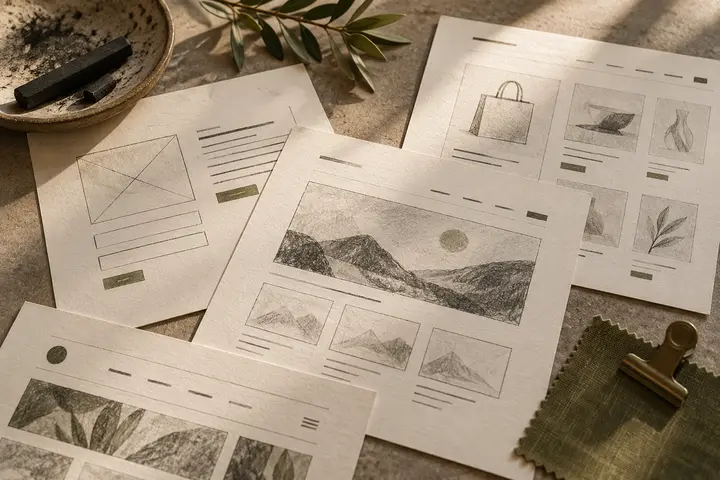
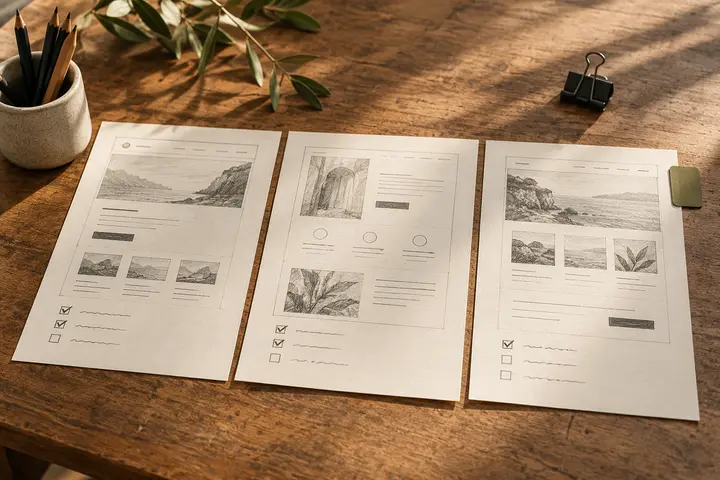
A ten page website may repeat one template with different copy. Another ten page website may contain product comparisons, booking flows, filters and several editorial formats. Their design requirements are not equivalent. List home, service, project and form layouts separately, then ask which states belong to each. Empty search results, successful submissions and error messages should not disappear from the scope simply because they are less prominent than the default screen.
Separate discovery from visual production
A business with an established content map and brand guide needs different preparation from one still defining its proposition. Interviews, existing site reviews and user journey mapping may form a separate stage. Check whether these are included and which decisions they will inform. Ask what document or agreed outcome concludes the work. The presence of the word research in a proposal does not by itself tell you how the activity will be conducted or whether it addresses your uncertainties.
Normalize a hypothetical pair of quotations
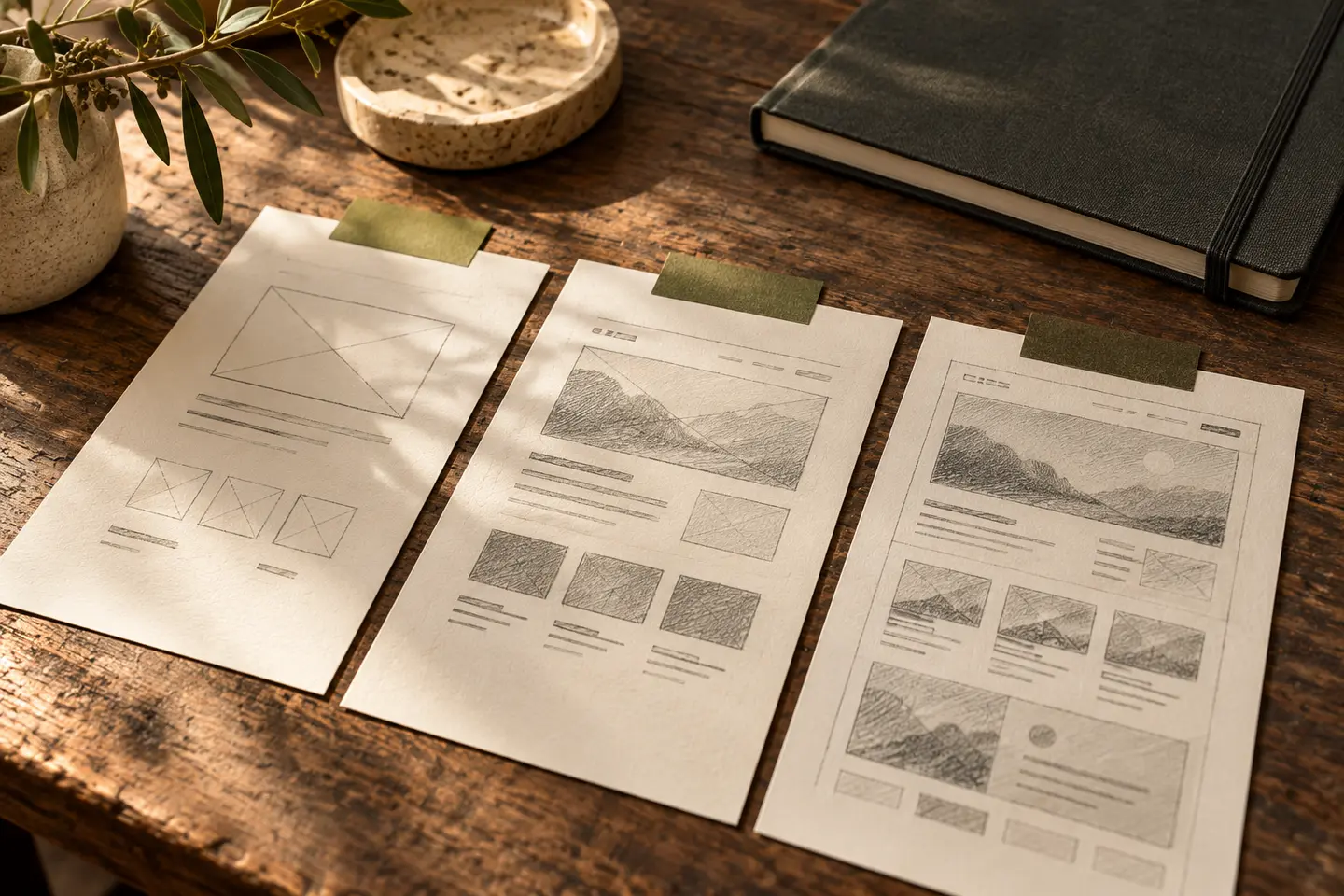
Imagine a workshop comparing proposal A, with five desktop layouts, and proposal B, with the same layouts plus mobile versions and a prototype. Comparing their totals before pricing the missing work would be misleading. Mark each scope line as included, excluded or awaiting clarification. Request revised proposals against that shared list. The goal is not to force every supplier into one method, but to understand which tangible outputs and responsibilities their different approaches actually provide.
Discuss the limits of ready made systems
Using an interface library or an existing theme does not automatically mean poor quality. Ask which elements are reused, what will be adapted for the brand and where customization stops. If fully original layouts are required, clarify what that means at component level. A hypothetical product business may benefit more from distinctive photography and product presentation than from a custom FAQ pattern. Directing effort toward meaningful differences can be a better decision than demanding that every detail be designed from scratch.
Find gaps between design and implementation
Copywriting, translation, image selection and retouching are not automatically part of design. Meetings with developers after file delivery may also be a separate responsibility. Ask who will review the working site and how deviations from approved screens will be reported. Establish responsibility for any font or image licensing costs. Small tasks left undefined can affect both timing and total expenditure after approval, especially when each participant assumes another supplier will complete them.
Phase the work without losing the core journey
A first release might prioritize service explanations and the inquiry journey, leaving advanced filters or special motion for later. Discuss how postponed features influence the initial structure. If a catalog will follow, the navigation and content model should anticipate it. Instead of removing review and handover clarity to reduce costs, prioritize optional visual features. The decision record should clearly separate the first release, later phases and excluded work so the budget remains connected to an understandable outcome.
Key takeaways
- Compare the same list of distinct layouts and deliverables.
- Ask about excluded content, licenses and implementation review.
- Preserve the essential visitor journey when reducing scope.
Frequently asked questions
Is a price per page enough?
Not on its own. Page types, interactions and content density vary. If per page pricing is used, define the template and states included in that unit so both parties understand what is being purchased.
Is choosing the cheapest proposal a mistake?
Not necessarily. An economical proposal can be suitable when it meets the actual need and has clear delivery conditions. The risk is treating missing scope as equivalent work or overlooking unspecified additional costs.
How can I obtain a specific BOCW price?
Share the website goal, existing content, language requirements, example page types and expected deliverables when requesting a proposal. This article does not present a current BOCW rate card or claim a market average.