In this article
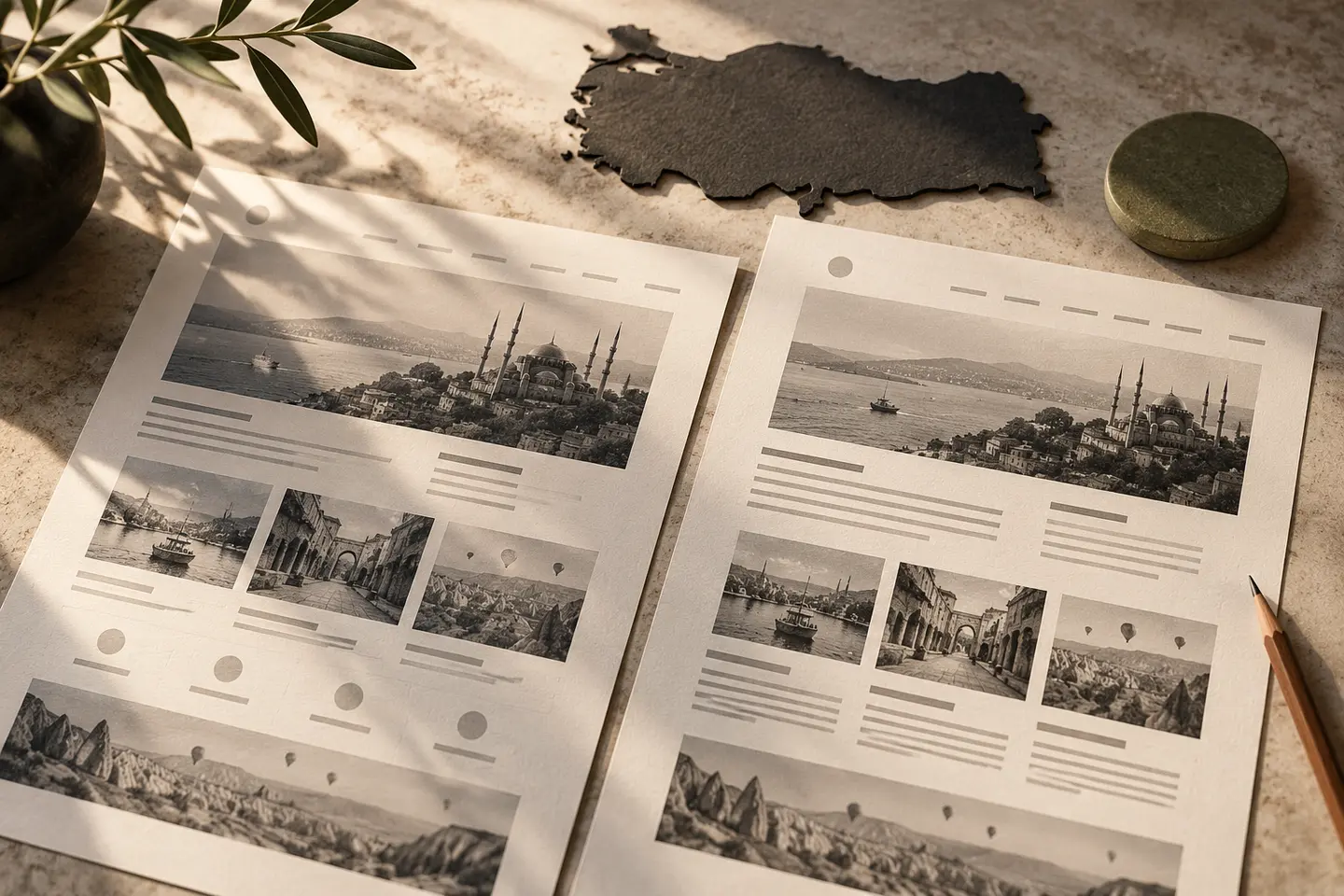
A website serving customers across Turkey may need to maintain a consistent brand while keeping regional information accurate. Multiple service points, Turkish and English content, central announcements and local details can meet within one structure. The challenge extends beyond page layouts: update ownership and translation readiness also become design concerns. This guide uses a hypothetical national business to explain how architecture and publishing responsibility can be planned together, without assuming that every city requires a separate page.
Quick answer
A website targeting Turkey should combine shared templates with clear content ownership and reliable links between equivalent language versions. Create regional pages only when they provide genuinely different information. Review Turkish and English journeys independently, and maintain addresses, service boundaries and contact details from a verified source instead of editing disconnected copies.
Separate shared identity from regional facts
Identify material that stays consistent for everyone, such as the brand approach, core service descriptions and working method. Then identify what genuinely varies by region. Addresses, responsible contacts or different delivery scopes can be maintained as structured information rather than embedded in repeated prose.
Changing a city name does not create a useful regional page. Avoid implying an office where none exists. Distinguishing service availability from a permanent branch makes a national website easier to understand and prevents the design from setting inaccurate expectations.
Treat each language as a complete experience
Do not make English an abbreviated shadow of the Turkish site. Translate headings, descriptions, image alternatives, field labels and submission messages throughout the journey. A terminology list helps different editors describe the same service consistently over time.
W3C explains how to declare the main language of a document in HTML. The visible language control should make its destination clear as well. When a translation is unavailable, communicate the available language honestly instead of suggesting a complete alternative already exists.
Connect equivalent language versions
Google’s localized versions guidance explains how hreflang identifies equivalent language alternatives. This annotation communicates relationships; it does not replace useful content or accurate translation. Developers should verify implementation against the structure and publishing method actually used by the website.
Provide a direct route between the Turkish and English versions of an article. Returning readers to the homepage whenever they switch language makes them search again. If an equivalent page is absent, use a clear explanation or appropriate content index rather than a misleading pairing.
A hypothetical publishing approval workflow
Imagine a national company preparing a service description. A service owner checks the scope, an editor refines the copy, a translation reviewer checks terminology and a publisher tracks readiness in both languages. One person can perform several roles; responsibility still needs to be clear.
A content register can include the page address, source language, review date, owner and translation status. A complex committee is unnecessary for every small correction. Distinguishing significant changes from spelling edits allows proportionate review without making routine maintenance unmanageable.
Expand according to maintenance capacity
Before creating a regional or language page, consider who will keep it accurate. Without meaningful regional information, a strong national service page may be more useful. Additional URLs do not automatically provide a clearer account of the business.
A Turkey-focused brief with BOCW can identify audiences, languages, real service locations and approval owners at the outset. Try the design and translation process on one representative page pair before expanding. This exposes gaps while they remain easy to correct, rather than reproducing an unsuitable workflow across the website.
Key takeaways
- Separate shared brand content from regional information.
- Review labels and status messages in every language.
- Assign maintenance ownership before adding another page.
Frequently asked questions
Does every city need its own page?
Only when it provides real, distinct information for visitors in that region. A clear national service explanation is preferable to repetitions that merely replace the city name.
Must Turkish and English pages be identical?
Essential promises and facts should agree. Wording can adapt naturally, but important scope or contact information should not disappear from one version.
Does hreflang guarantee better rankings?
No. It identifies language or regional alternatives. It is not a ranking promise and does not substitute for useful content, accessible pages or other technical work.