In this article
Adding a language to an Izmir web design project involves more than translating navigation labels. A hypothetical hospitality business or product company addressing several markets may need to explain arrival, measurements and communication as clearly as its introduction. This guide does not prescribe one model for every Izmir business. It helps organisations needing multilingual websites make concrete content and design decisions. Collaboration with BOCW can be arranged remotely; the presence of an Izmir office should not be assumed.
Quick answer
Define scope, update ownership and visitor tasks for each language. Hospitality pages and catalogues need understandable forms, specifications and next steps alongside translated introductions. Provide consistent information and a clear language switch. Technical annotations help explain relationships between versions, but cannot replace useful content or guarantee indexing and rankings. The content plan should reflect real service capacity.
Choose languages through communication needs
Identify languages the organisation can support with information and conversation. Presenting an offer without handling enquiries can create an expectation gap. Sustainable support matters more than a large language menu. Explain the customer support arrangement to designers. A hypothetical accommodation business may prioritise rooms, arrival and enquiries; a product brand may emphasise materials, measurements and delivery questions. Even with shared infrastructure, order should reflect those different tasks. Describe what readers need to do and which communication channel they can use before translation begins.
Establish shared facts before translating
Create an approved source so dimensions do not vary and service details do not disappear between versions. Tone can change, but specifications and contact conditions should agree. Terminology lists support consistency. Updating one page may require checking its equivalents; record review status for every language. Treat translation as continuing publishing rather than a completed launch activity. Allow subject and language review for automated translations. Fluent wording does not establish that technical or commercial information is correct, so unapproved facts still need confirmation from the organisation.
Explain hospitality enquiry outcomes
If a form requests dates and guest numbers without checking availability, it should not call the submission a confirmed reservation. Explain the enquiry. Room arrangements, included services and conditions support decisions alongside photography; use verified features. Mobile visitors need accessible arrival and contact details. Maps, addresses and directions should support one another in each language. Where possible, switching should open equivalent content instead of the home page. This preserves context and avoids requiring visitors to repeat room or service choices they already made.
Make catalogue details understandable
Translating product names may not suffice. Review measurements, option names and usage explanations while preserving approved facts. Without checkout, explain the quotation journey instead of implying immediate purchasing. In a hypothetical home-textile collection, buyers may compare sizes. Organised measurements matter alongside imagery. Codes, photographs and options should agree across languages. Explain genuine market-specific differences explicitly, rather than allowing accidental discrepancies during translation. When information is missing, obtain confirmation from its owner instead of filling gaps with assumptions that merely make the page look complete.
Test switching and editorial maintenance together
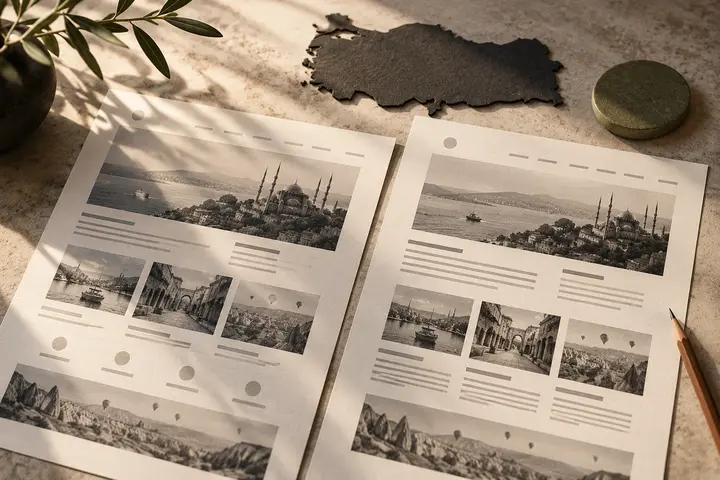
Google recommends separate URLs and appropriate annotations for language versions. These explain page relationships without promising indexing or position. Titles, descriptions and content should be coherent in each version. Test beyond the home-page button: switch from a room or product detail, inspect form labels and check completion feedback. Editors should repeat this process after updates. Multilingual publishing then becomes a sustainable practice rather than a visual launch feature. Assigning review responsibility helps keep language versions aligned as products and services change over time.
Key takeaways
- Choose languages supported by real content and communication capacity.
- Keep shared product and service facts consistent.
- Check switching through pages, forms and completion feedback.
Frequently asked questions
How does BOCW work with an Izmir business?
Its offices are in Istanbul and Sakarya. Content sharing, online reviews and delivery can be arranged remotely. Discuss on-location photography or additional services as separate scope requirements.
Should English follow Turkish word for word?
Underlying facts should remain equivalent and accurate, while writing can read naturally. Adaptation must not create conflicting specifications or service descriptions. Assign someone to check consistency across versions.
Can a language be added later?
Usually, but planning URLs and editing early makes the work clearer. Include form adaptation, language matching and publishing checks alongside translation. These tasks also need an ongoing owner.