In this article
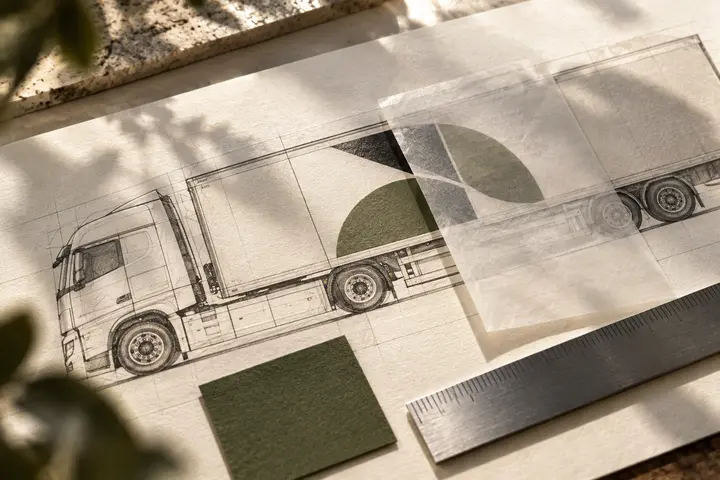
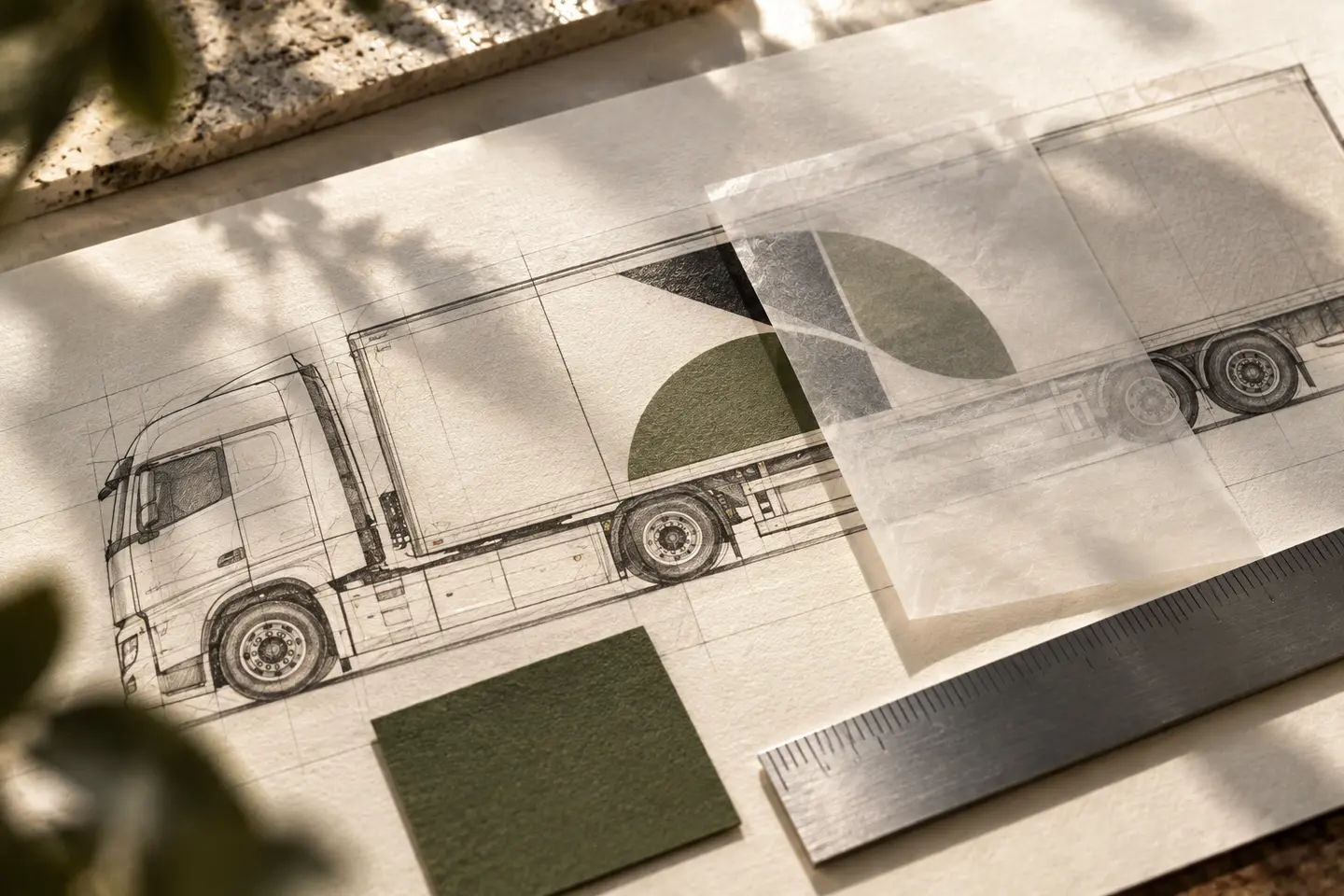
Vehicle graphics require more preparation than placing a flat poster on a car. Door gaps, curves, handles and separate body panels can interrupt a message. Moving and parked vehicles also provide different viewing conditions. This guide considers identity and information together with that physical structure. Installation limits and applicable local requirements should be checked with the installer and relevant specialists. A convincing design visual alone does not establish that an artwork is ready for production and mounting.
Quick answer
Obtain the exact vehicle model, photographs and installer template first. Arrange the logo, short service description and essential contact information on appropriate surfaces. Check that important wording is not divided awkwardly by panels. Review the design on the actual vehicle, with the installer confirming dimensions, materials and application conditions before production approval.
Collect precise vehicle information
Model year and body variations can alter the available surface. Ask for actual photographs and the installer’s measurement template. Added equipment may affect visibility as well. A similar outline found online should not be treated as the final measurement source. State which areas are included in the assignment so a partial wrap is not mistaken for a complete-vehicle application.
Prioritise the brand and a concise service message
For a hypothetical technical service vehicle, the brand and a short description of the work may matter most. Long service lists and numerous account names can make a distant reading difficult. Give different surfaces appropriate roles instead of applying equal density everywhere. Check contact details separately; a readable but incorrect number makes the communication ineffective regardless of the visual quality.
Review wording against doors and panel gaps
A critical letter or number split at a join may become difficult to read. Consider how the message appears when a door opens too. Preserve meaningful groups of information wherever practical. Review both the flat template and a visual applied to photographs. This exposes physical interruptions that can remain unnoticed when the composition is assessed only as a clean rectangular artwork.
Maintain rules across different fleet models
A fleet needs shared brand areas and information hierarchy rather than one layout forced onto every vehicle. Vans and passenger cars have different proportions. Check each model’s adaptation independently. If branch or contact information varies, identify which version belongs to which vehicle in the delivery list. This makes the artwork package easier for production staff to apply without guessing between similar files.
Check the real vehicle before installation
The design team reviews visual organisation, the brand approves wording and the installer verifies dimensions and technical suitability. Share the model list and application expectations with BOCW. Clarify whether printing and mounting are included or handled separately. Do not approve manufacturing solely from a three-dimensional presentation; the actual vehicle and installer requirements remain part of a responsible handover.
Preparing a fleet delivery matrix
A hypothetical fleet contains two service vans and a passenger car. Give each model a row containing actual photographs, application area and correct contact details. Identify the intended vehicle in file names. Preserve hierarchy without forcing identical placement. Check open-door interruptions and record the installer-approved template version. A delivery matrix supports correct production and later diagnosis of differences between approved artwork and installation, rather than leaving the supplier to identify files from a fleet presentation alone.
Key takeaways
- Use exact model details and installer templates.
- Check critical wording against physical panel gaps.
- Approve each vehicle adaptation separately.
- Check the vehicle model and contact details together so similar-looking fleet files are not interchanged during production.
Frequently asked questions
Can one design fit every vehicle?
A shared identity can remain, but layouts must respond to different body proportions and surfaces.
Who verifies production dimensions?
The installer should confirm measurements and application suitability on the actual vehicle before manufacturing.
Does vehicle branding only contain a logo?
It may also include service and contact information. The priority is a clear, readable hierarchy rather than adding every available detail.