In this article
One recycling business may be encountered as a receiving facility, collection service and seller of processed products. Before fitting those activities into a circular symbol, explain which customer encounters which company name. Supply vehicle photographs, a material-receipt document and an existing sales label at the outset. Material descriptions and corporate identity serve different purposes. Keeping changing material names outside the master signature gives the commission a concrete way to evaluate several business relationships.
Quick answer
Define how collection service, facility identity and sales products relate before commissioning a recycling company logo. Test the naming hierarchy on a vehicle, material-receipt document and product-sack label. Keep material types editable outside the signature. Request separate application templates, without treating circular or leaf-inspired shapes as proof of material properties or environmental results.
Distinguish incoming materials from products sold
The list of materials accepted by the business may differ from the products sold to customers. Keep both lists in the brief. Fixing one material name into the corporate identity can create explanations elsewhere. Show which existing names identify products and which identify the company. Ask for supporting descriptions beside the master signature; if new product naming is needed, define it as an additional part of the commission.
Explain the relationship on collection vehicles
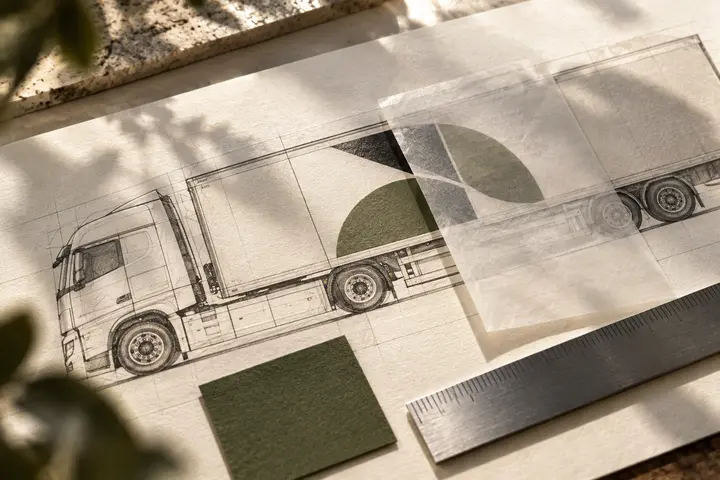
A vehicle may represent the company's own service or a service shared with another organization. The client explains why several names appear together. Review side and rear views using actual wording. Telephone numbers, service descriptions and material headings should remain changeable without redrawing the logo. Distinguish a representative vehicle image from measured wrap artwork, and do not assume competing proposals include both simply because they show similar mockups.
Establish identity on receiving documents
A material-receipt document carries company identity alongside other organizations and changing records. Preserve client-supplied fields while arranging the brand heading. A populated specimen offers a more relevant review than an almost empty page. An individual sheet filed separately should still identify its source. The business's designated owner checks content and records; the visual identity task does not independently prescribe specialist document procedures or operational decisions.
Keep environmental statements independent from the symbol
When material characteristics or environmental wording are needed, the client supplies approved content. The new identity does not substantiate those statements. Explain concepts through naming, form and application relationships rather than assigning unmeasured results to the symbol. Compare wording on a product sack with wording in a corporate presentation. Keep any existing specialist marks as separate supplied assets rather than redrawing them as part of the new company signature.
Rehearse expansion into another material family
A hypothetical company adds paper products beside its plastic range. Test the new material heading on the same sales page and sack-label system. Examine supporting names before commissioning another corporate logo for every activity. Use approved names alongside colour distinctions rather than relying exclusively on colour. Acceptance concerns the clear relationship between company identity and product information, without becoming a technical assessment of the new material itself.
Provide usable files for facility and office teams
Separate corporate artwork, vehicle reference, receiving-document heading and sales-label template. Mark the information facility staff may update. Check that a customer or partner name can change without altering the permanent identity. The proposal should identify who prepares a template when the material family grows. Retain populated accepted specimens so the next supplier can understand the decisions without guessing from isolated logo files or presentation imagery.
Key takeaways
- Describe incoming materials, sales products and the company name separately.
- Compare distinct identity roles on vehicles and receiving documents.
- Manage environmental wording as client-approved content independent from the logo.
Frequently asked questions
Is a circular-arrow symbol sufficient?
It may suggest the sector without explaining the firm's role or material properties. Base selection on the naming relationship across vehicles, receipt documents and sales labels.
Does each material need another logo?
Test changing material headings beneath one company identity first. If another brand is needed, explain the customer relationship and product family it would represent before commissioning it.
Is sack-label design included?
Only when specified. A representative label image, editable template and print-ready files for every product variant are different deliverables and should be compared separately.