In this article
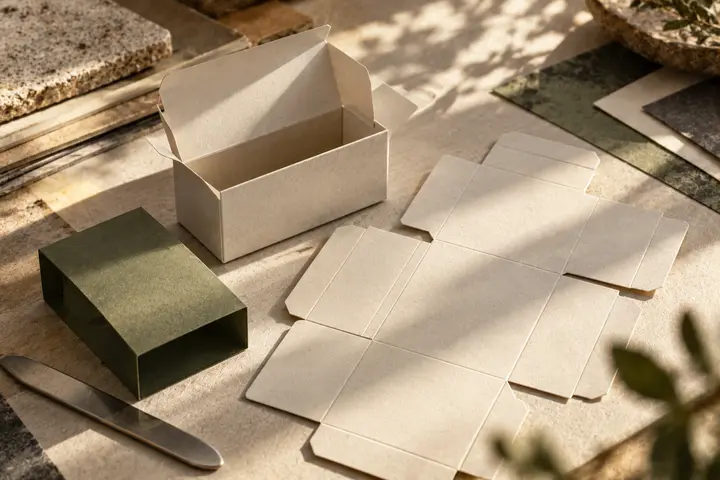
The long takeaway box is an important decision surface for a pide restaurant. A mark that sits comfortably on a broad facade can spread awkwardly across a narrow lid or disappear beneath a folded section. Show the actual packaging dimensions and how customers encounter the closed order. Separating product and order information from the permanent name also helps establish a coherent relationship between the package, menu and exterior identity.
Quick answer
Provide the long box’s dimensions, closure lines and intended reading direction for a pide-logo commission. Assess the mark on the closed box, small order label and menu heading. Use variable information fields rather than a different logo lockup for every product. State which box sizes and label templates the final application artwork will cover.
A long box does not require a stretched identity
The name need not fill the entire lid simply because the surface is horizontal. Try a central name area, compact corner mark or another considered placement. Judge readability with the box open and closed. Supply the manufacturer’s drawing; an approximate rectangle may omit important folds. List every intended size rather than giving the designer only the widest one. Otherwise the smallest order’s space problem appears late and the client ends up comparing proposals against an incomplete version of the actual application brief.
Inspect the name around the closure
Lid flaps or a closing label can cover part of the mark. Show those areas explicitly. Imagine a hypothetical business using the full name on top and a compact version on the side. Which is visible when boxes are stacked, and which identifies a single box placed before the customer? One arrangement need not serve both views. The versions should clearly belong together, without leaving staff to invent additional placements after production. Reviewing both conditions makes the acceptance decision about the package as used, rather than the lid drawing alone.
Keep product varieties in a variable label area
Where several products share one box, reserve room for their names, order numbers or other client-defined information. Separate these fields instead of adding them around the logo afterwards. Test the longest product name. Does it force the mark to shrink or interfere with the label’s closing position? The client should supply the information headings. The logo commission does not create product descriptions or redesign the ordering process; it gives the established information a readable visual structure within the selected packaging.
Assess the menu relationship beyond a product silhouette
Use the actual menu to discuss whether a boat-like or pide illustration represents the full offer. Detailed imagery may disappear on a small label, so review a restrained name-led option too. Populate menu headings at realistic lengths and see whether adding categories preserves the identity area. Confirm the spelling of any family name and descriptor. Inconsistent abbreviations across the facade, menu and box should not be left to emerge casually. The brief needs to identify the authoritative name that connects those applications.
Count sizes and supplier outputs in the quotation
One box preview does not include production artwork for every format. List required sizes, label templates and menu applications. Separate the master, compact version and supplier layouts in the final delivery. The owner verifies naming and example content while the box manufacturer reviews the supplied application drawing. Establish who prepares an adaptation when another size is introduced. Retaining the approved references gives the next order a known starting point, avoiding reconstruction based on measurements taken from an old printed box.
Key takeaways
- Do not stretch the logo merely to fill the long lid.
- Review a single closed box and a stack together.
- Put changing product and order details in defined label fields.
Frequently asked questions
Is a horizontal logo compulsory for a pide box?
No. A readable central or corner arrangement may work. Judge it through viewing direction and closure lines as well as the overall shape of the surface.
Does each box size need a different logo?
The master identity can remain while placement adapts. Agree which dimensions receive artwork and whether a compact companion is needed before comparing quotations.
Can the product name be placed inside the logo?
Frequently changing varieties are easier to manage separately. Test a label with actual content rather than rebuilding the principal identity for each kind of order.