In this article
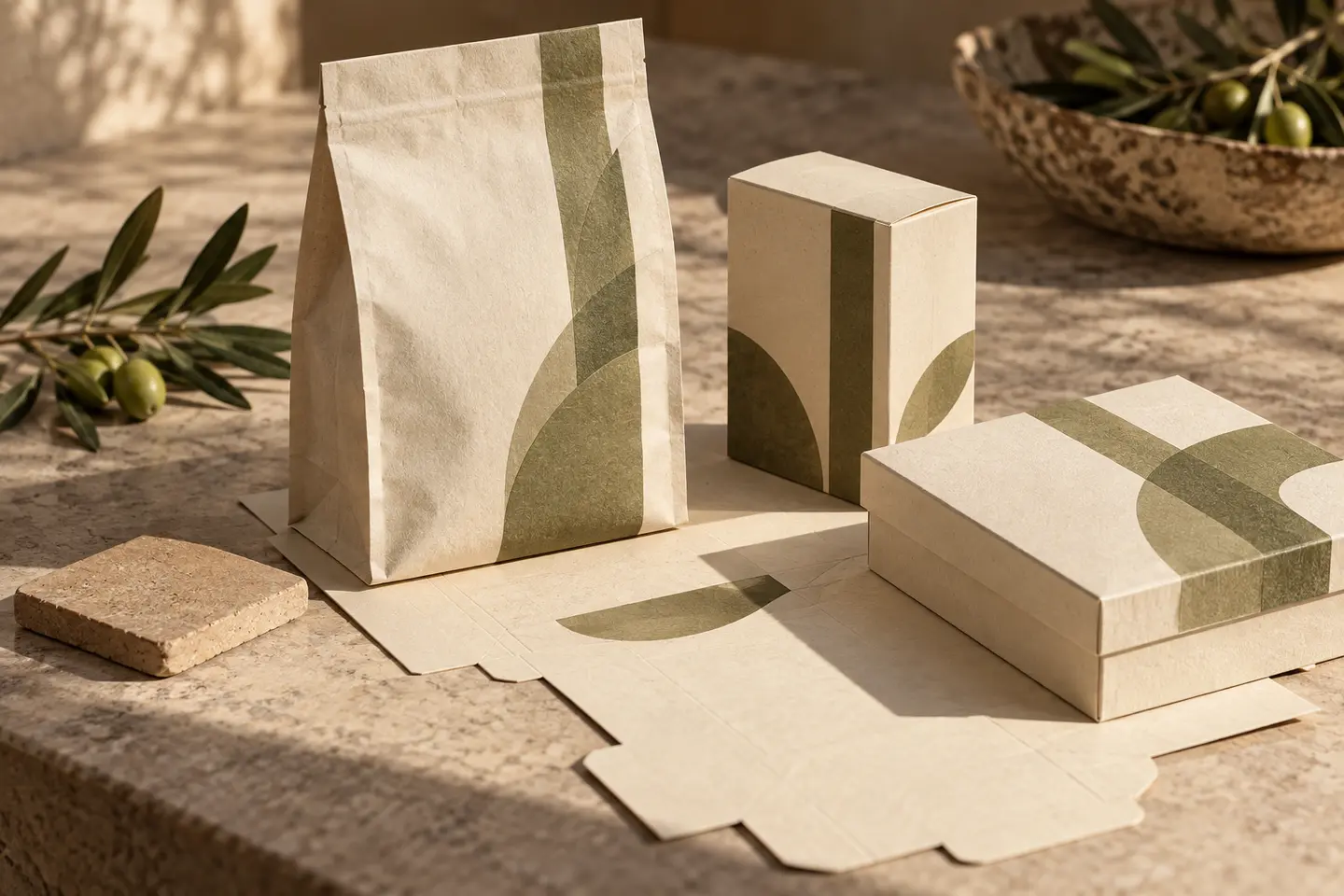
Packaging that looks related can help establish a product family, but excessive similarity can make variants difficult to distinguish. Design must address both requirements. A system that works for the first few products may struggle when the range expands. This guide considers shared brand areas, variable information and future additions. Compare the family together and each product individually: a single attractive pack does not show how shoppers will understand several similar products on a shelf or screen.
Quick answer
A packaging family can share its logo, hierarchy and image approach while varying names, colours and descriptive information. Do not depend on colour alone. Map current products and likely additions, test long names and different sizes, and explain how another variant enters the system without requiring a complete redesign of the range.
Organise the range before deciding its appearance
Put variants, sizes and packaging types into one table. Determine whether one product appears in different quantities or whether apparently similar items have different contents. The distinction guides visual classification. Mark unconfirmed products rather than guessing their final role. Colour selection cannot resolve a product structure that the business has not yet defined clearly enough for customers to understand.
Separate the shared brand from the variable product
Decide where customers should recognise the same company and where they need to identify a different item. The logo and core arrangement can provide continuity. Variant names and imagery support selection. In a hypothetical coffee range, the blend name should not be confused with the pack weight. Give those details distinct levels instead of competing for the same visual emphasis.
Support colour coding with names and hierarchy
As a range grows, colours may become closer to one another. Keep explicit variant names readable and place descriptive information consistently. Compare products as small online images too. Distinctions visible on a full-size shelf sample may disappear in a listing thumbnail. Designing for both settings helps the family remain recognisable without turning product identification into a test of colour memory.
Try a future product before approving the system
Add a hypothetical item with a longer name, different quantity or another container format. Observe which parts must change. If every addition forces a complete reconstruction, revisit the underlying structure. This exercise does not predict future sales or guarantee expansion; it tests the flexibility of the design under plausible conditions instead of assuming the current range will remain fixed indefinitely.
Manage artwork together with product information
Each variant needs its own approved content and current design file. Establish naming and folders that reduce the chance of applying one product’s information to another. When discussing work with BOCW, share the complete range rather than only the first pack. A successful handover supports accurate production as well as shared visual recognition across the family.
Stress-testing a growing product range
Start a hypothetical range with three short names, then add a long fourth name and another pack size. Can shoppers still distinguish brand, variant and quantity? Compare individual thumbnails as well as the complete family. Check whether one product loses necessary information to fit the layout. Define relationships worth preserving rather than freezing every dimension. Assess whether expansion really needs more colours. Turn the exercise into a reusable acceptance checklist that checks family recognition and correct selection whenever another product joins the range.
Key takeaways
- Map products, variants and pack sizes separately.
- Support colour with explicit names and hierarchy.
- Test a long name and a future addition.
- Review the complete family whenever a product is added, checking recognition and variant distinction together.
Frequently asked questions
Should every product look different?
Customers should recognise the family while being able to select a particular item. Shared design and clear differences must be planned together.
Can variants differ only by colour?
Colour can help, but names and information hierarchy make identification clearer when colours are similar or images are small.
Must all variants be final at the start?
Share the current range and likely expansion. Unconfirmed items can be used as test scenarios without pretending their details are approved.