In this article
A business seeking packaging design in Kocaeli may need buyers to understand an accessory kit and check its contents without confusion. Consider a hypothetical supplier offering similar boxes with different combinations of components. Some kits go to dealers; others reach customers directly. The packaging needs a recognisable brand, but it also needs to communicate which set has been selected and what belongs inside. Those tasks should shape the brief before anyone chooses a colour or prepares an attractive presentation.
Quick answer
For accessory kit packaging, bring product codes, component lists, variant names and sales channels into one brief. Maintain a shared identity while making differences explicit. Review a physical mockup with the actual contents and test dealer selection separately from delivery checks. BOCW can collaborate remotely with businesses in Kocaeli; samples and approvals can be reviewed through a shared project record.
Connect each kit name to an approved contents list
Create a separate row for each kit, including components, quantities, approved names and any product association that the business needs to communicate. A designer can organise this information but cannot establish technical compatibility on the supplier’s behalf. If the sales team uses a name while the warehouse uses a code, explain how they correspond. Bring the current list to the review rather than checking copy from memory. Similar looking kits may need more than a different photograph to remain distinguishable.
Separate dealer selection from customer unpacking
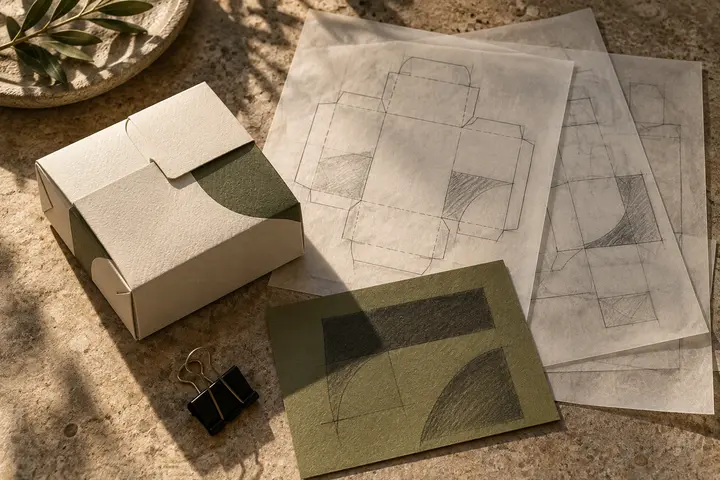
A dealer may see only the narrow side of a box, while the customer first encounters the opening flap. Review both situations with the same mockup. Decide where the kit name and code should repeat and where the detailed list belongs. The brand mark does not need to dominate every face. In the hypothetical project, staff should distinguish three adjacent kits, and the recipient should match delivered components to the list. Give each task its own review question and success criterion.
Do not make a photograph carry every explanation
Ask the product owner to confirm that each photographed or illustrated part belongs to the relevant kit. If an image is representative, agree how that is communicated. A large image can also distort expectations about scale, so any necessary dimensions should come from approved product information. Compare the convenience of sharing a photograph across several kits with the difficulty it might create during selection. The goal is to show the decisive difference clearly, not to force the entire contents list onto the front panel.
Discuss internal arrangement using real components
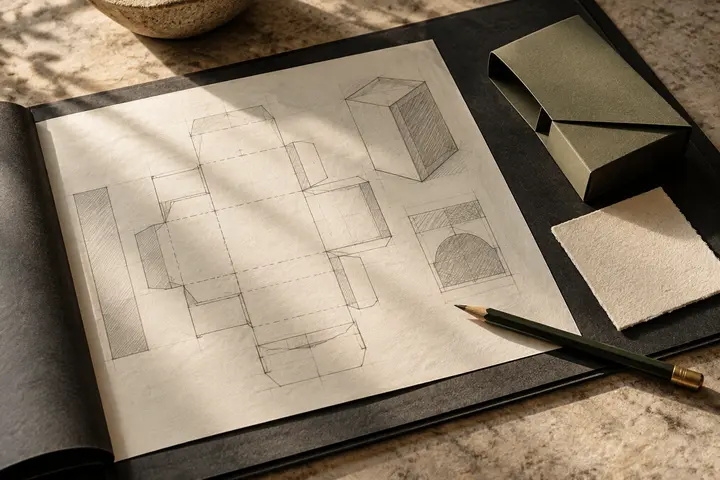
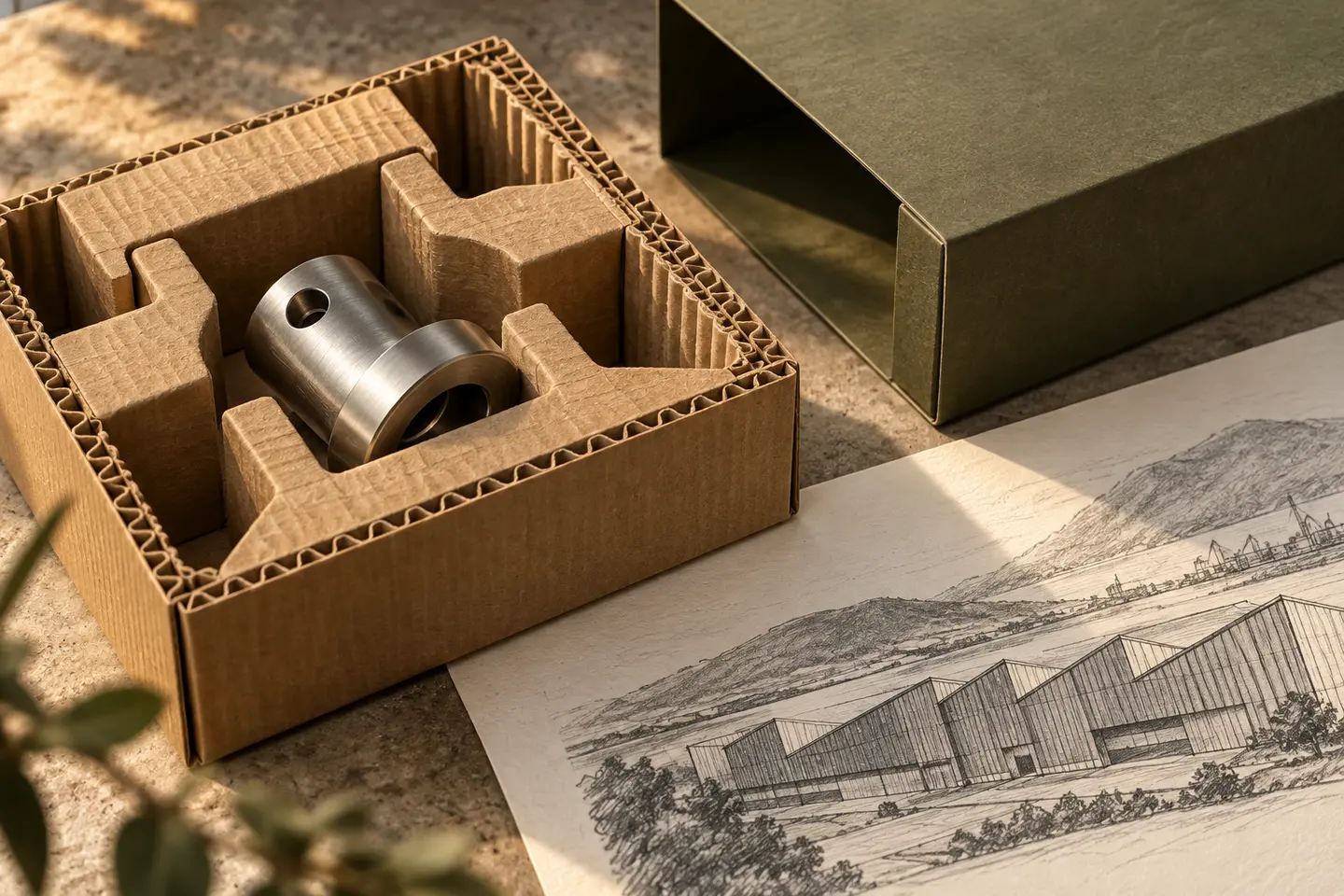
Distinguish graphic presentation from physical protection. If dividers, supports or a different box structure are needed, request recommendations and samples from the manufacturer. State whether structural services fall within the design quotation. A sample containing actual parts helps the team discuss opening order and the visibility of the checklist. Decisions about securing components, transport conditions or material performance require the appropriate production review. A visually tidy mockup is useful evidence of layout, but it does not establish that the package will perform adequately in transit.
Allow the system to accommodate another kit
Imagine adding a larger set to the original three. Test a longer name, more components and a different box size within the same visual family. Review the longest name as well as the shortest one before approving the structure. Colour can support differentiation, but retain explicit names and codes. Separate shared assets from variable fields in the handover. Ask how future additions and corrections will be scoped, so a new product does not silently become an unlimited extension of the original assignment.
Turn remote review into a recorded decision
BOCW has offices in Istanbul Levent and Sakarya, and collaboration with a Kocaeli business can be organised remotely. Specify who receives samples, who consolidates comments and which version goes to the producer. Check product codes, contents, image accuracy and file status separately at the final review. Visual approval by sales colleagues does not replace factual approval by the product owner. Name the person authorised to release the files, and withdraw earlier drafts from the working handover to reduce confusion about the approved version.
Key takeaways
- Link the kit name, product code and contents to one approved source.
- Test dealer identification and customer contents checks as separate tasks.
- Assign graphic, structural and production approvals to explicit owners.
Frequently asked questions
Does every kit need an entirely different design?
Not necessarily. A common identity can accommodate changes to names, codes, images and contents. Different dimensions or information requirements may still need separate adaptations, which should be included in the agreed scope.
Does the designer approve technical compatibility?
The designer arranges information verified by the business. Component compatibility and technical instructions belong to the relevant product owner. Keep a record of the exact content version that person approved.
Is an in-person meeting in Kocaeli essential?
No. Briefs, concepts and feedback can be exchanged remotely. Physical samples may still need a planned review process, with the resulting decisions recorded in the shared project documentation.