In this article
A menswear logo is more than the small signature inside a jacket. The same name may appear on shirt boxes, belts and shopfronts at very different scales. Explain how ready-to-wear, made-to-measure services and accessories relate before commissioning the work. Show actual products behind descriptions such as classic or sporty. The identity should connect them beyond one campaign's temporary mood, and real labels and packaging provide useful evidence for selecting it.
Quick answer
Define product groups, any tailoring service and the role of accessories. Compare the logo on a jacket label, shirt box and small accessory surface. Request consistent name treatment with separate service descriptors. Judge physical samples alongside store applications, and ask the handover to explain the shared rules connecting the different versions.
Separate ready-to-wear and personal tailoring roles
A brand may sell ready-to-wear pieces and offer a personal fitting service. Explain whether these activities have separate names. A service descriptor may be sufficient without another crest. The name sales staff use should describe the same relationship as the label. Share actual older labels if established lettering needs to remain recognisable. Explain a desire for a traditional character through those materials rather than requesting a monogram resembling another company's identity.
An inside-jacket label provides practical evidence
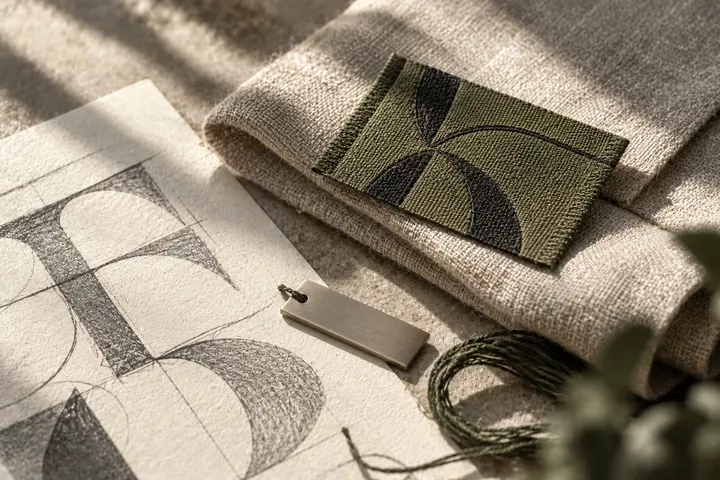
Ask the label producer for a sample using the selected method. A long name can become crowded when reproduced within a small area. Include realistic line lengths if collection or product information appears beneath it. Do not approve on an empty white strip alone: show the fabric colour and surroundings where the label will be attached. A small-use version should retain the main name's character. Record which details disappear and which version is approved for that particular application.
A hypothetical jacket, shirt and belt collection
Imagine a brand presenting jackets, shirts and belts together. The jacket may carry the full name while a belt needs a smaller mark. Demonstrate how that compact signature connects to the complete name. Arbitrarily combining initials does not establish recognition. Compare both versions on the shirt box as well. Showing all three products together helps the team assess whether the applications identify one business. Discuss what would happen if each item instead received an unrelated visual character.
Packaging decoration should not replace the identity
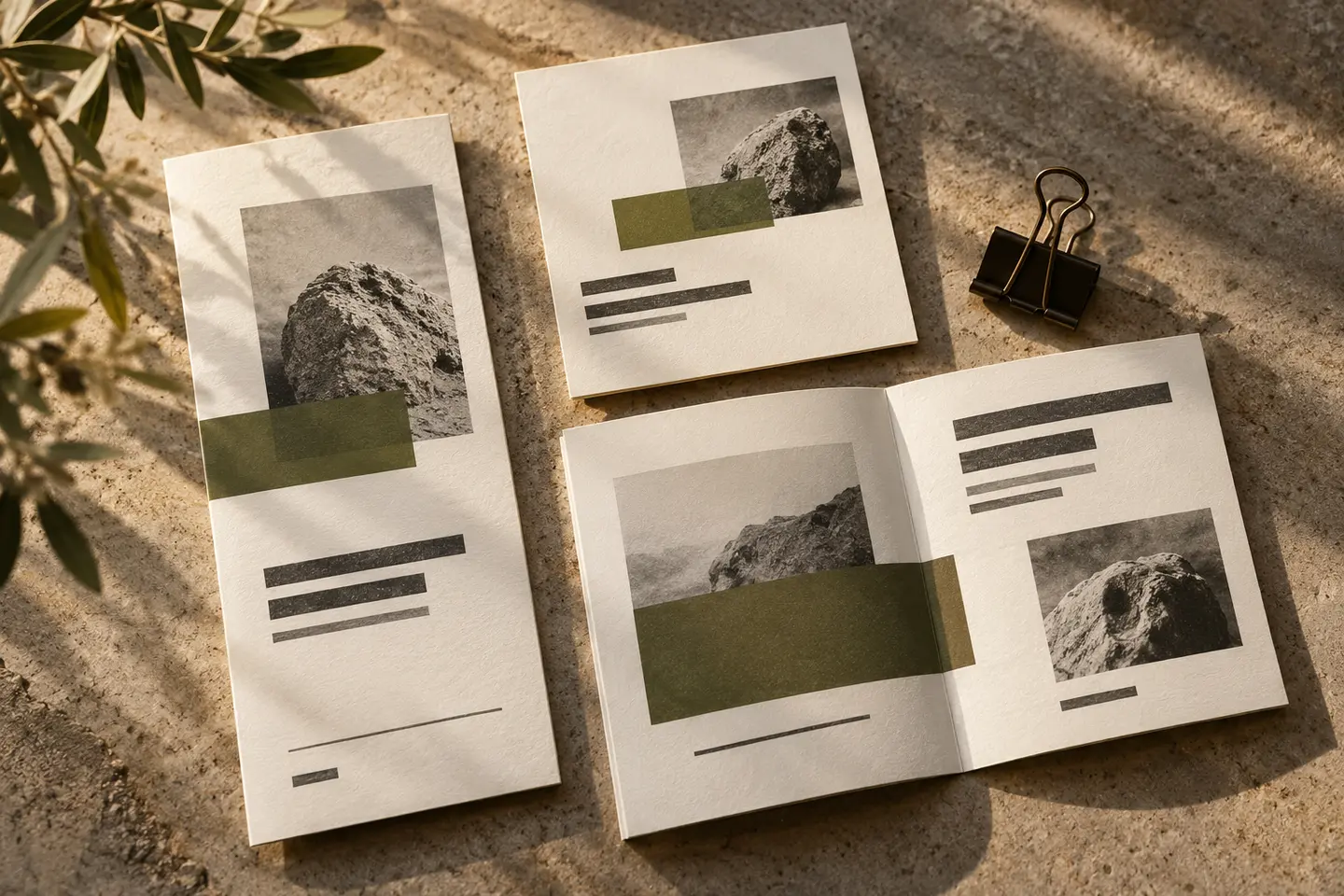
Embossing or metallic print can change a box's appearance, but the name should also remain readable in plain print. Compare candidates first on a simple box label and store header, then test special decoration on actual material. Shopfront lettering may need a related arrangement rather than being copied unchanged onto a tiny label. Show the restricted header of the online shop too. Approval based only on an elaborate packaging mockup can overlook the surfaces encountered during ordinary product use.
Explain where the monogram may appear alone
List full-name masters, any compact signature, label arrangements and selected packaging applications separately. Demonstrate where a monogram may stand alone rather than assuming it replaces the name everywhere. Scope production adaptations for belts or other accessories explicitly. Separate collection-heading templates from the master identity source. Ask who follows label samples, supplies box drawings and checks final application artwork. These responsibilities allow accessories to be added through an established arrangement instead of generating unrelated marks every time.
Key takeaways
- Define product and tailoring-service naming at the outset.
- Review small accessory signatures alongside the full name.
- Request an identity that works without elaborate packaging decoration.
Frequently asked questions
Is a monogram necessary?
No. A compact signature is useful when it serves actual small surfaces. Explain its connection to the full name and the situations where it may appear alone.
Does tailoring need a separate logo?
Try an explanatory heading beneath the main name first. Decide on another identity through the service's brand relationship and the names customers already use.
Who should approve the label sample?
The brand owner can inspect the visual result while the production team checks its application. One consolidated approval keeps the accepted version clear.