In this article
A language school mark can become crowded when it tries to illustrate every language taught. Flags, speech bubbles and a globe may leave little room for the school’s own name. Start the commission with the name people should recognise rather than the number of languages offered. Then inspect course information, student documents and online class profiles. This approach gives new languages and programmes a place in the communication system without automatically requiring another version of the permanent identity.
Quick answer
Supply separate lists of approved school names, multilingual spellings and programme descriptions. Test directions in two language announcements and beside a long course title. Specify the number of multilingual arrangements, document templates and profile assets in the quotation. Language, level and lesson format should change around a stable identifier, using educational wording approved by the school.
Clarify translation versus a second name
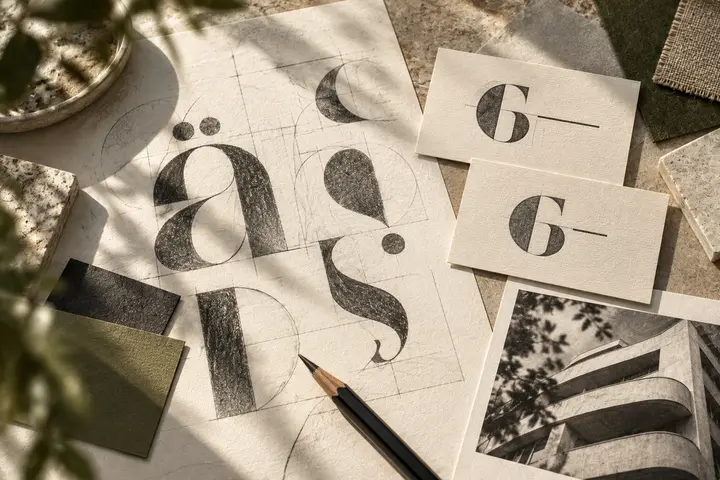
Does English communication retain the same brand name or use another approved institutional name? Answer before drawing begins. A translation, shorthand and programme descriptor perform different jobs. Tell the designer which wording is primary. On a hypothetical bilingual brochure, test the same hierarchy without shrinking the longer translation excessively. The school should supply correct spelling for Turkish characters and any additional scripts. Evaluate typefaces with the actual required text rather than relying on a short Latin alphabet sample that avoids the difficult letters.
Make language and level variable information
Beginner classes, conversation workshops and adult programmes may change over time. Fixing those labels inside the symbol creates unnecessary artwork updates. Demonstrate separate fields for school name, language, level and timetable on a course card. The institution supplies its own level wording instead of expecting the designer to invent it. Compare a short language name with a longer programme description. Acceptance depends on students distinguishing the programme while recognising that all options come from the same school, even when the supporting descriptions occupy different amounts of space.
Ask what a flag is meant to communicate
Representing a language through one national symbol can narrow the intended message. If a flag, speech bubble or letter device is proposed, explain its specific job. Compare directions that do not need another element whenever the school adds a language. Show how the school addresses children, adults or corporate groups through representative materials. The main identifier may remain unchanged across these conversations, while supporting colour and photography vary separately. This turns a debate about decorative symbols into a discussion about the communication the school actually needs.
Compare student documents with online profiles
A participation document may carry a student name, programme heading and approved institutional text. Leave usable space for these around the mark. Designing the page does not determine the professional or institutional meaning of its wording; the school supplies that content. An online class profile offers a much smaller area. Review the same direction beside a long document title and inside a circular profile crop. If a compact version is necessary, show its connection with the full name rather than introducing an unexplained abbreviation that only internal staff understand.
Create another course card during handover
Ask enrolment staff to enter a new language, a different level and a long programme heading into the delivered template. Resolve changing fonts or crowded spacing before closing the work. Name multilingual arrangements clearly and identify the primary version. Include vector sources, profile images, a monochrome document version and course card examples. Record who supplies later translation updates and which editable file should be used for a new spelling. This makes future course information easier to produce without allowing small wording changes to fragment the school’s visual identity.
Key takeaways
- Distinguish the institution name, translation and programme descriptor.
- Keep language and level outside the fixed logo.
- Test actual multilingual text before approving a direction.
Frequently asked questions
Does each language need a different coloured logo?
No. Course cards can distinguish languages through supporting colour or wording. Decide how much remains fixed by reviewing real programme examples together.
Is certificate design part of the commission?
It can be included when requested explicitly. Page layout, editable fields and school supplied wording should be named separately so the document work is clear.
Must the English name always sit below the Turkish one?
That depends on the naming policy. List where names appear together or separately rather than imposing the same two line arrangement on every surface.