In this article
Commissioning a jeweller's identity does not mean placing a new manufacturer mark on every product. The store may sell several brands, curate its own selection or provide different services. Explain the store name's role within those relationships. A prominent sign should connect with the smaller identity on boxes and customer documents. Bring actual packaging, display cards and paperwork alongside shopfront photographs, making the distinction between retail identity and product identity visible from the start.
Quick answer
Define the relationship between the jewellery store and the product brands it sells. Compare the name on frontage, small boxes, display cards and customer documents. Approval should establish readability without special decoration and a clear hierarchy beside other brands. Keep store identity and approved product-information areas separate in the handover.
The retail identity is not the product manufacturer's mark
Separate own-name products, other brands and store services in the brief. Clients should supply current files for other organisations' identities. Discuss appropriate prominence rather than automatically placing the store name above every product brand. A family-named business may also need an agreed form for different branches or generations. The designer cannot infer this structure from a crown or gemstone illustration. Actual cards and boxes provide stronger evidence of which names appear together and what relationship customers should understand.
Test signage on the real frontage
The sign surface, surrounding lettering and entrance arrangement form part of the application. Do not judge the mark only as glowing letters against an empty dark background. Show daytime placement on an actual frontage photograph. If a long name becomes crowded on one line, compare a related two-line arrangement. Specify any supplier example needed for fabricated letters or panels. The same naming relationship should remain understandable on a small document header; signage should not appear to introduce another business name.
A hypothetical store selling three manufacturers
Imagine a shop selling products from three makers. The outer carrier box can identify the retailer while the product card retains the relevant manufacturer's name. Identical dimensions do not automatically explain the relationship. Show the box and card together to establish which name identifies the seller and which identifies the product brand. The store logo does not create a new statement about product quality or value in this example. Relevant product information should come from client-approved documents.
Inspect a small box without decorative treatment
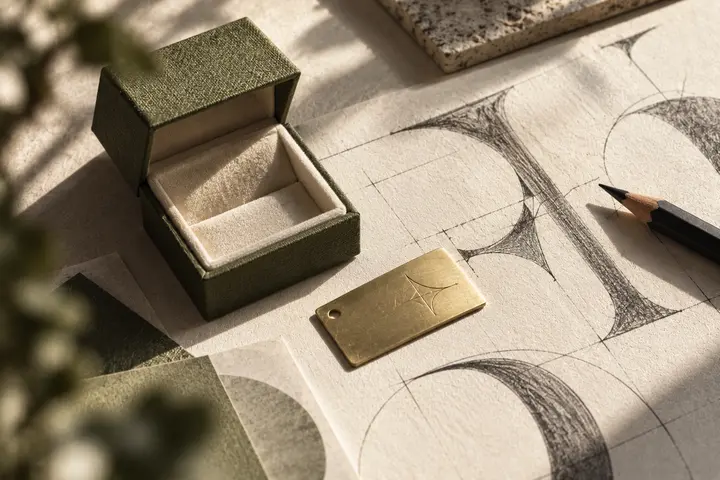
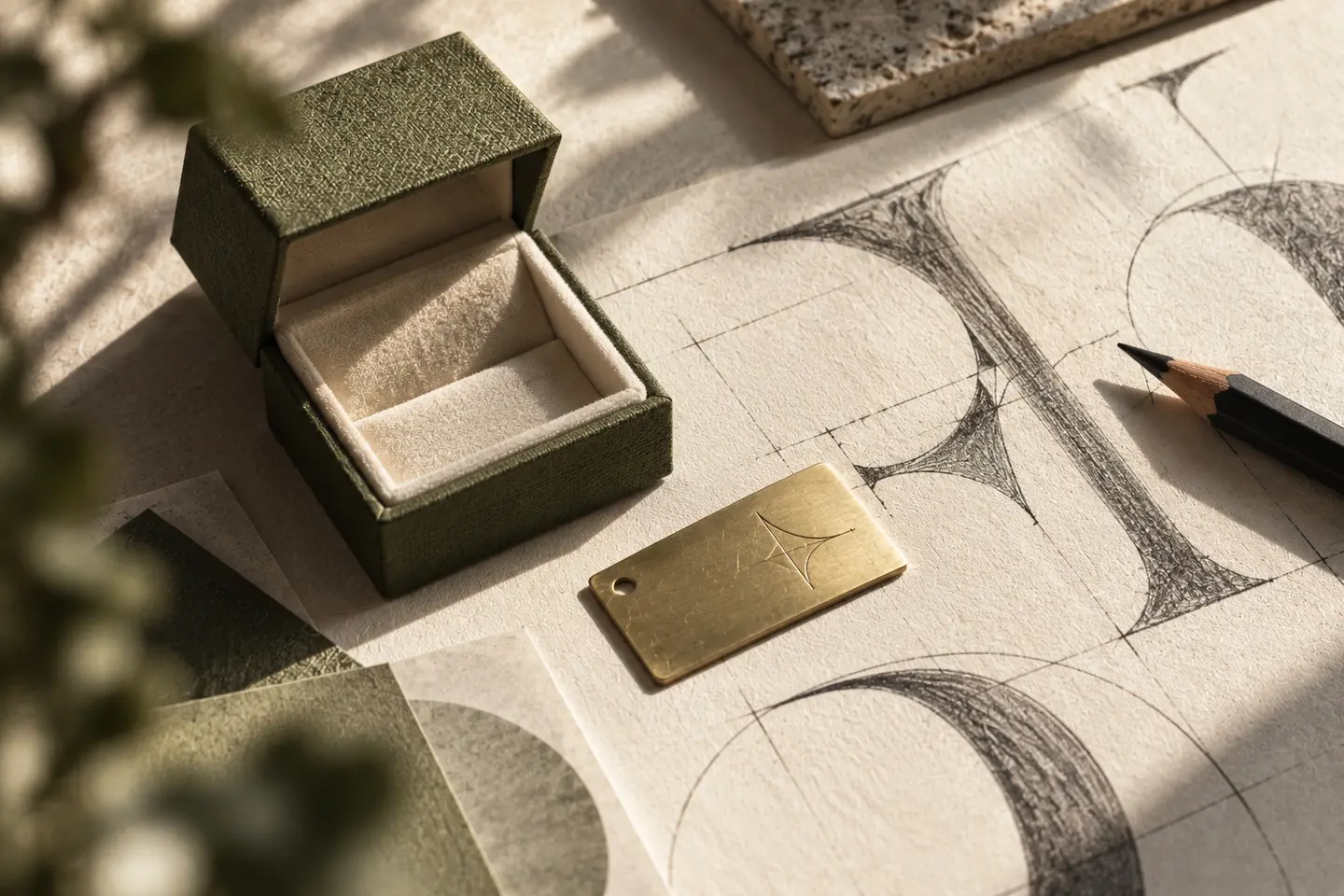
Metallic print, embossing or other finishing can change the appearance of packaging. The underlying name should remain distinguishable without those processes. Compare the lid at actual size with a plain single-colour treatment. Inspect fine lettering and spaces inside any emblem. Include the internal card and customer document where relevant. A pale tone used successfully on one stock may disappear on another. Base approval on which name is readable in each example as well as the desired visual character.
Deliver documents and packaging separately
List the store masters, frontage arrangement, box artwork, display card and document header individually. Preparing every product description or service record is a different content task. State which templates are blank and which applications are complete. Show changing fields if staff insert prices or product names. Keep other brands' files separate from the store's identity sources. Record who approves supplier adaptations for decoration and which physical sample governs the final artwork, making the handover usable beyond the initial presentation.
Key takeaways
- Distinguish store naming from product-manufacturer identities.
- Review frontage with actual surroundings and neighbouring lettering.
- Request a small-box version that works without decoration.
Frequently asked questions
Does a jeweller's logo need a crown or gemstone?
No. Decide through the store's own name and applications. Inspect whether any familiar symbol remains distinct on the small box.
Does the identity establish product quality or value?
No. Product information should come from approved client material and occupy separate fields rather than being implied through the logo.
Are other brands' logos included in the handover?
Client-supplied files can support required combinations. Redrawing those identities or determining their usage conditions are separate matters.