In this article
A heavy equipment company may sell, rent or present its own branded products. Its identity appears beside different information in each role. Explain that role before selecting a machine silhouette. Where recognised manufacturer marks share a surface with the business name, distinguish their purposes. Supply equipment photographs, proposals and existing fleet labels. Large machines do not mean every application will be large: a small working label also belongs in the review.
Quick answer
Brief the heavy equipment identity around the company's manufacturer, seller or rental role. Compare one candidate on a machine body, populated proposal and small fleet label. Keep references, model names and technical markings outside the permanent identity. Count exterior arrangements, catalogue headings and editable company labels in the scope, with specialist information supplied and approved by the business.
Distinguish the business role from the manufacturer
A company renting another maker's equipment may use its identity to indicate the service provider. A business selling its own branded machines has another source relationship. Show the two situations separately where relevant. The client supplies third-party artwork. Explain where the names appear instead of combining them into one emblem. If several equipment categories are offered, consider whether a drawing of one excavator can represent the full business.
Keep surrounding information visible in body reviews
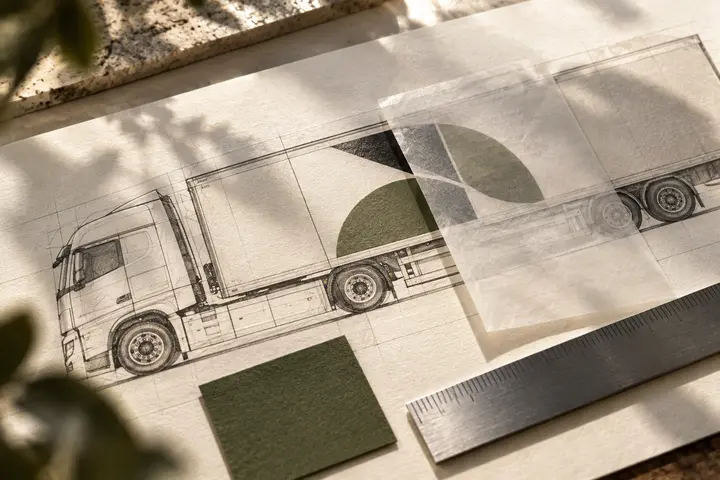
The responsible team should identify the available identity area in a machine photograph. Retain model lettering, records and other existing marks in the review rather than deleting them to create an empty surface. The graphic identity does not replace these elements. Supply dimensions and viewing angles, then inspect where the name remains uninterrupted. Include a second, smaller application so that approval is not based entirely on the largest available body panel.
Separate fleet references from company naming
If the business uses its own tracking label, treat the reference as changing information. A logo occupying the entire tag can make that number difficult to find. Use actual dimensions and the longest reference format. Imagine staff listing two similar machines: can their different fields be located while the company signature stays consistent? The designer arranges the business's existing information rather than inventing a new tracking process or technical identification system.
Test category headings within realistic proposals
The proposal cover identifies the business while internal tables carry product or service descriptions. Try a quieter header if an oversized identity compresses the table. Use a long equipment category and customer name. Technical descriptions and operating information come from approved business content. Count catalogue pages separately if required. The identity commission concerns visual application rather than writing the entire range description or evaluating the operation of machinery.
Organise delivery around the teams using it
A field application partner and proposal writer need different assets. List body views, label examples and document formats in the quotation. During acceptance, enter another fleet reference and change a long customer name. Check that the signature stays positioned and text remains readable. Name editable sources separately from ready-to-use images. The resulting package should demonstrate how another equipment group joins the identity without relying entirely on verbal explanations at the handover meeting.
Key takeaways
- Separate manufacturer, seller and rental roles in the brief.
- Retain surrounding markings when reviewing actual machine photographs.
- Test fleet references in editable fields outside the permanent mark.
Frequently asked questions
Must the logo illustrate an excavator?
One equipment shape may become restrictive across several categories. Consider alternatives that carry the business name through the full portfolio.
Does a fleet label replace other machine markings?
No. This discussion concerns the company's own identity and reference area. The responsible team determines how other product information is retained.
Does logo delivery include catalogue pages?
Specify pages and product quantities separately. Delivering identity assets and arranging the entire product catalogue are different tasks.