In this article
Selecting a dairy logo through one milk bottle leaves important questions unanswered. The same name may also appear on yoghurt tubs, cheese packs and dispatch cartons. Each container has a different surface, opening arrangement and shelf presentation. Start the commission with existing products and genuinely planned additions. The logo should connect the family without competing with product names. Working with at least two different container formats makes that relationship easier to assess.
Quick answer
Commission a dairy logo with the whole product family in view. Compare how people locate the same brand on bottle labels, yoghurt lids and cheese packs. Separate brand, variety and product descriptions. Approval should establish consistency across formats rather than favouring one attractive package, with family rules explained alongside the delivered artwork.
Draw the boundaries of the product family
Explain which milk, yoghurt, cheese and other products share the name. Identify sub-ranges and their relationship to the parent brand. Separate emblems may differentiate products initially while fragmenting recognition of the family. In a hypothetical range containing everyday products and a special selection, compare naming hierarchies first. The brand team should identify which name customers should locate on every item. Product descriptions and claims should come from the client's approved content rather than being invented to suit a visual concept.
Lids and side panels are read differently
A yoghurt tub may be seen from above, a bottle from the side and a cheese pack according to its shelf arrangement. Showing every container only from the front conceals these differences. Share photographs of actual containers and discuss the views in which the name should lead. Compare alternative arrangements if a long name becomes crowded on a small lid. Also consider whether opening the lid removes the only identity, and whether a permanent side-panel signature is needed.
A hypothetical move from yoghurt to cheese
Imagine a brand launching cheese after starting with yoghurt. If a tub-shaped frame is inseparable from the master logo, it may create an unnecessary association on the cheese pack. Present both products together to distinguish the permanent signature from a packaging frame. Product imagery can change while name treatment and the logic of the brand area remain connected. Comparing a long cheese variety name with a short yoghurt name reveals how much flexibility the actual portfolio needs.
Use a chilled-shelf example in the approval meeting
Review alternatives on plain backgrounds and in a representative chilled-shelf arrangement. This examines visual distinctions rather than predicting sales. Are brand name, product name and pack-size information confused? Does fine detail remain visible on a pale package? Do two neighbouring family members accidentally appear to be the same variety? Give feedback against these questions. A vote on favourite colours does not explain whether the arrangement works across the portfolio or where an adjustment is needed.
Separate family rules from completed packaging
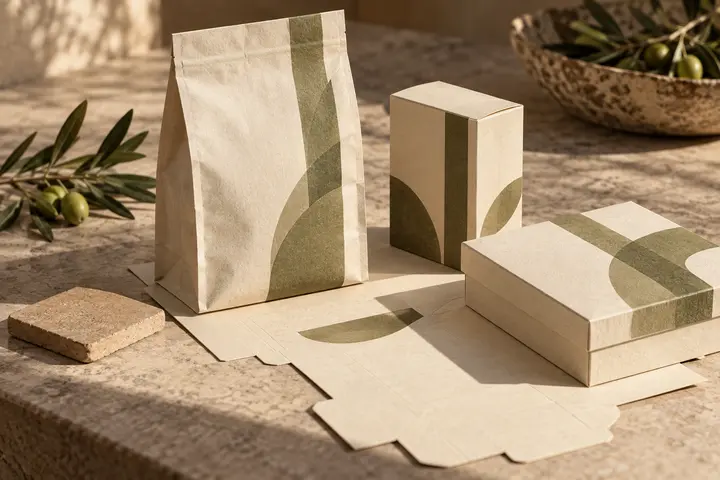
Alongside logo versions, request a family sheet explaining brand zones, product-name areas and imagery. List production artwork for each container format separately. Establish who inserts new information, supplies the container manufacturer's drawing and follows proof corrections. If existing packs remain in use temporarily, agree where the new signature appears first. A template does not automatically include unlimited packaging adaptations; the handover should explain which changes staff can make and which need further design work.
Key takeaways
- Review at least two different container formats together.
- Separate the permanent brand from variety names and decorative frames.
- List family rules and finished packs as distinct deliverables.
Frequently asked questions
Is a milk drop or cow symbol necessary?
No. Assess any symbol through its contribution to the entire range. Naming hierarchy and container legibility provide more concrete selection criteria than familiarity alone.
Is placing the logo only on the lid sufficient?
That depends on display arrangements. Compare top and side views, including what happens to brand visibility after the lid has been opened.
Can new products use the same packaging template?
Similar containers may share rules. New shapes, longer variety names or different information areas can require additional adaptation; define that through product examples.