In this article
When commissioning web design, collecting links to attractive websites can feel like a useful first step. References help, but they do not replace a brief. Without knowing whose questions the site must answer, which content exists and who will approve decisions, the discussion can become a sequence of personal preferences. This guide explains what a business can prepare before hiring a design team and which outputs to review along the way. Its focus is the design commission; implementation, technical configuration and launch should be identified separately in the scope.
Quick answer
To commission web design, prepare a brief covering business goals, intended visitors, page types, brand assets and content responsibilities. Agree the scope of wireframes, visual direction, prototypes and handover. Review decisions using realistic content and visitor tasks. Establish at the outset whether the supplier will deliver design files, a functioning website or both, and what each delivery includes.
Answer five useful questions in the brief
What do you offer, whom is it for, why should visitors consider you, what should they do and what information do they need first? These answers can be more useful than a lengthy corporate presentation. A hypothetical furniture workshop selling finished products needs a different journey from one handling bespoke commissions. If both matter, explain their priority. Describe the commercial process plainly rather than expecting the designer to infer the business model from photographs and competitor links.
Explain why each reference is relevant
Instead of copying an entire website, identify the feature that helps. One reference might offer clear service explanations, another effective project photography and another simple navigation. Explain dislikes with the same precision. Elaborate motion may look attractive but conflict with your content rhythm. Positive and negative notes allow a team to connect taste with purpose. Discuss how the final direction will establish its own identity so the new experience is not confused with another organization’s site.
Provide one realistic content sample
Even if all copy is unfinished, supply a real service description, a project story and accurate contact information. The layouts will then rely less on imaginary text lengths. Image orientation, long headings and downloadable documents become visible early. Make an inventory of missing content and assign an owner to each item. If the design team should write copy or produce imagery, state that as a deliverable. Unspoken assumptions about content can otherwise become delays when screens are ready for approval.
Review structure before visual direction
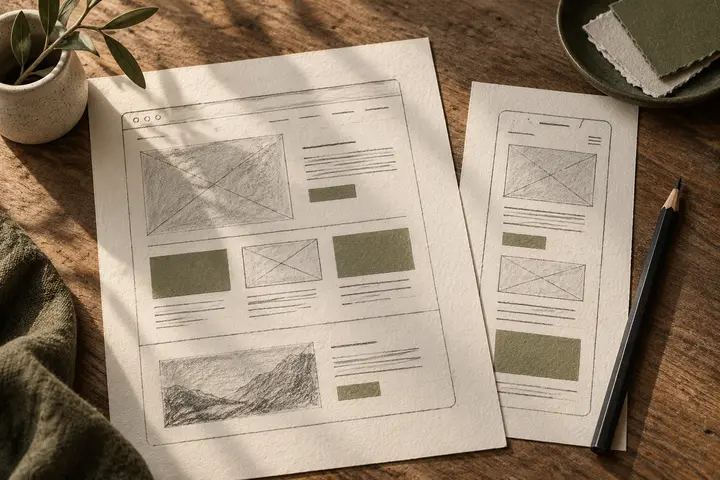
Start by checking the order of sections rather than colors and photographs. Can visitors understand the service, judge suitability and see a sensible next step? Agreeing the structure first makes visual feedback more focused. State which decisions are being reviewed at each stage instead of reopening every detail in every presentation. In the hypothetical workshop example, removing a bespoke production explanation may simplify the composition, but the team should first consider what useful information visitors would lose.
Specify what the prototype will demonstrate
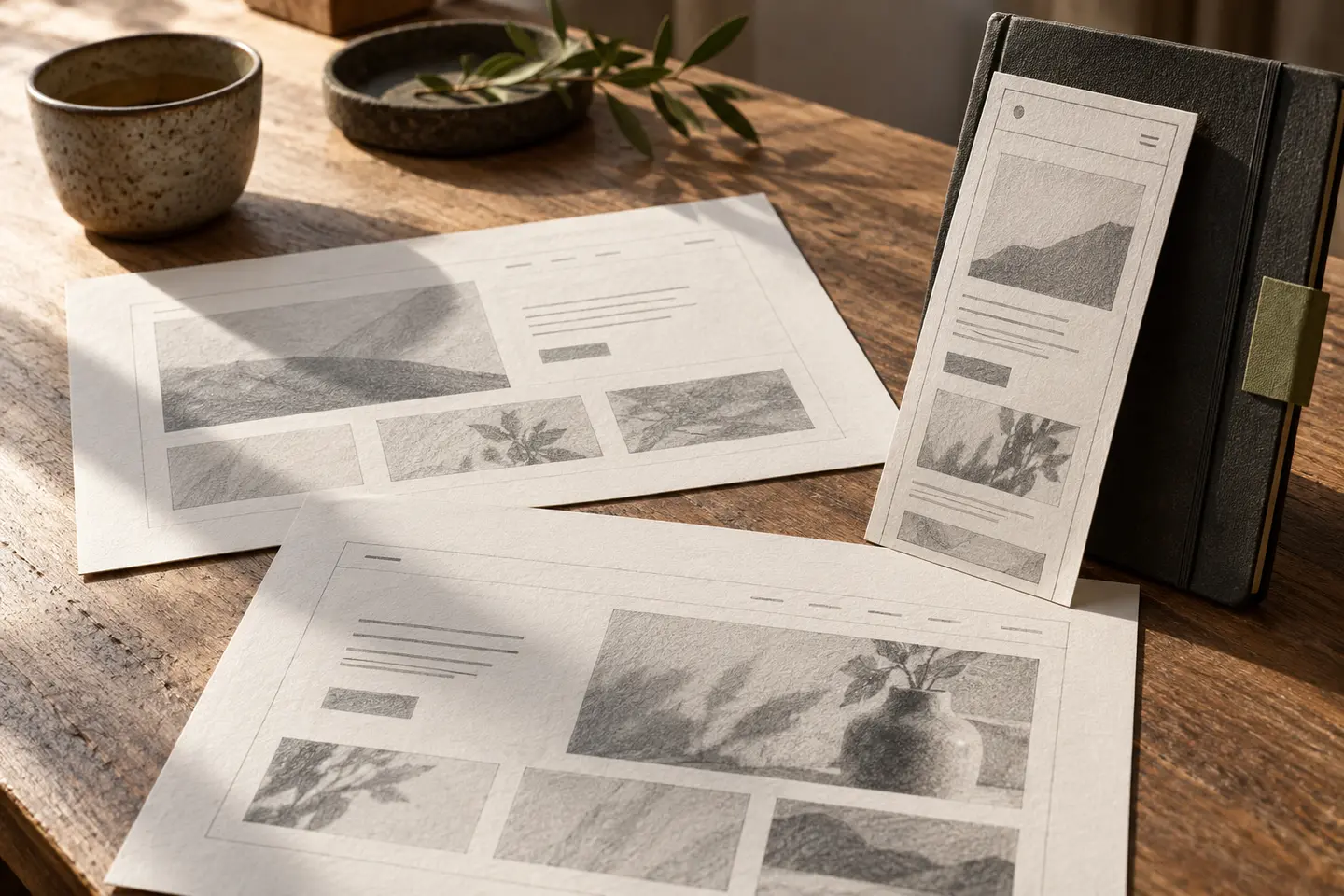
A clickable prototype can show destinations and the sequence of a journey. It does not necessarily include real form submissions or a functioning data system. Make the represented behavior explicit. A quotation form might demonstrate service selection and a confirmation screen while the notification service remains a development task. Approval of the design should not be mistaken for acceptance of an unbuilt integration. This distinction gives both the client and the implementation team a clearer understanding of what has been tested.
Review handover from the recipient’s perspective
What will a developer or future content editor need to understand? Components, spacing relationships, image ratios and interaction states should be organized and named clearly. Clarify file access, editability and the source of supplied assets. A handover meeting can demonstrate how a representative page should be extended. Record unresolved decisions as well as completed items; sending a file does not automatically resolve a missing instruction. The commission should produce a usable reference for implementation, not only an impressive presentation.
Key takeaways
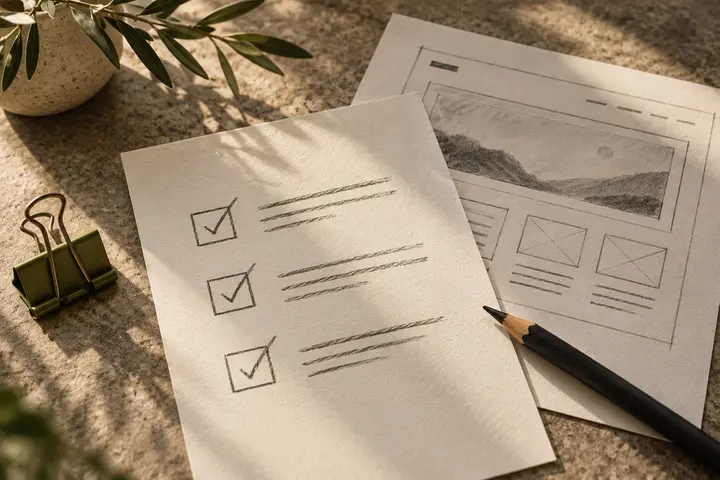
- Connect business objectives with visitor tasks in the brief.
- Use realistic content samples when reviewing layouts.
- Separate prototype behavior from functioning system delivery.
Frequently asked questions
Is showing a competitor website enough?
No. It can be a useful reference, but it does not explain your goals or content needs. Identify what you like, why it matters and which problem that feature should solve for your own visitors.
Can design start before all copy is ready?
It can begin with an agreed content structure and representative real examples. Plan who will supply final material, when it will arrive and how substantial changes could affect approved layouts.
Who should approve the work?
Choose a person with defined decision authority who understands business priorities and can gather relevant team input. A single coordinated response helps the design team act on consistent feedback rather than conflicting instructions.