In this article
Putting two brands into one design involves more than giving their logos equal widths. Readers need to understand who provides the product, who supports it and what the relationship means. Co-branding makes that relationship visible through design and language. Unless roles and permissions are clear at the start, even a visually balanced arrangement can imply an inaccurate partnership, endorsement or ownership relationship.
Quick answer
Co-branding represents two or more brands within a defined offer, product or communication. Establish the relationship and permitted uses first, then compare approved assets and each partner’s rules. Hierarchy, spacing and wording should accurately reflect the arrangement. The relevant brand owners should approve the final applications, because a visually convenient composition does not itself establish permission to use a partner’s identity.
Write down the relationship and scope
A joint product, event sponsorship and technology integration are different relationships. Identify the lead provider and supporting roles in the brief. Record channels, languages and the intended usage period. Distinguish the permitted announcement date from the production deadline. This information informs headline wording, logo order and disclosure language. If the relationship itself is unclear, obtain clarification from the authorised parties rather than allowing the design to imply assumptions about legal status or ownership.
Review both sets of brand rules
Request current assets and guidance from both partners. Minimum sizes, clear space, backgrounds and colour restrictions may differ. Do not recolour or redraw one identity merely to make it resemble the other. Availability for download does not establish unrestricted permission, and some uses require specific approval. Where rules conflict, propose alternative arrangements and seek a shared decision. Your own organisation’s spacing unit cannot automatically replace the other brand’s requirements.
Balance visual weight with role hierarchy
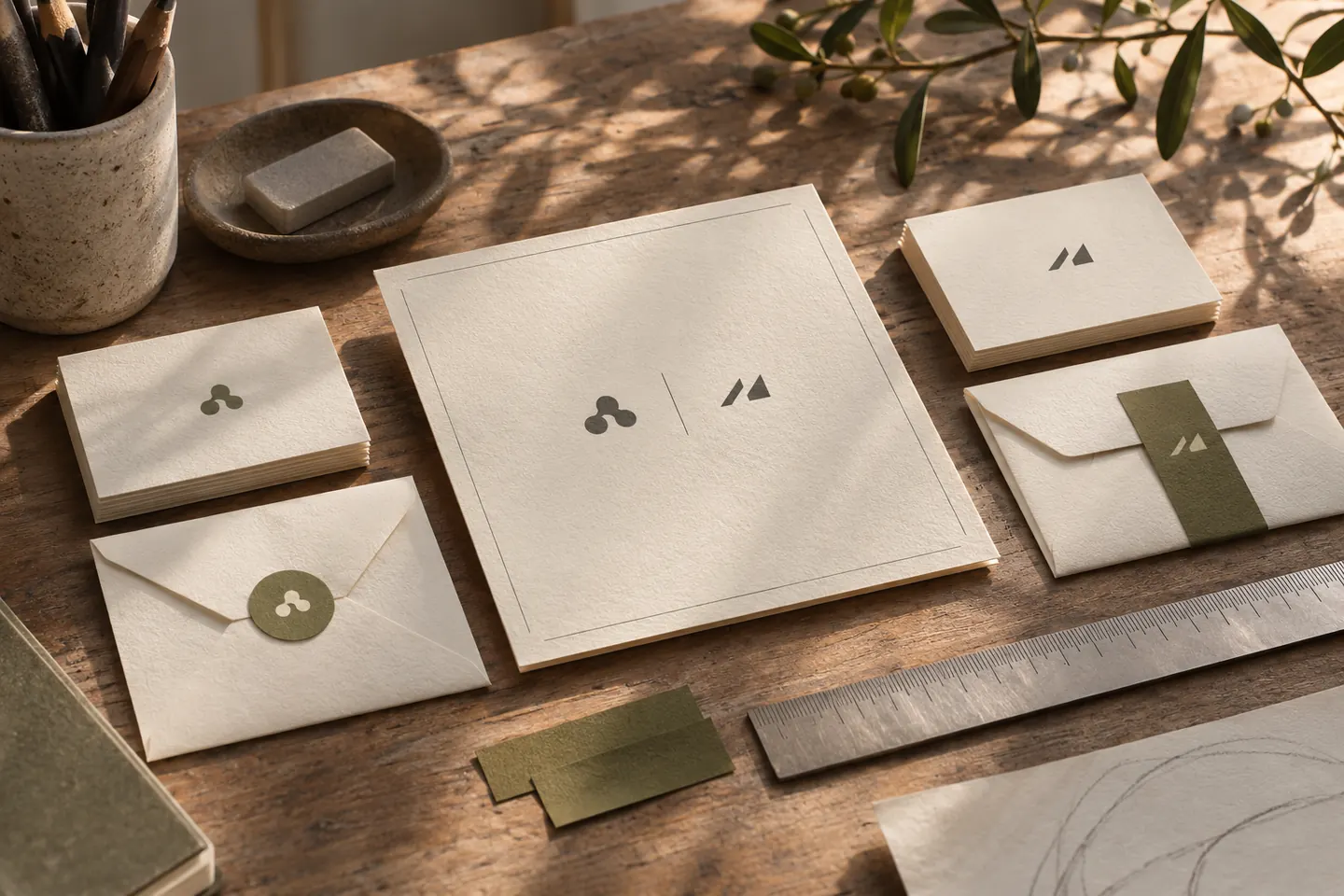
Equal widths do not necessarily create equal perceived size. Compare a long wordmark and a compact symbol at their intended viewing size. Visual balance should not erase a meaningful difference between lead provider and sponsor. Prepare horizontal and vertical arrangements separately. Any divider must respect both clear-space requirements. Avoid presenting the combination as a permanent new identity unless that is explicitly part of the agreement; a temporary campaign lockup and a new joint brand serve different purposes.
Test small screens and production variants
A shared signature that works on a desktop poster may fail in a mobile header. Narrow layouts may need an approved vertical arrangement, separate line or explanatory wording. Do not force two complete logos into a single tiny profile icon. For monochrome print, use variants permitted by both partners. Relationship labels, notes and links must remain readable too. Name exports by channel, language and revision, and supply approved combinations rather than asking every producer to reconstruct the arrangement independently.
Plan approval and the end of use
For a joint webinar, the registration page, invitation email and presentation cover could be reviewed as one coordinated package. Record approvers and the accepted revisions. Approval of one poster should not be treated as unlimited approval for every future channel. Decide what happens when the campaign ends: which pages remain as historical records, which links stay active and where partner marks must be removed. Managing the end of use keeps the relationship accurate after production is complete.
Key takeaways
- Clarify the relationship and permitted uses before designing.
- Consider both brand systems and perceived visual weight.
- Record channel-specific approval and end-of-use decisions.
Frequently asked questions
Must the logos be the same size?
No. Partner roles and both sets of guidelines determine the hierarchy. Even with equal partners, perceived visual weight and readability may require a different approach from simply matching geometric dimensions.
Can we recolour a partner logo to our palette?
Only where the partner’s rules and permission allow it. Consider a neutral background or an approved monochrome variant instead of modifying the mark merely to make the overall palette match.
Is co-branding identical to a sponsor panel?
They can overlap, but a sponsor panel communicates a particular supporting role. A joint product or service may need a different explanation. Wording and logo hierarchy should make the actual relationship understandable.