In this article
For a ceramics brand, the product pattern is often the strongest visual in front of the buyer. The logo does not have to imitate that pattern. It needs to identify the source of a sample and connect different collections to one business. Bring sample cards, box panels and showroom displays into the commissioning conversation alongside attractive tile photographs. The distance between product imagery and brand identification is a practical decision to resolve before choosing the character of a symbol.
Quick answer
Separate the ceramics brand name from collection names before commissioning the logo. Compare candidates beside patterned sample cards, product information on boxes and showroom headings. One recognisable signature should work across light, dark and visually busy collections. Request the selected sample-label and collection-card arrangements alongside the identity files, rather than redesigning the logo whenever another range is launched.
Keep collection choices separate from brand decisions
One collection might emphasise a stone appearance while another uses geometric patterns. Trying to include all these differences in the main logo adds detail without clarifying ownership. List the permanent brand name, series names and customer comparison information in separate columns. The designer can then see which information remains stable. If collection naming is still being discussed, distinguish provisional headings from approved text so that a demonstration title does not accidentally enter product artwork as final wording.
Use patterned samples instead of an empty background
A mark reviewed only on a white page leaves an important ceramics question unanswered. Veining or repeated patterns may visually merge with fine details in the logo. Compare the same candidate beside a calm sample, a busy pattern and a dark finish. A clear area on the sample card may work better than placing the identity over the product image. This establishes a brand location without altering the pattern or assuming that every collection needs its own logo colour.
Test the reading order on sample cards
A card can contain the brand, collection, product code and information customers use when comparing options. The business should supply these contents from an actual example. Imagine two similar beige samples displayed together: the customer may rely on the code to distinguish them. If enlarging the logo makes that code difficult to find, the arrangement loses part of its purpose. Review both cards side by side and discuss what appears first, rather than approving one attractive card in isolation.
Connect the showroom heading with the box panel
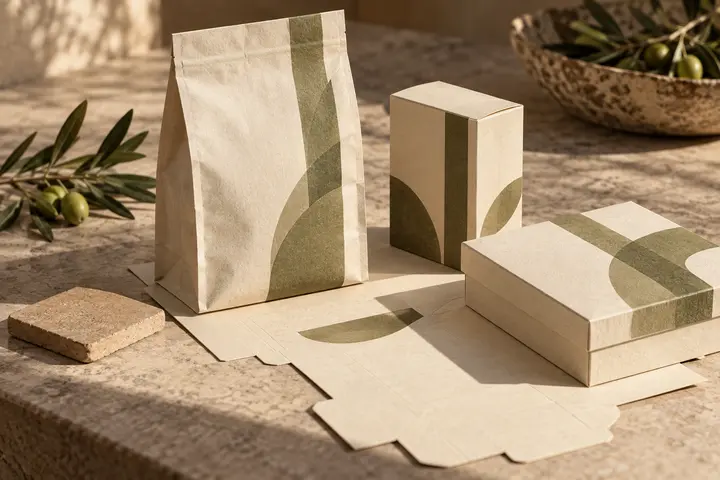
A broad showroom heading can lead with the brand name, while a box panel carries a denser set of product information. Instead of forcing identical compositions, agree which elements maintain recognition between the two. Letter proportions, symbol placement or a defined clear area may establish the connection. The client supplies and approves the product wording; the identity exercise does not redefine product properties. Without the actual box-panel dimensions, treat a packaging mockup as a directional review rather than completed application artwork.
Receive a package that accommodates another series
Name the logo commission and collection-card preparation separately in the quotation. Clarify how many cards belong to the first range and whether the assignment covers the entire box or only the brand area. At handover, try changing the series name in a sample card. Inspect how the layout accommodates longer text and where the product image sits. If a dealer or internal team will add products, select an editable file format that matches the way that team actually works.
Key takeaways
- Manage collection names independently from the permanent brand mark.
- Use two similar sample cards to inspect the information hierarchy.
- Include an example of adding another range in the delivery package.
Frequently asked questions
Should a tile pattern become part of the logo?
Patterns can change between collections. Consider whether the permanent identity would become tied to one product; pattern references are an option rather than a necessary starting point.
Must the logo appear directly on the sample?
A sample card or separate label may provide a clearer location. Compare both approaches using the intended display arrangement.
Can all collections share one logo colour?
Test a common signature across the different surfaces first. If needed, develop approved light and dark treatments instead of creating another logo.