In this article
The first useful question in cafe logo pricing is where the identifier needs to work during everyday service. A small seated venue and a business handling many takeaway orders may prioritise different materials. Cups, windows, counter boards and social profiles can be considered without requiring every application at the first delivery. Defining actual opening needs separates identity exploration from decorative imagery and recurring content production. Describe the service flow and materials in use before deciding how many usable design outputs the quotation should include.
Quick answer
Cafe logo pricing can be compared through name composition, distinctive identifier exploration, compact cup trials and the number of supporting arrangements. Window graphics, menu boards, physical printing and social content require their own definitions. Applying a signature to existing cup stock differs from developing a packaging system, and proposals should make that distinction visible before their totals are compared.
Use the takeaway flow to choose priority surfaces
Explaining the service model helps prevent exploration from focusing exclusively on a large wall presentation. A takeaway-led cafe may prioritise cups and carrying materials. A primarily seated venue may first need tabletop menus and counter identification. These are not fixed packages: priorities should follow the actual business brief. Marking the first three surfaces needed can provide a more controlled starting point than an undefined opening set in which unnecessary applications are priced alongside essential design work.
A cup identifier is not an entire packaging system
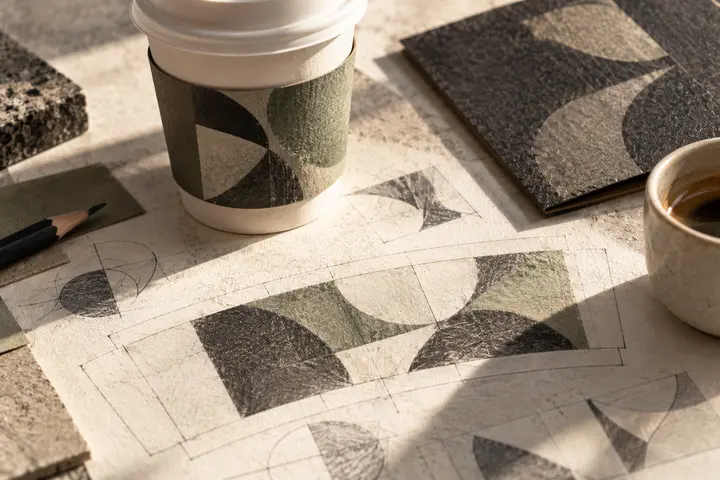
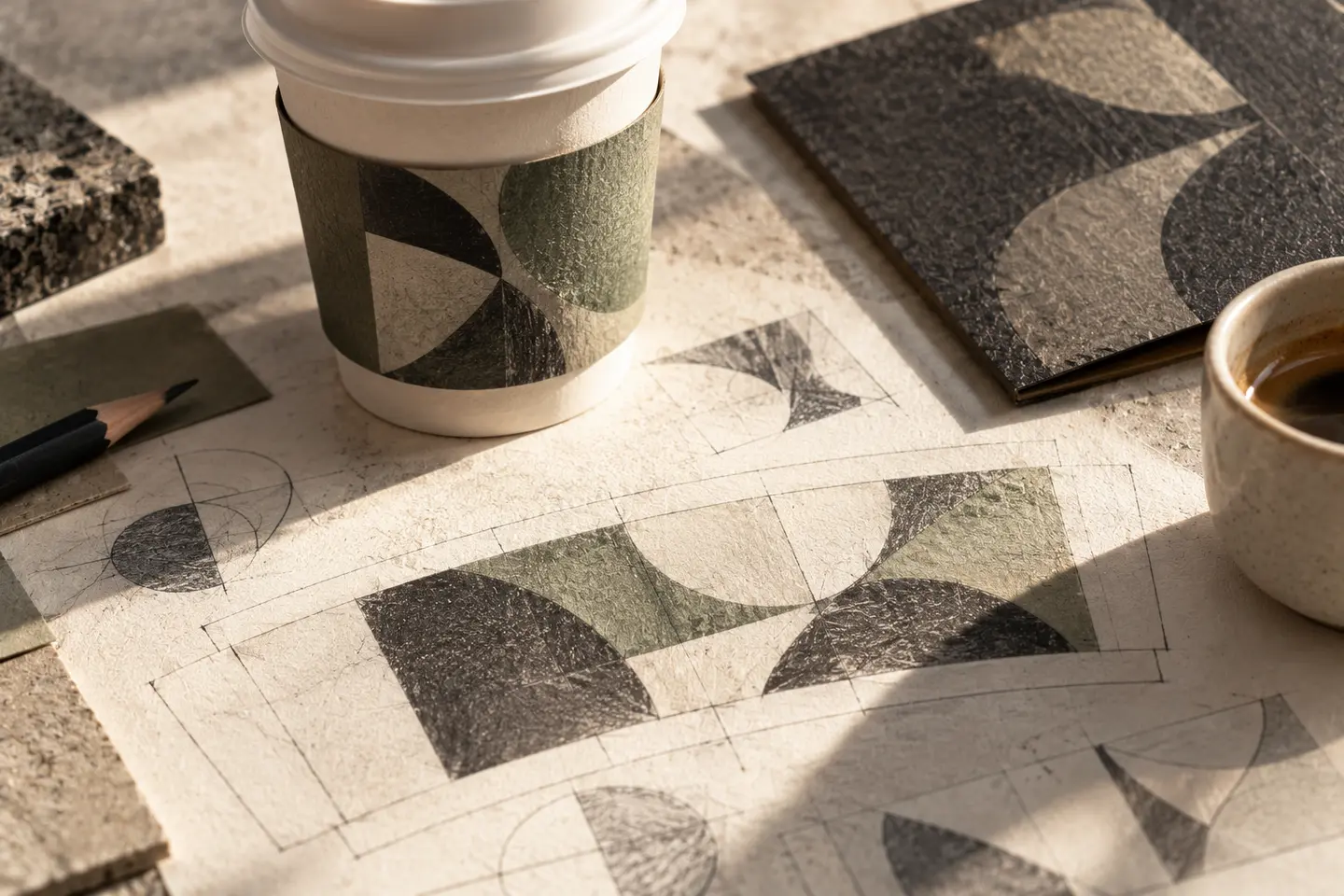
One assignment may adapt the logo to a cup supplier’s existing print area. Another may develop graphic arrangements for cups, sleeves and carriers. The manufacturer should supply intended dimensions, and the quotation should count delivered artwork. Do not assume that two cup sizes accept precisely the same composition. Review how the name reads around the curved surface and near joining areas using actual templates. Ask whether physical sampling and the supply of printed materials are included or belong to separate production responsibilities.
Define the editable fields within a daily menu board
Where products change frequently, identity design differs from preparing new menu content every day. A layout can establish fixed headings and adaptable product areas. If the initial product list will be fully typeset, specify its extent and the board dimensions. A hand-updated chalkboard and a menu shown on a digital screen require different handovers. In a hypothetical opening, category and heading arrangements alone may meet the design need. Do not infer unlimited free content changes from the delivery of one reusable layout.
Trial the window using the actual setting
A name applied to glass appears against different backgrounds from an interior wall signature. Entrance photographs and usable dimensions help define meaningful trials. A clean window shown in a presentation does not include removing existing graphics or installing replacement vinyl. If full window design is commissioned, count the placement of opening hours, contact details and other approved information. Designing the entire glass surface and simply establishing a logo position are different tasks, even when both produce a similar-looking early presentation image.
Keep profile artwork separate from campaign production
A profile identifier and cover can be basic digital adaptations. Photographing drinks, producing weekly content and developing an opening campaign involve other outputs. All may appear in an identity presentation, so distinguish representative examples from usable files included at handover. List the master signature, compact arrangement and selected applications individually. One cafe representative can consolidate content and visual approvals, preventing an evolving product list from repeatedly reopening identity decisions that have already been accepted and delivered.
Key takeaways
- Choose initial surfaces according to the actual service model.
- Specify cup dimensions and the number of production files.
- Distinguish daily menu updates from reusable layout design.
Frequently asked questions
Can cafe logo and cup design be commissioned together?
They can share a quotation, but cup sizes, print areas and delivered artwork should be identified. Receiving the principal signature does not establish that every cup, sleeve and carrier has been supplied with implementation-ready design files.
Are later menu changes charged again?
That depends on the agreed update scope. Distinguish an internally editable template from changes completed by the designer. Another board size or information structure can involve different work from updating a product line within the approved arrangement.
What information helps obtain a useful proposal?
Provide the approved cafe name, service format, priority materials, cup templates and any window photograph. Separate items needed at opening from possibilities for later consideration so that the immediate assignment remains clear enough to price and compare.