In this article
A cafe identity reaches someone sitting in the venue differently from someone carrying a drink outside. The first encounter includes architecture and menus; the second may offer only a small curved cup. Bring both situations into the commission. Establishing the relationship between the name, compact mark and changing menu information supports a broader decision than selecting the proposal that looks most attractive on an interior wall.
Quick answer
Define the cafe name, any compact-use requirement and its service surfaces before commissioning. Compare the mark around a cup curve, on a ceramic mug, above a counter menu and on a phone. Question what a coffee-bean symbol adds. Handover should include the agreed cup arrangement, a monochrome version and a master identity independent of menu content.
Separate the venue name from its offer
Explain whether the cafe serves only coffee or also includes food and other services. That information helps avoid unnecessary restriction; it does not mean illustrating the whole menu inside the emblem. Provide the exact permanent descriptor, if one exists. References should explain the name’s character and the visitor encounter rather than consist entirely of bean symbols. Any shortened name should be agreed with the client, so the designer is not left inventing an unofficial nickname merely to fill a compact space.
Account for the cup’s curve
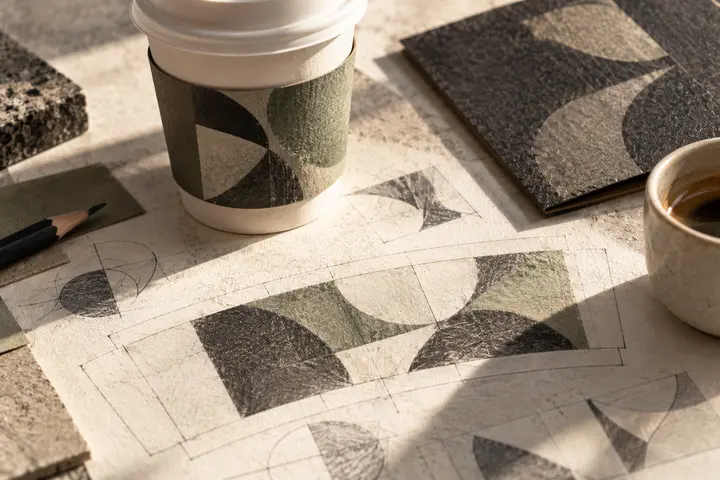
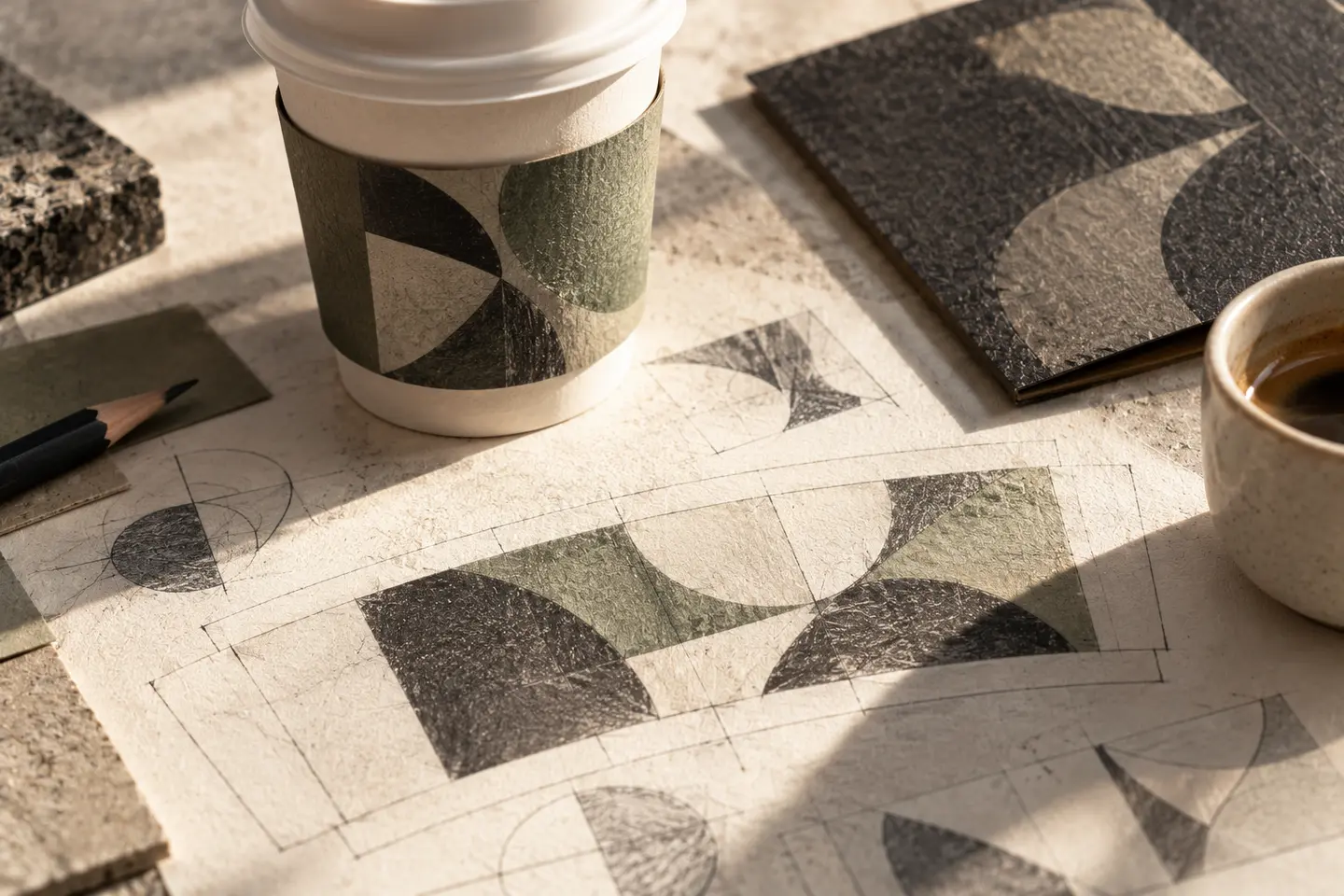
A flat printing area differs from the view of a filled cup in someone’s hand. Share intended sizes and the supplier’s application drawing. A name spread too widely around the circumference may never be visible in one glance. In a hypothetical cafe using two sizes, review both during the same decision meeting. Include the lid and likely hand position in the example. For single-colour printing, ask the designer to resolve simplification instead of passing a colourful presentation to the supplier for interpretation.
Do not assume the ceramic mug needs the same layout
A mug has a different surface, handle direction and available area. Reducing the takeaway layout may not produce an appropriate ceramic application. Discuss which side should identify the cafe when the drink is served. If a compact symbol is proposed, show its relationship with the full name. List the saucer as another application if required. Rather than placing every identity component on every object, decide how each object contributes to recognition and review the collection as a related set.
Keep menu information usable
The menu needs an intelligible relationship between branding and the information customers seek. A large counter board may accommodate a generous identity area, while the same proportion can waste a phone screen. Test both with actual-length product names. Does adding another drink force the logo to shrink? Can its header position remain consistent? These questions establish whether the purchase includes only an attractive cover or a layout that remains workable as content changes. A blank menu does not answer them.
Map which files go to which person
The owner, cup supplier and employee updating menus need different outputs. State whether the quotation includes the cup arrangement, mug application and digital-menu header. At acceptance, inspect the full spelling, compact mark and monochrome example together. Preserve the approved dimensions and reviewed applications in the handover as references for repeat orders. Keep everyday images separate from master artwork, so staff do not have to crop a logo from a social post when creating the next menu update.
Key takeaways
- Agree compact naming instead of improvising abbreviations.
- Assess curved cups and different sizes at their actual dimensions.
- Test phone-menu density separately from the counter board.
Frequently asked questions
Does a cafe logo need a coffee bean?
No. If a bean is proposed, demonstrate its relationship with the name and its contribution on the cup rather than treating category familiarity as sufficient proof.
Do mugs and takeaway cups need different brands?
They can use surface-specific arrangements of the same identity. Preserve recognisable shared features and explain which approved file belongs to each application.
Is the digital menu included with the logo?
Only when explicitly agreed. A menu header, one-page layout and complete menu system represent different work, so the quotation should identify the intended deliverable.