In this article
A burger restaurant often presents its identity across a meal set rather than one box: wrapping paper, side containers, drinks and a carrying bag may appear together. Explain how those pieces should relate instead of simply putting a large emblem on every item. Strong product photography can also influence the logo decision. Reviewing the identity with the same photograph and without imagery helps identify what the mark itself contributes to the business presentation.
Quick answer
Show the individual product and full meal set when commissioning a burger-restaurant logo. Treat wrapping paper, the box lid, side container and small order label as separate surfaces. Distinguish photographic appeal from identity performance. Handover should provide the master brand, approved simplified packaging use and a set arrangement that leaves variable order information usable.
Keep product photography from deciding the identity
Burger imagery can be important to promotion, but the logo should not be selected solely through an appetising picture. Request every option with the same photograph and in a plain application. Where is the name easier to identify? Does heavy lettering overpower the product, or does delicate lettering disappear? Supply the business name, permanent descriptor and campaign heading separately. Product descriptions and claims should come from approved client content rather than being invented by the designer to make a visual presentation more persuasive.
Test repetition on the wrapped product
Flat paper and a finished wrap create different views. Discuss whether the business needs one central mark or a repeating arrangement. Obtain actual sizes and application boundaries from the supplier. Imagine a hypothetical restaurant wrapping two burger sizes with the same paper. Does each retain a recognisable identity, or do folded letters become random fragments? Show how the compact mark relates to the complete name. The supplier should not have to invent another abbreviation merely to build a usable pattern.
Review the hinged box as it opens
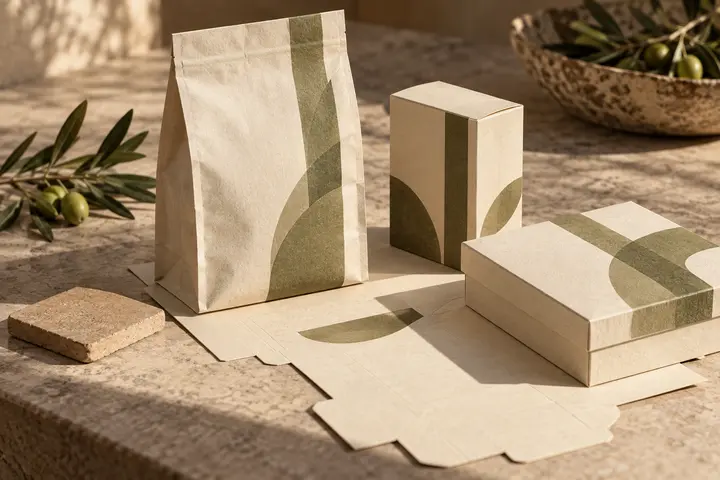
The hinge and closure affect name placement. Include the customer’s view after opening as well as the closed overhead image. Any interior message should be supplied as separate content. If the full name crowds a small lid, reconsider the layout or develop a compact companion. Provide the actual packaging drawing instead of an approximate oversized box. The decision can then be made within the intended surface boundaries, and the same reviewed reference can accompany the application artwork given to the manufacturer.
Avoid overloading the collection of side items
A side container, sauce label and drink can create excessive repetition when presented together. Request a complete set view. Some surfaces may need the full name while others use a limited identity element; ask the designer to explain the connection. Separate changing sauce or product names from the permanent mark. Filling a tiny label with a large emblem can weaken its identification role. The team should describe which information changes daily so the template addresses real needs rather than an idealised empty packaging photograph.
Compare scope through the actual pieces
List the box, wrapping arrangement, side container and label individually. A meal-set preview does not automatically provide production files for every piece. Assign client approval of wording separately from supplier responsibility for dimensions. Name the master, simplified version and everyday label template clearly. Demonstrate which areas may change when a product or campaign is added. During acceptance, insert a long fictional order line to establish whether the system is ready for routine use as well as the original presentation.
Key takeaways
- Compare directions with identical photography and without imagery.
- Inspect the whole meal set rather than isolated packages.
- Separate a set preview from individual production deliverables.
Frequently asked questions
Must the logo feature a burger illustration?
No. Naming, packaging and photography can establish the category together. If an illustration is selected, test its contribution in the small wrap pattern and label.
Does every sauce label need a new design?
A shared template may be enough. Try different name lengths so product identification and brand visibility can coexist within the same limited area.
Does a meal-set image include all production artwork?
No. Specify which components receive dimensioned supplier outputs. One presentation image does not demonstrate that application files for every packaging piece are ready.