In this article
A watch identity must connect the restricted dial area with a much larger packaging surface. A large emblem presentation does not answer the questions raised by those tiny applications. Separate brand, collection and client-approved product descriptions from the outset. Give the designer actual dial drawings, product photographs and packaging examples. Decide deliberately where the complete name or compact signature appears. The commission concerns visual identity on specified surfaces rather than designing or evaluating the watch mechanism.
Quick answer
Commission a watch logo alongside actual dial dimensions, collection names and packaging arrangements. Compare the complete name and compact signature on products, boxes and digital product images. Approval should establish readable relationships with surrounding dial elements and consistency across models. Handover should distinguish master artwork, surface-specific applications and changing collection headings.
Give brand, collection and model names different roles
Identify which name appears throughout the range and which headings describe collections or models. Separate internal product codes from customer-facing names. Incorporating a long collection heading into the master logo can constrain later models. Supply realistic naming lengths rather than deciding through one short example. All dial information need not receive equal emphasis. The approved hierarchy should remain understandable on packaging and online product pages as well, connecting applications without forcing them into identical spatial arrangements.
Inspect the dial at its actual size
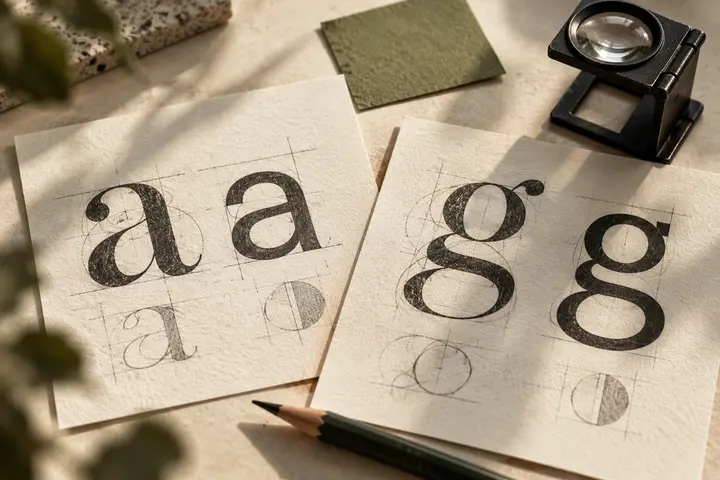
Show the area allocated to the signature using information supplied by the producer. Surrounding numerals, indices or other visual elements can affect how the name is perceived. Examine delicate lettering at actual size rather than relying on an enlarged screen view. Establish versions for light and dark dials. This review does not assess the mechanism or technical operation. It concerns visual identity within a specified area. State who supplies any physical sample and which artwork version governs its approval.
A hypothetical name across two dial styles
Imagine a brand offering one restrained dial and another with more visual elements. Lettering surrounded by space in the first may become crowded in the second. Show both at the same scale and compare related placements. Unrelated letter structures for each model may weaken the shared identity. If a compact mark is needed, connect it to the complete name on the box. This example explores which brand features remain stable as model styling changes, without asserting any product-performance outcome.
Component marks and boxes serve different purposes
If the producer applies a small signature to a component, request an actual example of the available surface. A compact mark may be more suitable than the complete name. The box can organise the name, collection and approved product information more generously. Compare both surfaces together so the small mark does not appear to belong to another brand. A plain single-colour box example is useful too. Metallic or embossed presentation does not remove the need to assess the underlying letter structure and its readability.
Make model applications countable at handover
List complete-name masters, compact signatures, selected dial layouts and packaging brand zones separately. Artwork prepared for one model should not be assumed to fit all others. Ask how many dials and small-component examples receive applications. Establish who checks visual adaptations made by the producer. Show changing collection headings within a template. Product photography, every model page and technical-copy preparation need separate scope. Retaining the approved sample with its corresponding artwork provides a clear reference when another model enters the range.
Key takeaways
- Give brand, collection and model names distinct roles.
- Review actual-size dials with their surrounding elements.
- Connect compact signatures to the complete name on packaging.
Frequently asked questions
Does watch branding require very fine lettering?
No. Judge lettering through actual dial space and production examples. Delicacy alone does not establish suitability or visual quality.
Should the logo change for every collection?
Collection headings can change while the brand signature remains shared. Compare different dials at equivalent scale to determine what stays consistent.
Is dial artwork included in logo delivery?
State how many models receive applications. A representative demonstration and completed artwork supplied to the producer are different deliverables.