In this article
A seafood restaurant may change its menu or daily selection while the principal name continues to identify the same business. Separate that stable identity from variable product information at the beginning of the commission. Choosing maritime imagery does not resolve the information arrangement by itself. A table menu, entrance card and takeaway package contain different amounts of content, so the design decision should address those actual encounters rather than one atmospheric presentation.
Quick answer
Supply the main name, venue descriptor and daily-selection information separately for a seafood-restaurant logo. Compare populated menus, changing product cards, the facade and packaging. Consider whether one fish illustration unnecessarily narrows the offer. Handover should define the fixed identity area, editable daily text fields and the person responsible for maintaining those templates.
Connect maritime imagery with the actual business story
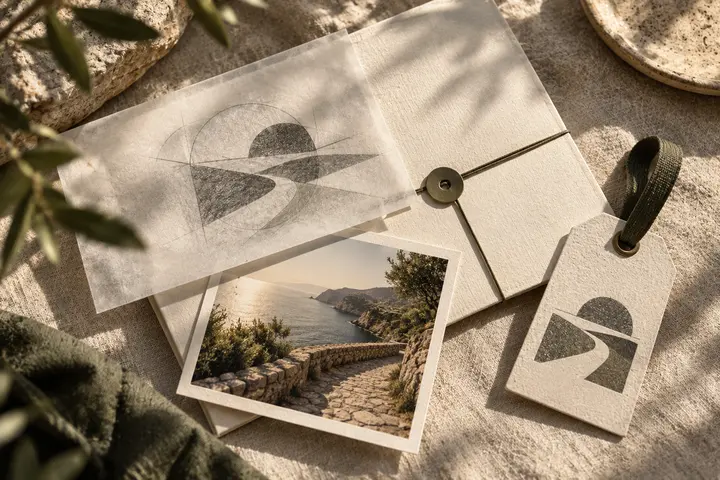
Fish, waves or a boat are possible directions, not a requirement to combine every symbol. Explain the venue name, service approach and existing visual environment. Claims about a waterfront setting, local sourcing or a particular history should use client-confirmed information. The designer should not invent those stories to strengthen the atmosphere. If a symbol is chosen, discuss how it represents different products and future menus. Readable naming may contribute more than gathering numerous category references inside one crowded emblem.
Let the daily card change around a fixed identity
A selection card at the entrance or table may be updated frequently. Reserve explicit areas for client-approved product names and other content. Ask for short and long lists in the same template. The main name should not need a different size every day. Identify who updates the card and which tool that person will use. The logo project does not choose the day’s products or determine the accuracy of their descriptions; the business supplies that information while design gives it an understandable reading structure.
Distinguish the table menu from the selection card
If these are separate documents, explain their roles. One might organise the regular service groups while the other carries client-approved daily additions. They can share a restrained identity area rather than repeating a large mark on both. Imagine a hypothetical restaurant presenting the menu and card together. They should appear related while making their different purposes evident. Use realistic heading lengths during the trial. Generous empty pages can conceal the crowding that emerges when the actual service material is populated.
Review exterior and packaging at different distances
The facade name may be seen from farther away, whereas a package is encountered in a hand or on a table. Displaying both at equal screen size hides that distinction. Provide an approach photograph for the exterior and actual dimensions for the package. If a broad fish illustration forces the name to shrink, request a restrained alternative. Keep the identity visible when packaging closes and leave variable order information room. The client defines the packaging brief; the logo presentation should not be treated as an assessment of operational methods.
Accept the editable handover through a real change
Add another product name and a long line to the daily card during the final meeting. Can its operator edit the content without disrupting the identity area? Check the agreed files for the logo, daily card, menu and packaging individually. The business representative approves names and wording while suppliers verify their application inputs. Give master artwork and everyday templates distinct file names. Retaining the reviewed examples connects later content updates with the original design decision and reduces the need for another person to redraw the card without a reference.
Key takeaways
- Build maritime or local narratives only from confirmed client information.
- Test a changing selection with a fixed identity area.
- List menu, daily-card and packaging work as separate deliverables.
Frequently asked questions
Does the restaurant logo need a fish illustration?
No. The name and surrounding communication may establish the category. If an image is proposed, examine whether it narrows the menu and whether it remains readable in small use.
Can staff update the daily-selection card?
A suitable template can support that. Agree who edits it and in which tool, then try a sample change before accepting the handover as complete.
Should the logo change with the season?
Changing content can usually occupy separate areas. Test whether the card and menu accommodate different information before assuming the principal identity needs repeated redesign.