In this article
For a marble company, the product is already a strong and changing visual material. Veining on one slab, the colour of another stone and the restricted surface of a sample present different conditions for the same identity. Begin by discussing how the company name remains recognisable across this variety. Reproducing stone inside an emblem is only one possible direction. If quarrying, processing and a traded selection share one name, explain the order in which customers encounter those activities.
Quick answer
Describe the marble company's production, processing and sales roles before choosing its logo. Request a photographic signature, a label for the back of a sample and a project-proposal cover. Keep stone names and temporary stock codes separate from the permanent identity. Include light and dark photographic treatments and a usable sample-label arrangement in the handover.
Distinguish stone names from the company name
Customers may associate the business with a particular stone name, but that does not automatically make the stone name its corporate brand. Present the current product list as three information layers: permanent company name, commercial stone name and stock code. The identity should remain meaningful if a stone leaves the range. If processing services also need promotion, decide whether they appear as an explanatory line beneath the main name rather than becoming another element inside the logo itself.
Find a photographic position that respects veining
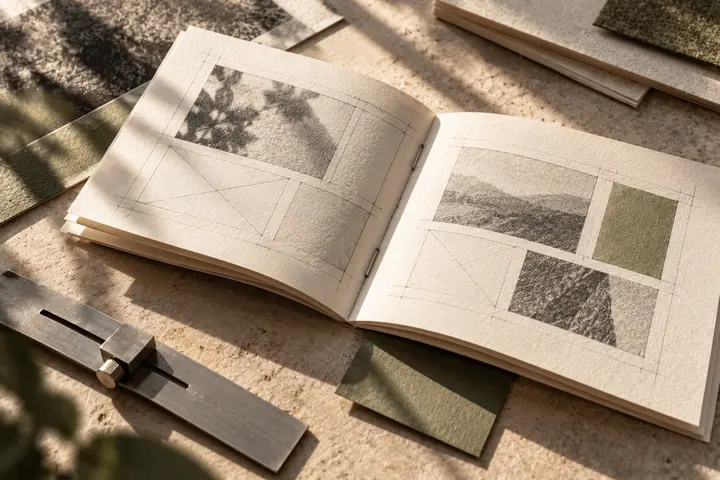
If the mark will appear in an image corner, supply photographs with different levels of veining. Fine lettering that works beside a light stone may disappear on a dark, visually active slab. Compare a reserved plain area with direct placement over the photograph. The photograph still needs to describe the stone: if a larger brand area hides a useful part of the surface, explore another position. Define the selected corner and spacing clearly enough for the image team to reproduce them.
Run a label trial on the back of a sample
A business may want the front of a stone sample left unobstructed, making its rear label the primary identification surface. Use actual sample dimensions to review the company name, stone name and code together. Imagine five samples distributed across an architect's meeting table. Discuss whether their source remains apparent without turning every piece over. A sample card or box may provide another identity surface, but its preparation should enter the commission explicitly rather than appearing as an assumed extra.
Balance project imagery with proposal identification
A stone selection for a hotel lobby and a document describing one product dispatch need not share an identical cover. A project proposal needs a clear sequence for the client name, proposed selection and supplying business. Try a restrained identity arrangement before adding a long slogan over the slab photograph. If proposals use several languages, identify the fixed business name and the areas where explanatory wording changes. Product descriptions and specialist claims should come from the company's approved material, not from the designer's interpretation.
Deliver rules that fit the photographic archive
A single logo file cannot answer every question for a photography team. Request short examples identifying the source file for the photographic signature and the treatment for light or dark images. List editable sample-label and proposal-cover sources separately. If different people prepare print labels and digital images, file names should make those responsibilities clear. Creating one additional slab image during acceptance is a practical way to check whether the instructions can be applied without reconstructing the designer's presentation from memory.
Key takeaways
- Separate the commercial stone name from the company identity.
- Inspect the rear sample label at its actual size.
- Validate delivery by adding the signature to another slab photograph.
Frequently asked questions
Does the logo need a marble texture?
The product photography already shows texture. Evaluate recognition across different stones before deciding whether the permanent mark should imitate one particular pattern of veining.
Does each stone colour need a different logo?
First compare light and dark treatments of one identity. Product colour can remain within the information and imagery describing the stone itself.
Can a sample box join the logo commission?
Yes, with its dimensions, sample count and label areas specified as a separate design task. Clarify who handles physical production as well.