In this article
A hearing centre needs an identity that helps people locate the business and connect documents with the right provider. Its name may appear beside several device manufacturers, which makes the relationship between those identities an important buying decision. Bring a real appointment card and an empty handover folder to the briefing discussion. They reveal more about the commission than starting with a preferred sound-wave illustration.
Quick answer
For a hearing-centre logo, specify readable naming, manufacturer relationships and everyday document areas together. Test letter spacing and fine detail on a small appointment card. Separate centre contacts from product information in the handover folder. Approval should include actual-size examples of both applications and a monochrome version that preserves the centre’s name.
Establish the centre’s relationship with manufacturers
A centre may offer several manufacturers or have a particular brand relationship. The client should approve how that relationship is expressed. The designer should not guess whether a device brand must be reduced or whether the centre should appear as its sub-brand. Supply existing approved manufacturer artwork for the joint-layout discussion. Keep those marks separate from the new master identity, so changing a product line does not automatically alter the centre’s own logo.
Make the appointment card the demanding test
Date, time and contact information still need room to function. A large identity can create an attractive cover but a poor working card. Request an empty layout and another completed with fictional appointment details. Examine the separation between letters, the prominence of any wave motif and the first name the reader notices. If the hierarchy fails, increasing the whole logo may simply displace other information. Reconsider its position and internal balance before assuming that size alone will solve the problem.
Ask what an abstract sound symbol contributes
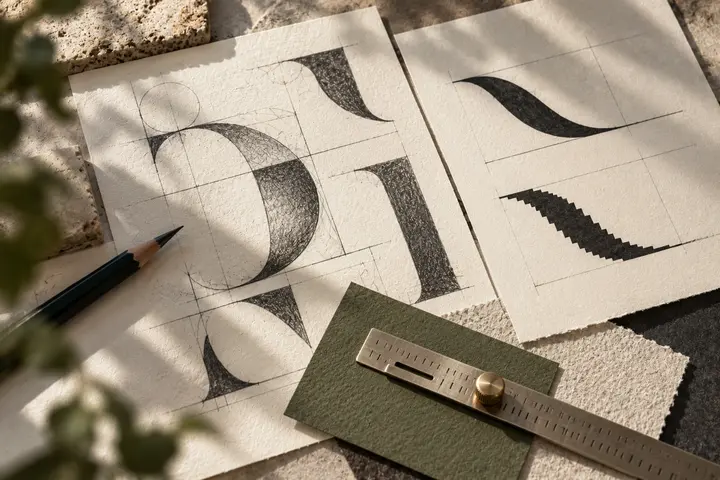
A wave, ear outline or initial-based mark is a possible direction rather than an obligatory starting point. Ask the designer to explain each proposal’s relationship with the actual name. A fine wave that looks balanced on the entrance panel may disappear on a card. If removing the symbol leaves an undistinguished name, the lettering may deserve more attention. This discussion is more useful than comparing a succession of familiar category icons whose only argument is that they suggest hearing.
Give product details a separate home
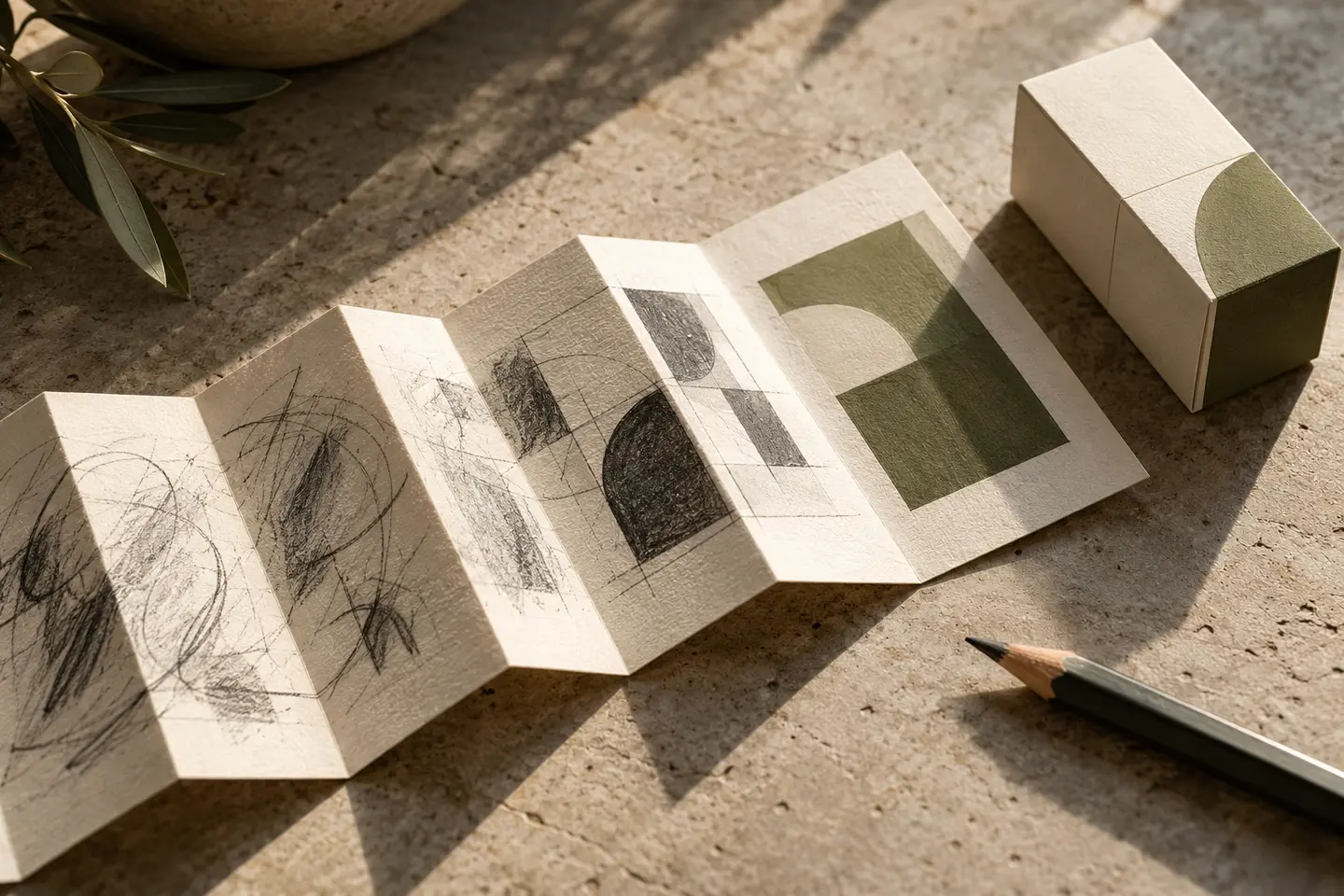
Consider a hypothetical centre offering devices from different manufacturers while using one outer folder. The cover can carry the centre’s identity and contacts, with approved product information placed on a separate insert. Ask for an empty template demonstrating that relationship. Fictional content avoids sharing personal information during design review. A change of product should not require a new cover. This application frames the client’s approved content; it does not ask the identity designer to create technical device information.
Include reception in the acceptance meeting
The person preparing cards can notice operational difficulties that a polished presentation conceals. Have that person review editable fields, file names and the version intended for the entrance panel with the centre manager. Confirm whether the quotation covers only the logo or also the card and folder templates. Reread the approved name and remove superseded contact details. Deliver current application files separately from archived creative options, so the team can identify what has actually been approved for use.
Key takeaways
- Keep the centre’s identity distinct from manufacturers’ marks.
- Check a completed appointment card as well as an empty one.
- Let the outer folder remain stable when product information changes.
Frequently asked questions
Is an ear or sound-wave drawing necessary?
No. Carefully developed lettering can identify the centre. An additional symbol should demonstrate a useful contribution on the small card, rather than simply announce the category.
Why include an appointment card in the commission?
It tests the identity with actual competing information. Problems that emerge after dates and contacts are added may remain invisible in an isolated logo presentation.
Should device-information layouts also be changed?
Only within a separately agreed application scope using client-approved content. Commissioning a logo does not assign responsibility for rewriting technical product information to the designer.