In this article
A florist identifier sits beside a colourful product that changes continually. Season, bouquet size and wrapping colour vary while the shop signature still needs to be understood. Begin with more than a choice of flower illustration. Folded paper, narrow ribbon and the space for a customer message create real design constraints. Reviewing a finished arrangement photograph alongside the shopfront helps establish an identity that accompanies the product without competing with its colour, texture and personal meaning.
Quick answer
Provide the shop name and examples of packaging actually used. Test directions on light and dark wrapping, narrow ribbon and a note card. Separate the customer message from the shop signature. Name patterns, labels, delivery cards and order image templates individually in the quotation. Explain how seasonal imagery changes around a stable identifier rather than requesting another main logo for every occasion.
Resolve the name before choosing a flower
A rose, leaf or abstract stem may work without representing every item sold. Arranging a long name around a detailed flower can become difficult to read on a small label. In a hypothetical comparison, show the same mark on a simple single stem product and a mixed bouquet. Check name recognition in both. Supply any genuine naming story rather than asking the designer to invent botanical meaning or history. Assess lettering separately from illustration detail so an attractive drawing does not conceal an unclear shop name.
Inspect the visible area after wrapping
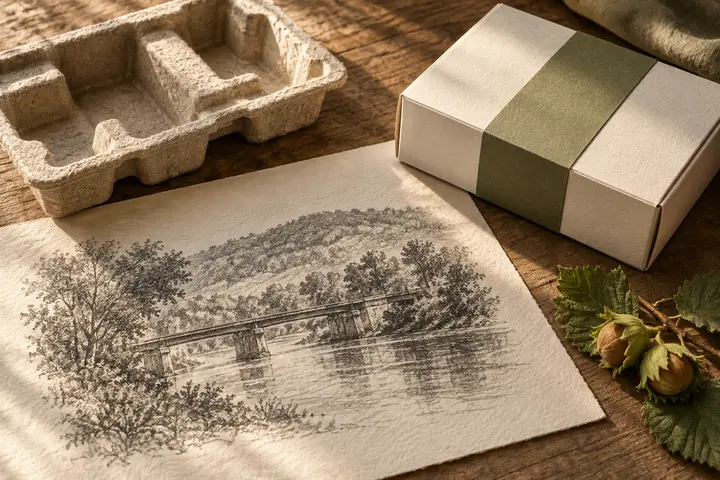
Wrapping paper does not remain flat; folds hide parts of it. Discuss whether a large central mark or repeated small pattern is intended through a physical example. Supply actual paper sizes and printing information from the supplier. A monochrome arrangement may leave more visual space for the flowers. The main logo and an all-over pattern are different tasks. Identify pattern artwork and production proof responsibilities in the proposal. A persuasive rendering of flat paper should not be treated as approval of how the printed design will appear around a bouquet.
Question what fits on a ribbon
Ribbon is a narrow, extended surface. Compare a compact identifier with a repeated name arrangement when the full mark becomes too small. Consider what remains visible after tying a knot. An actual tied example reveals more than a flat strip presentation. Do not assume delicate details will work before the supplier confirms the method and available area. If a short version is needed, show its relationship with the full name. Explain when a card or label will provide the written name elsewhere on the finished product.
Give personal messages their own space
The recipient’s message should lead on a bouquet card. The shop logo should not crowd it or be confused with the sender name. Test a long illustrative note and a short one. A delivery or order label performs another job; the shop decides whether it belongs on the same object as the message. Use fictional information in proofs rather than real customer details. Identify order system setup, data fields and printed card artwork separately. A logo assignment should not silently become a redesign of the florist’s entire sales and delivery process.
Approve the identity on a finished bouquet
Fold the selected paper at real size, tie the ribbon and place the card. Inspect the shop name in an illustrative phone photograph of the result. Distinguish vector masters, monochrome print artwork, compact ribbon versions and any repeating pattern through filenames. Staff should be able to enter another note and choose the right label. Demonstrate the supporting areas that can change for seasonal communication. Acceptance should show a consistent, proportionate shop signature within the completed product rather than rely only on an attractive logo placed on an empty sheet.
Key takeaways
- Review folded wrapping separately from a flat paper mockup.
- Demonstrate the link between compact ribbon artwork and the full name.
- Protect the customer message as a separate communication area.
Frequently asked questions
Must the logo contain a particular flower?
No. Typographic or abstract directions can work. Assess whether the shop remains identifiable across different bouquets and wrapping colours rather than choosing by illustration alone.
Is wrapping pattern design included?
Not automatically. A single mark and a repeating paper pattern may require separate artwork preparation. Identify both clearly if they are needed.
Does every seasonal occasion require another logo?
The main identity can stay fixed while imagery and card headings change. List seasonal templates and their editable areas separately when commissioning that additional work.