In this article
A delicatessen customer may encounter cheeses, olives and prepared foods from several producers during one visit. The shop logo should identify the business presenting the selection, rather than suggesting that it manufactured every item. Explain that role before commissioning the identity. If the shop also makes its own products, discuss how those products relate to its retail name. The small signature on a cabinet, the lid of a gift box and an order photograph should reinforce each other. An ornate, appetizing badge alone cannot resolve those different relationships.
Quick answer
For a delicatessen logo, distinguish the shop’s roles as selector, retailer and, where applicable, producer. Test proposals on cabinet fronts, wrapping paper, product labels and gift boxes. Pay particular attention to visibility beside producer identities. Keep variable price and product information outside the permanent signature, and specify which retail templates must be editable at handover.
Explain who makes and who selects the products
State which foods the shop prepares, which arrive from external producers and how each is presented to customers. These distinctions affect where the retail mark belongs. A hypothetical deli might fill containers with its own dips while also selling cheese in another producer’s packaging. The same shop logo can appear with different supporting descriptions in those settings. Ask the designer to clarify the actual relationship, rather than turning the entire assortment into an invented story of in house production. This creates a more credible starting point for visual decisions.
Review glass with the cabinet actually populated
A mark on glass is seen against food, shelf edges and reflections. Include a photograph of a filled cabinet alongside any clean shopfront drawing. Check that the signature neither blocks the products unnecessarily nor disappears as stock levels change. Compare an emblem and a simpler word arrangement in the same position. This exercise does not automatically commission a complete interior signage system. If cabinet headings also need designing, list their number and purpose separately so the quote describes the work being purchased.
Try wrapping paper beside the smallest container
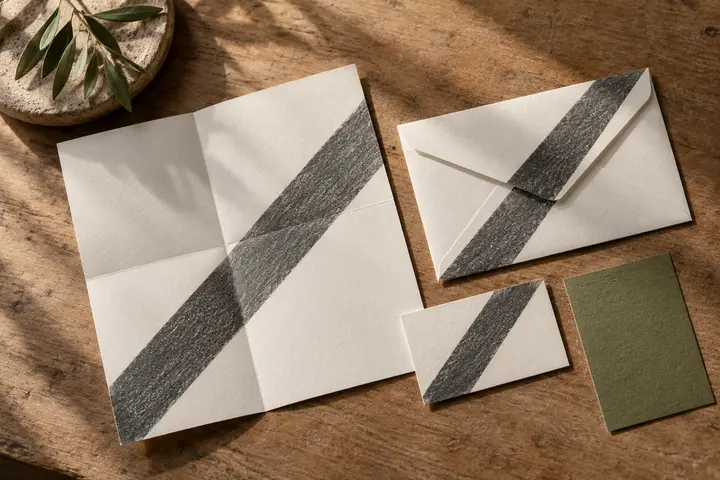
Only part of a repeat pattern may remain visible on a folded sheet, whereas the whole business name may need to appear on a small dip container. Request accepted arrangements for both rather than forcing one composition onto every surface. Inspect narrow borders and small letter spaces in a physical print sample. Use approved product copy around the mark. Identity work does not itself provide specialist verification of that content. Also check whether an opening line or curved label edge divides the name in an awkward place.
Let gifts and everyday purchases carry different emphasis
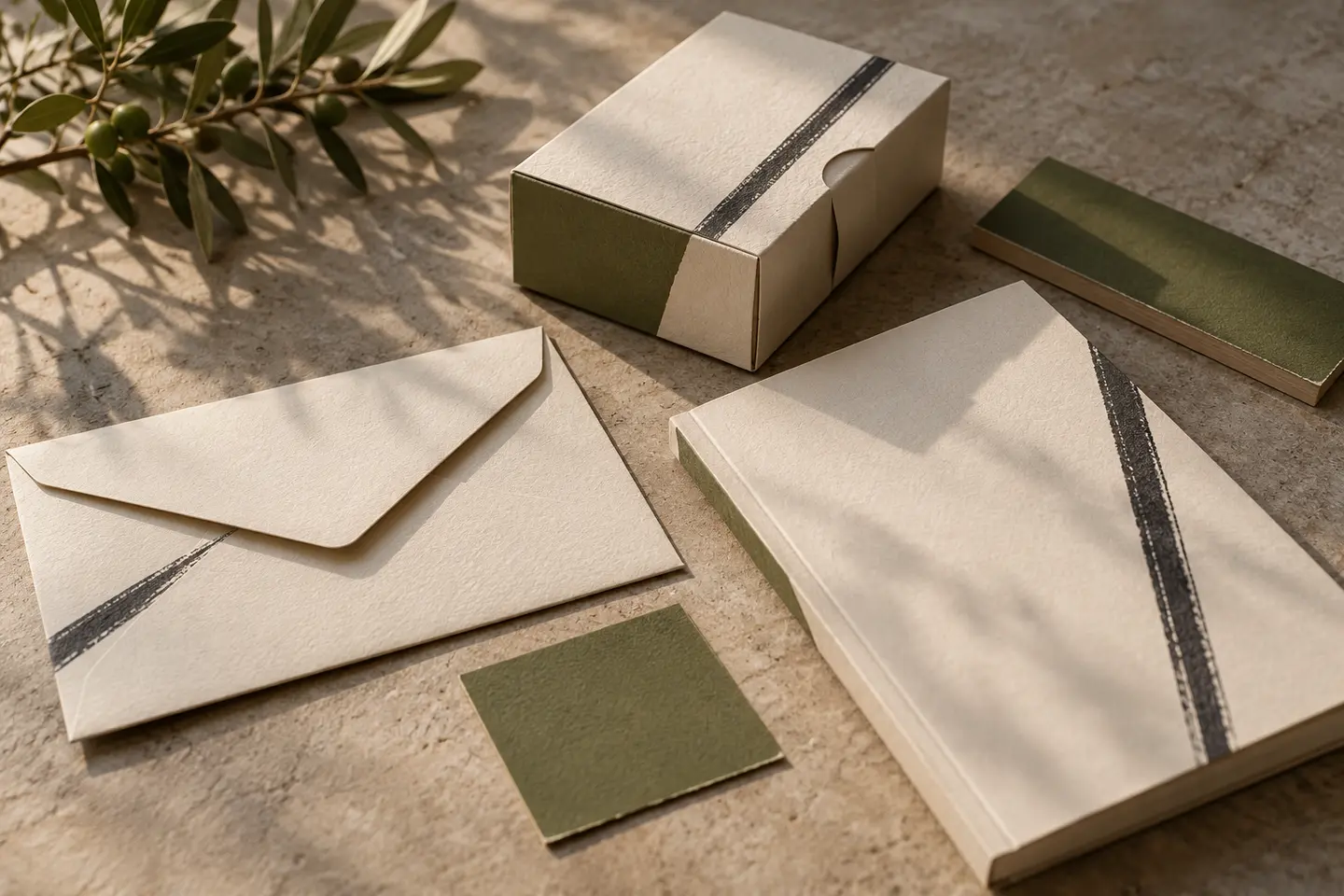
On an imagined seasonal hamper, the shop signature can identify the curator of the selection; on an everyday weight label, quick reading takes priority. An expensive looking box photograph is therefore insufficient evidence for choosing a logo. Put the same mark on a plain paper bag and a small order slip. Establish how seasonal ribbons, greetings and box colours can change while the core signature remains stable. That approach gives the business room to vary its presentation without commissioning an unrelated identity for every gift season.
Resolve the relationship inside product photographs
In online ordering images, the shop signature should not obscure a supplier’s package identity. Prepare examples in which both names need to be visible and choose a consistent margin for the retailer’s mark. At handover, clarify whether these examples are editable templates or placement guidance only. A staff member photographing a new product should understand where to position the logo. Acceptance depends on a workable arrangement across differently shaped packs, rather than one especially attractive image selected for the presentation.
Key takeaways
- Keep the retail identity distinct from producer brands.
- Test cabinet glass with products behind it.
- Give gift packaging and weight labels different priorities.
Frequently asked questions
Should a deli logo show cheese?
It can if cheese meaningfully represents the selection. Where olives, dips or other foods dominate, compare how a cheese specific symbol narrows the impression.
Do house made products need a separate brand?
That depends on the sales strategy. First explore the relationship between shop and product names; a desire for visual variety alone is insufficient reason to create another identity.
Is gift packaging included in the logo fee?
Die line artwork, accompanying cards and print preparation should be specified. A logo shown on a box mockup is not a complete packaging design handover.