In this article
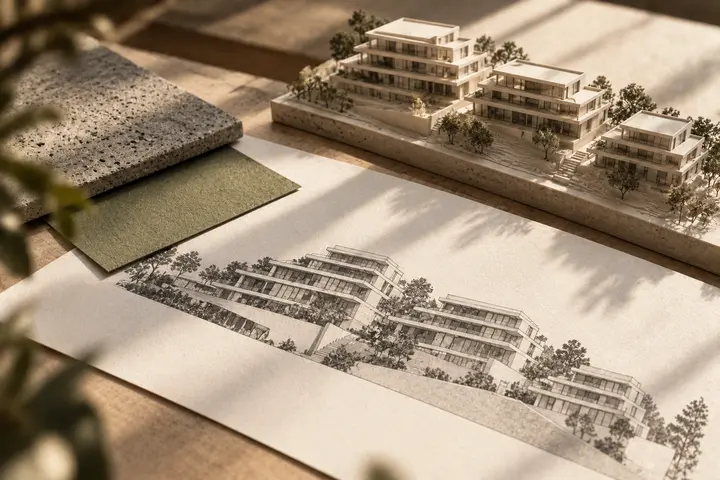
Construction company design often places the business name and a project name on the same surface. A residential sales board, a contractor's vehicle door and a proposal serve different purposes. The logo starts an identity system that organises those differences. Establish whether the business is a developer, a construction contractor or both. Then assess everyday documents alongside large physical surfaces. Selecting a building silhouette alone does not resolve the naming relationships or the practical application requirements of the company's identity.
Quick answer
Design a construction logo within a system that separates the company from individual project names and works on proposals, sites and vehicles. Prioritise name recognition on large surfaces, compact arrangements and relationships with project brands. Base approval on real dimensions and settings. Specify identity artwork separately from signage production, vehicle installation and adaptations for additional sites.
Distinguish the contractor from the project
The company's identity continues after a project is finished, while a residential or office project name refers to a particular development. Equal visual emphasis can make their roles unclear. Define the master brand, project name and any explanatory line in the brief. If the contractor works on developments owned by other businesses, consider the information accompanying its mark there too. A decision made for one sales board should not automatically determine the entire company identity.
A larger surface does not require more detail
A site perimeter may provide substantial space but is not equally visible from every point. Folds, posts or panel joins can interrupt the mark. Door handles and body lines affect vehicle placement. Show these obstacles in presentations instead of adding a flawless logo to a convenient photograph. Develop layouts that keep the business name intact and give it room. Assess the large application beside a small proposal header to avoid selecting an identity that works only in impressive site images.
Connect the symbol to the business model
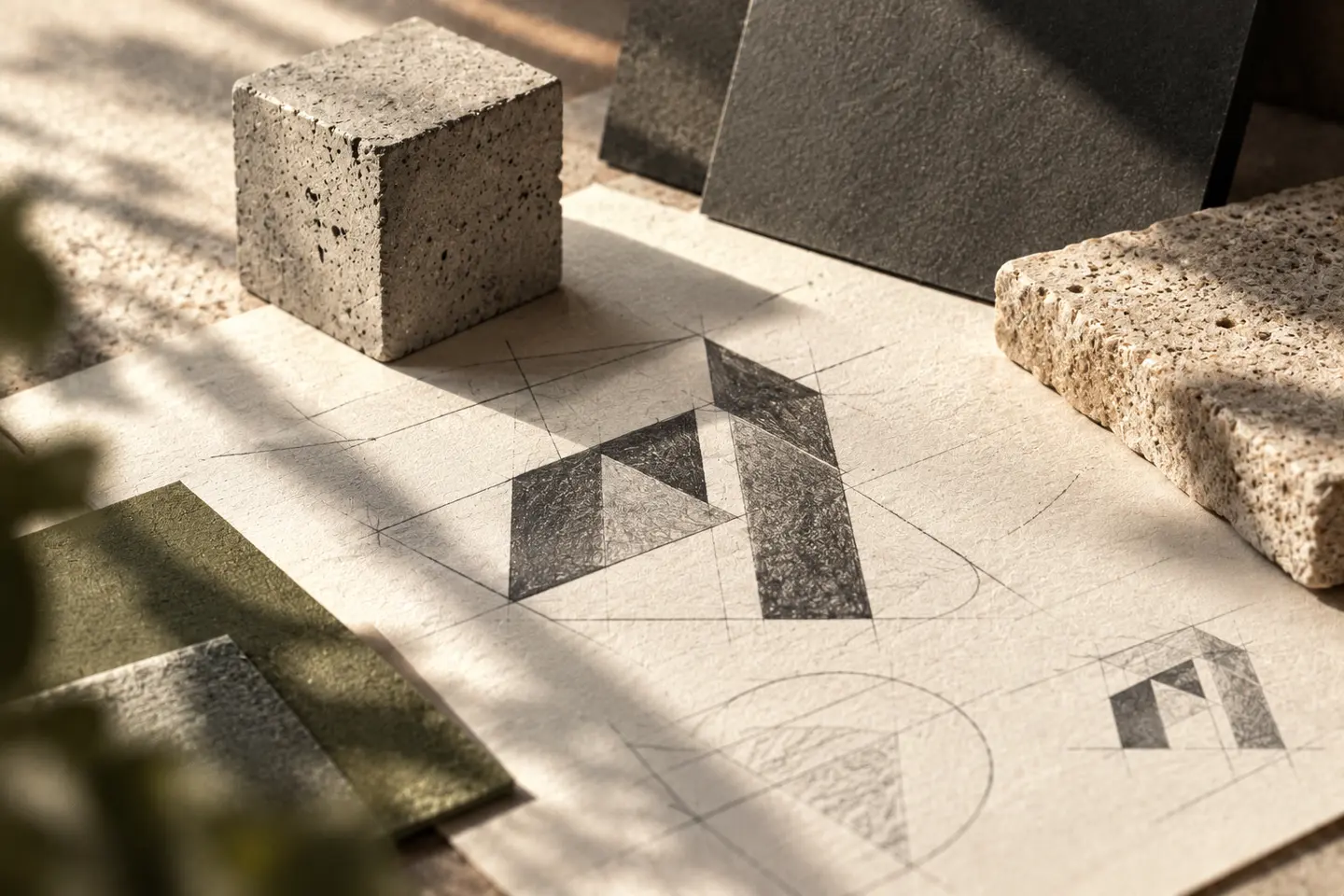
A building illustration can explain some businesses but may constrain a contractor working across infrastructure, refurbishment or several building types. A name-led approach can be flexible, while an abstract mark may require supporting applications to build recognition. Compare directions through those tradeoffs. Do not treat strength, trust or solidity as automatic effects of a colour or shape. Clear descriptions of the business, consistent document layouts and accurately presented project information also contribute to the identity's expression.
Hypothetical brief: two sites, one company identity
Imagine a contractor working with two different developers. Its brief includes the logo, proposal covers, a corporate area on site entrance boards, service vehicles and staff clothing. Project names remain outside the master mark. A shared template provides different information fields for each site. Obtain developers' brand rules and board dimensions from the relevant producers separately. This fictional example shows how corporate decisions become applications; it does not describe an actual project, customer or BOCW result.
Review identification alongside site information
Corporate branding should leave adequate room for directions, safety communication and required site information. Relevant responsible teams establish that content while the design provides distinct spaces. During logo approval, check the company name from an agreed viewing position, inspect panel joins and consider what happens when the vehicle door opens. Compare artwork with actual dimensions and request a separate embroidery proof. This reviews the identity's practical use; it is not an assessment of a site's safety system.
- Distinguish the main company and project name at first glance.
- Keep key elements clear of panel joins and vehicle parts.
- Review proposal output beside the physical application proof.
Separate identity design from site production
Logo design, site measurement, supporting structures, printing and installation are different tasks. A proposal may cover all of them, but it should explain responsibilities and approval order. List adaptations per site, vehicle types and staff applications. Guidelines should show how the stable identity supports a new project. Define work caused by dimension changes or a different producer's requirements. This makes clear that the business is commissioning a manageable application system as well as a visible mark.
Key takeaways
- Separate the lasting company identity from individual project names.
- Review large surfaces with their joins and physical obstacles included.
- Specify site production and future adaptation responsibilities in writing.
Frequently asked questions
Does a construction logo need a building symbol?
No. It can help when it accurately represents the business. A name-led or abstract direction may offer flexibility across building and service types. Compare the choices through actual applications rather than sector conventions alone.
Does every project need its own logo?
It depends on whether the project needs independent recognition. A separate identity may be appropriate, with a clear company relationship. Changing the contractor's corporate mark across ordinary documents and vehicles usually adds avoidable complexity.
Is signage production included in a logo quote?
Do not assume so. Ask who handles artwork adaptation, measurement, materials, printing and installation. Specify surfaces and quantities. An on-screen mockup represents a proposed appearance; it does not itself include physical manufacture and installation.