In this article
Finding many photographs for a website or catalogue is easy; choosing a suitable one requires more judgement. Being free, detailed or beautifully lit does not automatically make an image right for a brand. Readers interpret the depicted situation alongside the surrounding claims. This guide treats stock selection as more than a list of download websites. It proposes a working process that explains the message an image supports, the conditions attached to its use and the information future editors need when the material is reused.
Quick answer
Stock photography is previously produced imagery made available under specified conditions. Define the message and intended use first, then review the current licence, relevant considerations around depicted people or brands and technical suitability. A free download does not mean unrestricted permission for every context. Retain the source link, review date and intended application with the approved file.
Define the photographic task before searching
Will the image show the actual product, explain a service context or establish atmosphere? The answer changes the search. A hypothetical consultancy may use a representative meeting photograph, but should not present its subjects as the real team. Where readers expect evidence of an actual project or product, discuss original photography. Define the task first instead of selecting a favourite image and trying to make any available paragraph justify it.
Review the current licence at the source
Services such as Unsplash explain their own licences; different platforms and collections should not be assumed to use identical conditions. A free label on a download screen does not settle every intended use. Record where and how the image will appear. Clarify uncertainty before publication rather than interpreting missing information as permission. This is an editorial workflow recommendation, not a legal opinion about an individual photograph or a guarantee covering a particular campaign.
Inspect what is depicted as well as the file
Recognisable people, visible logos, artworks or private locations can introduce additional considerations. Unsplash’s help guidance distinguishes the photographic copyright licence from all possible uses of depicted elements. An alternative with clearer conditions may be more practical than an unresolved selection. Also consider whether the composition and accompanying wording imply a partnership or endorsement that does not exist. Choosing a suitable image involves context as well as attractive colour and composition.
Create a coherent series rather than isolated favourites
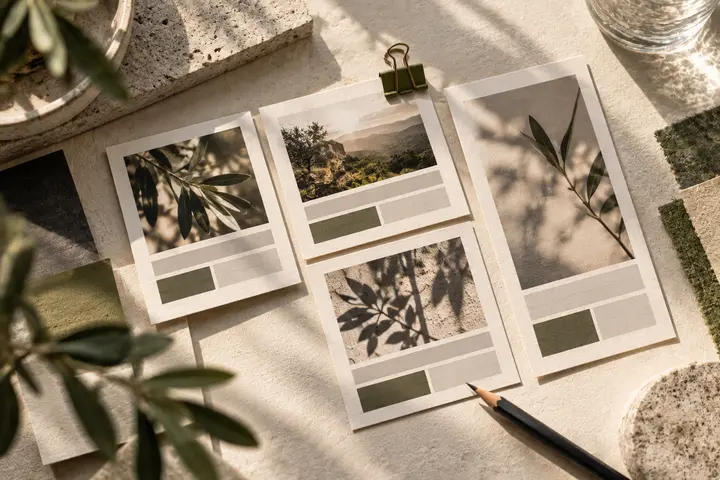
View the proposed website or catalogue images together. Compare lighting, colour intensity, camera position and available space. They need not be identical, but a random mixture can weaken the intended visual language. Build a reference board identifying the qualities to preserve. Record brief reasons for the choices so another editor can extend the selection later without having to infer the original direction from unrelated individual downloads.
Test the crop in the final arrangement
A wide photograph may not perform the same task in a tall cover. Check whether important objects disappear, space remains for headings and the mobile version preserves context. Work from a sufficiently detailed source rather than enlarging a tiny preview. Avoid modifications that imply a product or event existed when it did not. Review technical fitness separately from the accuracy of the message before approving the final publication version.
Add source records to the BOCW handover
Keep the file name, original link, contributor, download or review date and intended application. Request those details when another team supplies the photograph. Distinguish the approved original from compressed publication copies. Future editors can then identify where an image came from during a website or catalogue update. If a later use differs from the original, schedule a fresh review rather than assuming that one approval covers every possible future project.
Key takeaways
- Write the image’s role before searching for candidates.
- Do not equate a free download with permission for every context.
- Retain source, review date and intended use alongside the file.
Frequently asked questions
Can stock subjects be presented as our real team?
Avoid a misleading impression. Keep representative photography distinct from images documenting the actual business, its people or its work.
Can every free photograph be used anywhere?
No general assumption is appropriate. Review the current source conditions and the context in which you intend to publish it.
When should we commission original photographs?
When the real product, team or completed application serves as evidence, original photography may be more appropriate than a representative stock scene.