In this article
Car dealership logo design identifies the business selling the vehicles. A customer may encounter it on a large storefront, beside a vehicle photograph or inside a small marketplace profile. Each setting needs a different arrangement. Start by making the dealership's name and buying experience clear, rather than echoing the manufacturers of its current stock. A useful logo system helps people recognise the seller as vehicles change. Assess it alongside the presentation of vehicle information, prices and contact details, not as a standalone decorative badge.
Quick answer
A car dealership logo identifies the seller independently of the vehicle manufacturers. Test the dealership name on storefronts, listing profiles and vehicle photographs. Create editable templates for changing stock, keeping the mark from competing with product details and prices. Choose an identity that works across inventory and screens rather than judging only the appearance of a car silhouette.
Separate the vehicles from the seller's brand
A multi-brand dealership can become visually restricted if its identity is tied to a car currently in stock. Describe vehicle categories and the business's customer approach in the brief. Observable practices such as scheduled appointments, clear vehicle information and organised handover communication can guide the design. The dealer's name, manufacturer's name and campaign headline have different jobs. Arrange them separately. Visual association should not imply an authority or partnership that the business has not established and explained.
Communicate the category without relying on an outline
A car silhouette offers an immediate association, but similar outlines can reduce distinctiveness. Name-led design or a particular relationship between letters can identify the dealer too. If a symbol is chosen, assess whether it is too closely tied to one vehicle class. It should remain relevant when other body types are offered or the business expands. Chrome effects and speed lines are optional styles. Reviewing a flat, single-colour version reveals how well the name and form work after those effects disappear.
Assess how customers encounter the storefront name
A sign helps customers identify the right premises. Include the real facade, viewing angles and existing architectural details in the drafts. Assess daytime appearance and the lighting conditions the business will use separately. If a long name and slogan become crowded on one line, try another arrangement. Establish a hierarchy between name, telephone number and supporting copy. Request a normal street-view example as well as a close-up rendering. Confirm production materials and dimensions with the relevant supplier.
Leave room for the vehicle on listing screens
A profile area may be small, while the vehicle photograph needs to show the product. A large logo overlay can conceal useful details. A consistent corner placement or a heading outside the photograph may work better. Check the marketplace's current image conditions before publishing. Create separate fields for model, year, price and other details confirmed by the business. A visual template cannot guarantee accurate or current information; assign responsibility for content approval within the dealership.
A hypothetical multi-brand dealership brief
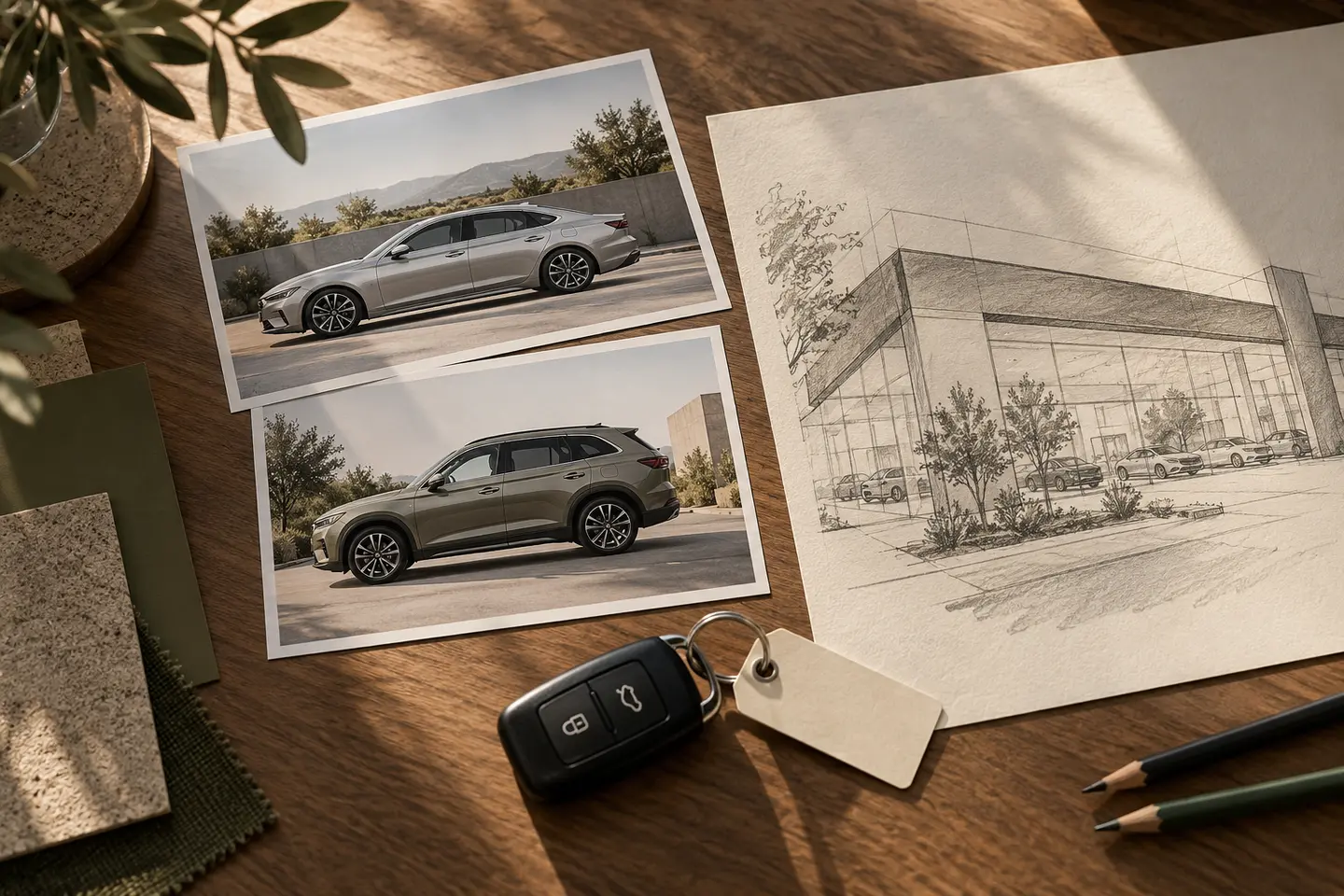
Imagine a new dealership offering several vehicle body types. Its brief prioritises introducing the business name and presenting listings consistently. The presentation shows a long-name storefront, small profile image, light-coloured vehicle photograph and dark-coloured vehicle photograph. The logo can use light and dark variants rather than forcing one background treatment everywhere. Assess whether the name reads clearly, vehicle details remain visible and a staff member can prepare a new listing using the same arrangement.
Include inventory changes in the handover
If inventory changes regularly, deliver empty listing templates alongside examples populated with content. Keep the logo separate from price fields and show how long model names fit. Explain how staff can add new photographs without losing the layout. Quotations should distinguish logo design, storefront adaptation, listing templates and other promotional materials. During acceptance, review a trial listing prepared by the business as well as the designer's examples. Instructions for everyday production then become a practical part of the delivery.
Key takeaways
- Give the dealer's name a hierarchy separate from vehicle manufacturers.
- Check that the logo leaves vehicle details visible in photographs.
- Request editable listing templates for long model names and changing prices.
Frequently asked questions
Does a dealership logo need a car silhouette?
No. A silhouette can suggest the category, but making the dealership name distinctive is the more fundamental job. Lettering-led design may also work. Assess the mark alongside different vehicle types and within a small listing profile, rather than only in a large presentation.
Should every vehicle photograph carry a logo?
It depends on the channel and photographic layout. A consistent corner position can be useful, but it should not obscure vehicle details. A profile identity or heading outside the photograph provides another option. Check the relevant platform's current image conditions before publishing.
Is sign production part of logo design?
It is a separate task. Facade adaptation, dimensions, material selection and installation create different responsibilities. If signage is needed, include it in the brief and compare the scopes of design and production quotations explicitly.